





Description
Product Introduction & Engineering Value
The API 4380G is designed for a very practical instrumentation problem: one side of a control system has a DC signal, but the receiving equipment needs a different range or electrical format. The module can isolate, convert, rescale, or retransmit voltage and current signals for PLC, DCS, SCADA, recorder, and instrumentation applications.
Configuration is performed at the module rather than through software. External rotary and slide switches select the input/output ranges, while zero and span controls provide adjustment. That makes the 4380G useful for legacy control panels where a dedicated signal-conditioning card is unnecessary.
Technical Specifications
| Parameter | Specification |
|---|---|
| Model | API 4380G |
| Input Voltage Range | 0–50 mVDC to 0–10 VDC |
| Bipolar Input | ±50 mVDC to ±10 VDC |
| Input Current | 0–1 mA to 0–20 mA |
| Output Voltage | 0–1 VDC to 0–10 VDC |
| Bipolar Output | ±1 VDC to ±10 VDC |
| Output Current | 0–1 mA to 0–20 mA |
| Isolation | 2,000 Vrms, input/output/power |
| Standard Power | 115 VAC, 50/60 Hz |
| DC Power Option | 9–30 VDC |
| Loop Power | 18 VDC nominal, up to 25 mA |
| Standard Response | 100 ms typical |
| Fast Response Option | DF option |
| Socket | API-008 8-pin octal socket |
API’s published product information also lists 230 VAC, universal AC/DC, and other power configurations, depending on the ordering option. Therefore, the exact suffix/configuration should be checked before replacing an installed unit.
Field Application & the “Trench” Experience
A process skid has a 4–20 mA transmitter feeding an older control system that expects a voltage signal. The instrumentation itself checks out. The problem is the interface between the transmitter and the receiving controller.
An engineer uses an API 4380G to provide the required conversion while electrically isolating the two sides. During commissioning, the LoopTracker LEDs provide a quick indication of input and output signal activity, while the built-in test function can force a known output for troubleshooting.
That last feature can save considerable troubleshooting time. Instead of chasing the entire loop simultaneously, the technician can isolate the input and output portions of the circuit.
Specific application scenarios
- 4–20 mA to 0–10 VDC conversion — Interfacing a current-output process transmitter with voltage-input control equipment.
- PLC/DCS analog input isolation — Breaking ground-loop paths between field instrumentation and control-system analog inputs.
- Low-level millivolt signal conditioning — Scaling a small DC signal into a usable analog control-system range.
- Panel instrumentation retrofit — Converting legacy analog signals without replacing the complete control panel.
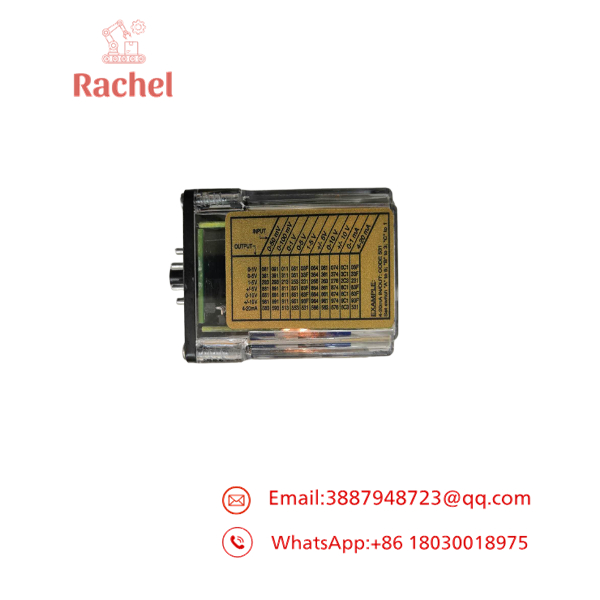
4380G
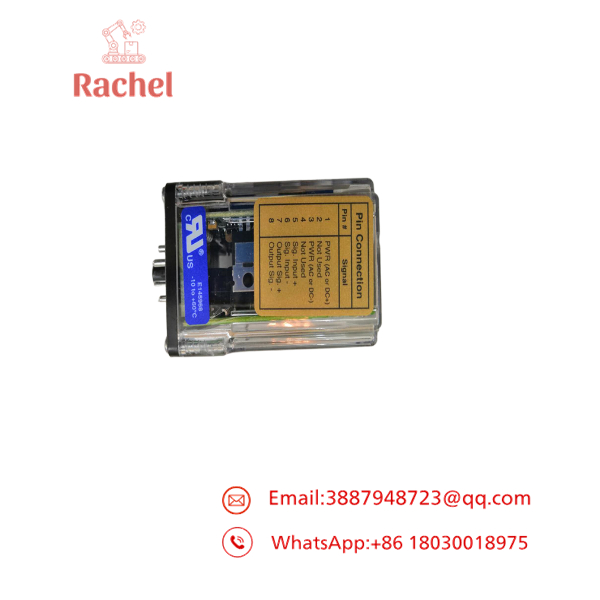
4380G
Transparency SOP: QA & Testing
For new-surplus or refurbished API 4380G inventory, configuration is part of the test.
- Verify the exact model — Confirm API 4380G and any power/options suffixes.
- Inspect the module — Check switches, potentiometers, LEDs, housing, and socket pins.
- Record configuration — Photograph the rotary and slide-switch settings before making adjustments.
- Apply a calibrated input — Use a known voltage or current corresponding to the configured input range.
- Verify output — Measure the resulting output with calibrated test equipment.
- Check isolation — Verify the appropriate isolation performance using suitable test procedures.
- Test the pushbutton — Confirm that the test function produces the configured output.
- Check LoopTracker LEDs — Verify that input and output indicators respond as expected.
- Record results — Document the input/output ranges, power configuration, and test measurements.
The API documentation specifically identifies the LoopTracker LEDs and output test pushbutton as troubleshooting aids.
The Veteran’s Tech Trap Guide
⚠️ Trap #1 — Ordering the model but ignoring the configuration.
A 4380G is field-configurable. Two units with the same basic model number can be configured for different input and output ranges.
PRO TIP: Photograph the side-mounted switches and record the zero/span settings before removing the original module.
⚠️ Trap #2 — Assuming the standard power supply is universal.
The standard configuration is 115 VAC, but API lists options including 230 VAC and 9–30 VDC. Verify the actual installed version before energizing a replacement.
⚠️ Trap #3 — Forgetting the socket.
The 4380G plugs into an API-008 8-pin octal socket. The socket is a separate item and should be inspected when troubleshooting intermittent connections.
⚠️ Trap #4 — Adjusting zero/span before confirming the range switches.
Zero and span adjustments cannot compensate for an incorrectly selected input/output range. Set the configuration first, then calibrate.
Dynamic FAQ
What is the API 4380G?
The API 4380G is a field-configurable DC-to-DC isolated signal conditioner/transmitter used to isolate, convert, scale, and retransmit analog DC signals.
What signals can the 4380G accept?
Depending on configuration, it accepts DC voltage from 0–50 mV through 0–10 V, bipolar voltage from ±50 mV through ±10 V, and DC current from 0–1 mA through 0–20 mA.
What outputs are available?
The output can be configured for DC voltage, bipolar voltage, or DC current. Common ranges include 0–10 VDC and 4–20 mA, along with other selectable ranges.
Does the 4380G provide electrical isolation?
Yes. The published specification calls for full 2,000 Vrms isolation between input, output, and power circuits.
How is the API 4380G configured?
It uses external rotary and slide switches to select the input and output ranges. Zero, span, and test-range adjustments are also available.
Does it require a separate socket?
Yes. The standard installation uses an API-008 8-pin octal socket, available for DIN-rail or panel mounting.
What should I verify when buying new-surplus 4380G stock?
Verify the actual power option, switch configuration, physical condition, socket compatibility, and functional test results. Because the unit is field-configurable, the supplier should identify how the specific unit was configured and tested.
What warranty is available?
Warranty depends on the supplier and stock condition. Current API-channel listings indicate that API modules can carry substantial manufacturer warranty coverage, but the warranty applicable to a particular new-surplus or refurbished unit should be confirmed in writing before purchase.

 Start Chat


