





Description
Product Introduction
The Alcatel-Lucent Enterprise 900CCD (OmniTouch Call Center Distribution / CCD) is a core soft-license and application module for the Alcatel-Lucent OmniPCX Enterprise (OXE) PBX platform. Designed specifically for enterprise call centers, the 900CCD package provides the soft architecture necessary to route, manage, and monitor high-volume incoming voice interactions across dedicated agent pools.
Rather than relying on separate third-party middleware servers, the 900CCD system operates as an embedded ACD solution directly within the OXE call processing engine. It provides agent desktop software interfaces (such as Alcatel OmniTouch Agent Console), supervisor monitoring utilities, and real-time statistics generation for wallboards and reporting servers (e.g., CC-IVR or OmniTouch CCSE).
Key Technical Specifications
| Parameter | Specification / Value |
| Manufacturer | Alcatel-Lucent Enterprise (ALE) |
| Product / Feature Name | OmniTouch 900CCD (Call Center Distribution) |
| Parent Platform | Alcatel-Lucent OmniPCX Enterprise (OXE) Media Server / Call Server |
| Architecture Type | Native Embedded ACD (Automatic Call Distribution) |
| Capacity Scaling | Up to 150 pilot numbers, multiple agent groups, and supervisor consoles |
| Agent Interface | OmniTouch Agent Desktop / IP Touch 4038, 4039, 4068, 8038, 8068 Deskphones |
| Supported Routing | Skill-based routing, priority queueing, overflow routing, VIP caller routing |
| CTI Integration | CSTA, TAPI, and Alcatel-Lucent Enterprise CTI framework |
| Supported OS (Client) | Windows 10 / Windows 11 / Windows Server (For client software deployment) |
| Licensing Model | Per-Agent / Per-Supervisor Concurrent Soft-License Keys |
Application Scenarios & The “Trench” Experience
Picture this: It’s 8:30 AM on a Monday morning at a municipal utility customer support center during a sudden regional storm outage. Inbound call volume spikes from 50 calls per hour to over 1,200 calls per hour. Without native ACD queueing, calls would hit busy signals or hunt-groups randomly. With the Alcatel-Lucent 900CCD engine running on the OXE Call Server, the system dynamically routes callers based on IVR selection, places customers into priority queues with hold-time announcements, and routes high-priority emergency accounts to senior tier-2 agents automatically.
- Enterprise Helpdesks & IT Support Center – Skill-based routing ensures callers with specific technical issues are directed to qualified helpdesk technicians automatically.
- Financial & Insurance Call Centers – Integrates with CRM databases via CTI to present screen-pops containing account details as the call lands on the agent desktop.
- Healthcare & Emergency Dispatch Operations – High-reliability, embedded call server architecture prevents contact center downtime even during high-traffic emergency events.
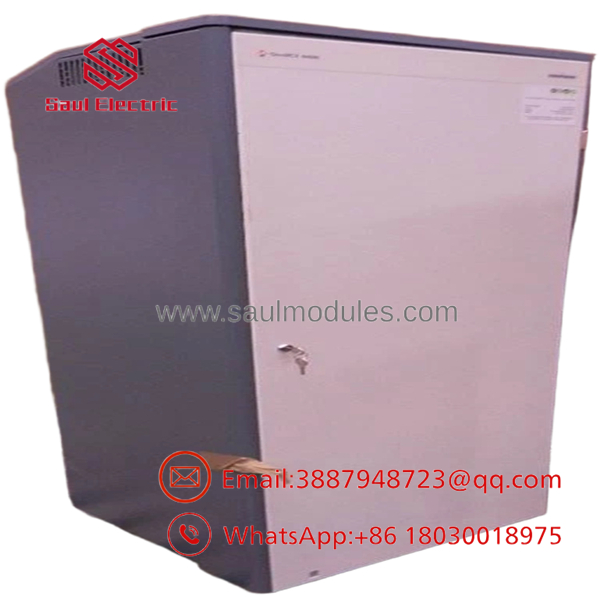
900CCD
Transparency SOP: Licensing & Deployment Verification
For software and licensing deployments involving the 900CCD platform:
- OXE Software Release Audit: Verify that the target OmniPCX Enterprise server is running a compatible software release (e.g., OXE R11, R12, or R100/R103) before adding 900CCD agent licenses.
- CPU Hardware Lock Check: Licenses are tied to the unique Hardware Identification (HW-ID / CPU ID) of the OXE Call Server card (e.g., CS-3, Appliance Server, or virtualized CPU).
- Agent / Supervisor Capacity Audit: Confirm available system memory and concurrent user count limits on the OXE server to ensure it can host the required 900CCD agent profiles.
- Client Desktop Testing: Validate network port availability (CSTA/TAPI ports and IP ports) between agent PCs and the OXE Call Server to prevent desktop softphone/console connection drops.
The Veteran’s Tech Trap Guide (Crucial Value-Add)
- ⚠️ Licenses Are Tied to the OXE CPU Hardware ID!
The
900CCDlicense keys generated by Alcatel-Lucent Enterprise are bound to the specific physical or virtual CPU ID of your OmniPCX Enterprise server. You cannot transfer a 900CCD license file from an old CS board to a new server without performing an official ALE license migration process via the ALE Partner Portal. - ❗ Do Not Confuse “CCD” (OXE Native) with “OXO Contact Center”!
900CCDis exclusively for the OmniPCX Enterprise (OXE) platform. If you are running an Alcatel-Lucent OmniPCX Office (OXO) or OXO Connect system, it uses a completely different ACD/Contact Center architecture (OXO Contact Center / ACIM) and 900CCD licenses will not apply. - ⚠️ Maintain Correct CSTA/TAPI Middleware Versions
When using third-party CRM screen-pop tools with 900CCD, ensure that the Alcatel-Lucent CSTA server runtime on the client PCs matches the exact version running on the OXE server. Version mismatches can lead to agent status freeze or failed screen-pops.
- ❗ Backup OXE Configuration Before License Ingestion
Before uploading new 900CCD software license keys via
swkcommands or Omnivista 8770, perform a fullspA/ database backup on the primary and secondary OXE CPUs.
Frequently Asked Questions (FAQ)
Q: What does “900CCD” stand for in Alcatel-Lucent nomenclature?
A: 900CCD refers to the software catalog and licensing code for Call Center Distribution (CCD), the native embedded Automatic Call Distributor for Alcatel-Lucent OmniPCX Enterprise systems.
Q: Is 900CCD a physical hardware card or a software license?
A: It is a software application module and soft-license. While it executes on the physical OXE CPU server hardware, no additional dedicated ACD hardware cards are required.
Q: Can 900CCD handle multi-channel interactions like email and web chat?
A: Base 900CCD handles voice interaction routing natively. For full multi-channel support (Email, Web Chat, Social Media), 900CCD integrates with Alcatel-Lucent’s OmniTouch Contact Center Standard Edition (CCSE) or OpenTouch Customer Service suites.



 Start Chat


