





Description
Product Introduction
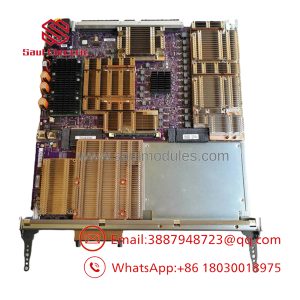
The Nokia / Alcatel-Lucent 3AL81295AAAA 03 (base part 3AL81295AAAA) is a high-reliability optical transport line card designed for Nokia’s optical subrack architectures (such as the 1830 PSS Photonic Service Switch series). Engineered for service providers, utility communications backbones, and data center interconnect (DCI) networks, this module provides low-latency optical signal processing, wavelength transport, and cross-connect aggregation.
Built under Nokia’s strict carrier-grade standards, the 3AL81295AAAA 03 features advanced onboard processing ASICs, low-power thermal design, and seamless backplane system integration. Its hot-swappable subrack architecture allows network operation teams to scale network capacity or replace faulty nodes without taking neighboring channels or entire subrack slots offline.
Key Technical Specifications
| Parameter | Specification / Value |
| Manufacturer | Nokia / Alcatel-Lucent (ALU) |
| Part / Item Code | 3AL81295AAAA / 3AL81295AAAA 03 |
| Revision Level | Revision 03 |
| Product Category | Optical Line Card / Photonic Transport Module |
| System Compatibility | Nokia / Alcatel-Lucent Optical Transport Platforms (e.g., 1830 PSS Series) |
| Form Factor | Subrack Modular Slot-In Card Assembly |
| Hot-Swap Support | Supported (Hot-Swappable Subrack Insertion & Extraction) |
| Management System | Integrated Backplane Bus (Managed via System Controller / NFM-P) |
| Operating Temperature | Standard Central Office Conditions (0°C to 45°C) |
Application Scenarios & The “Trench” Experience
Picture this: It’s 2:00 AM on a scheduled maintenance window at a regional telecom hub. An optical transport line card in a core 1830 PSS subrack suffers a localized component failure, raising severe link degradation alarms across a critical enterprise optical ring. Sourcing an exact-match 3AL81295AAAA 03 spare card allows field engineers to unlatch the faulty card, slide the new unit smoothly into the chassis slot, and secure the locking levers. The shelf controller recognizes the module, syncs system software, and restores live optical transport channels in minutes.
- DWDM & OTN Metro Core Networks – Provides wavelength aggregation, framing, and optical transport across regional fiber rings.
- Data Center Interconnect (DCI) Backbones – Aggregates high-volume Ethernet and SAN traffic onto high-capacity photonic transport paths.
- Mission-Critical Utility & Transportation Infrastructure – Deployed in private utility and rail telecommunications networks requiring high hardware availability and long operating lifecycles.
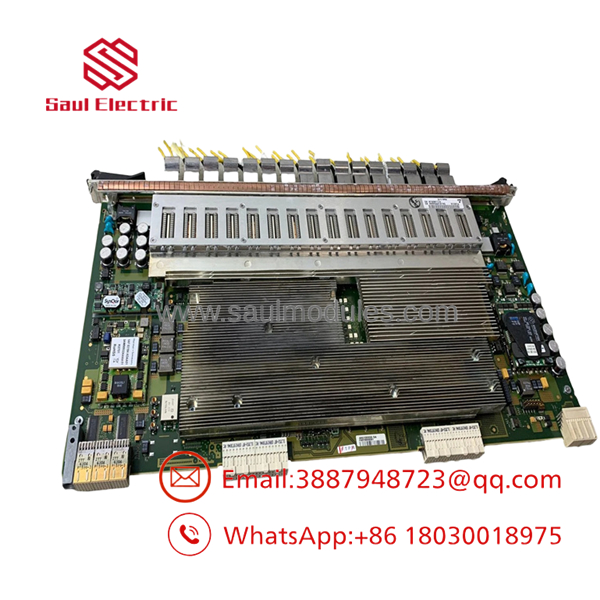
3AL81295AAAA 03
Transparency SOP: Quality Assurance & Testing
Every module undergoes a comprehensive bench audit before dispatch:
- Physical & Mechanical Audit: Thorough visual inspection of front-panel latching handles, optical port cages, backplane pin blocks, and surface components for zero physical wear or ESD damage.
- Chassis Boot & EEPROM Verification: Card inserted into a compatible test subrack to verify clean initialization, proper software boot sequences, and serial/part number matching (
3AL81295AAAA 03). - Full-Traffic Optical Stress Test: All transmission paths are stress-tested with BERT (Bit Error Rate Testing) and optical power meters across all ports to confirm zero frame drops or optical power degradation.
- Thermal & Voltage Rail Diagnostics: System logs verified to confirm stable onboard DC-DC power converters and normal operating temperature ranges under load.
- ESD Cleaning & Protective Packaging: Discharged of static, fitted with dust plugs in all optical port cages, sealed in anti-static ESD shielding bags, and packed in custom foam shipping boxes.
The Veteran’s Tech Trap Guide (Crucial Value-Add)
- ⚠️ Verify Firmware / Software Compatibility for Revision 03!
Ensure that your active node controller’s software release supports revision
03of the 3AL81295AAAA card. Installing a hardware revision that post-dates your active node operating system can trigger aProvisioning MismatchorCard Hardware Unsupportedalarm. - ❗ Inspect Backplane Connectors Prior to Insertion
Carrier line cards utilize high-density multi-pin backplane headers. Always visually inspect the backplane pins inside the chassis slot and the connector on the 3AL81295AAAA 03 before inserting. Guide the card carefully along the slot rails and use both top and bottom ejector handles simultaneously—never force the module into the slot.
- ⚠️ Strict ESD Grounding Protocols Required
Telecom transport cards house high-speed processing ASICs highly sensitive to electrostatic discharge. Always attach a grounded ESD wrist strap to the chassis ESD grounding jack before handling or swapping cards in the rack.
- ❗ Keep Unused Optical Ports Capped
Airborne dust inside central office HVAC systems can easily settle on precision optical transceiver ferrules. Keep protective rubber dust caps on all unused optical ports on the front panel to prevent high insertion-loss errors.
Frequently Asked Questions (FAQ)
Q: What is the difference between part number 3AL81295AAAA and 3AL81295AAAA 03?
A: 3AL81295AAAA is the base hardware catalog designator, while 03 specifies the exact hardware manufacturing revision level (Revision 03).
Q: Is this card hot-swappable in a live subrack?
A: Yes. Nokia / Alcatel-Lucent optical subracks support hot-swappable line cards. Unlatching the card’s ejector handles alerts the system controller to gracefully transfer management state before physical removal.
Q: Does this card require standalone external power cabling?
A: No. Operating power, management telemetry, and data traffic pass directly through the backplane connector when the card is seated into the chassis slot.

 Start Chat


