





Description
Product Introduction & Engineering Value
The Alcatel-Lucent WWAD34 is an S1:1 RXIO plug-in module associated with the LambdaXtreme 1625 Lightwave optical transport platform. Available equipment listings identify the module specifically as an RXIO card and associate it with WM7C304BAA.
This is not a generic optical transceiver. It is a platform-specific circuit pack. For replacement procurement, match the complete WWAD34 / S1:1 / WM7C304BAA identification and verify the LambdaXtreme shelf configuration before installation.
Technical Specifications
| Parameter | Specification |
|---|---|
| Manufacturer | Alcatel-Lucent |
| System Family | LambdaXtreme 1625 Lightwave |
| Module | WWAD34 |
| Shelf/Slot | S1:1 |
| Module Type | RXIO plug-in module |
| Associated Assembly | WM7C304BAA |
| Application | Optical transport |
| Network Technology | WDM / optical transport platform |
| Installation | LambdaXtreme platform dependent |
| Interfaces | Verify against actual module and shelf documentation |
| Firmware/Configuration | Platform dependent |
| Replacement Compatibility | Must be verified against installed LambdaXtreme system |
Identification warning
The WWAD34 designation should not be confused with nearby LambdaXtreme part numbers such as WWAD35B, which is identified in equipment listings as an X/O I/O end-termination configuration panel.
That distinction matters when building a spare-parts BOM.
Field Application & the “Trench” Experience
With legacy WDM equipment, the most expensive mistake is often an incorrect circuit-pack identification.
Imagine a LambdaXtreme 1625 shelf experiencing an RX-side hardware fault. The maintenance team has a spare card labeled WWAD34, but before installation they discover that the existing shelf uses a specific S1:1 configuration and the spare’s full assembly identifier was never recorded. The engineer now has to determine whether the replacement is actually the correct circuit pack before disturbing an active optical path.
For WWAD34, capture the complete label, shelf position, assembly number, neighboring cards, and fiber connections before removing the original unit.
Specific application scenarios
- LambdaXtreme 1625 optical transport nodes requiring replacement of an RXIO circuit pack.
- Legacy WDM network maintenance where discontinued optical circuit packs are retained as site spares.
- Carrier optical transmission shelves where restoration depends on maintaining the original circuit-pack architecture.
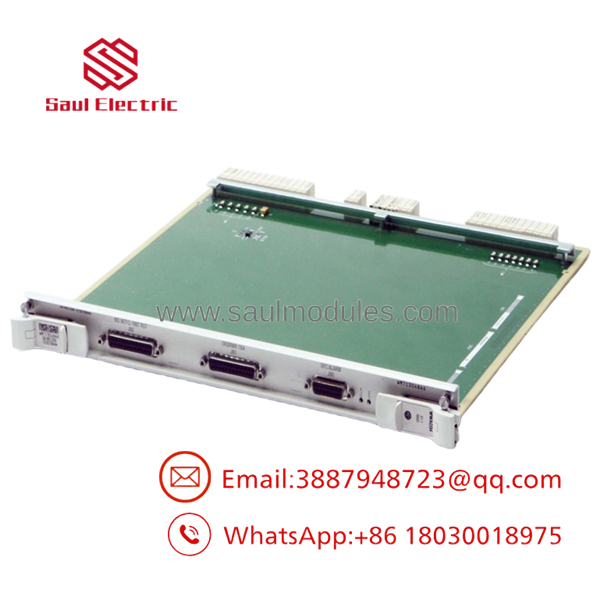
WWAD34
Transparency SOP: QA & Testing
For New Surplus , use a controlled acceptance process:
1. Identity verification
Confirm , S1:1, and, where present, WM7C304BAA.
2. Physical inspection
Inspect the PCB, faceplate, connectors, guide rails, ejectors, labels, and optical interfaces.
3. Storage-condition check
Look for corrosion, contamination, bent contacts, damaged connectors, or signs of improper storage.
4. Shelf compatibility check
Confirm that the test shelf is an appropriate LambdaXtreme 1625 platform.
5. Power/system recognition
Verify that the shelf recognizes the installed circuit pack correctly.
6. RXIO functional testing
Where suitable optical test equipment is available, test the applicable receive/input-output functions.
7. Alarm verification
Check module and shelf alarms after installation.
8. Documentation
Record the serial number, hardware revision, test environment, and actual test results.
A power-on test alone should not be advertised as a complete functional test for an optical circuit pack.
The Veteran’s Tech Trap Guide
⚠️ Trap #1 — Confusing with nearby WWAD-series cards
LambdaXtreme uses numerous similarly formatted WW-series identifiers. For example, WWAD35B is listed as an X/O I/O end-termination configuration panel, while is identified as an RXIO plug-in module.
PRO TIP: Record the complete label, including the S1:1 designation and any secondary assembly number. Do not enter only “” into a critical-spares database.
⚠️ Trap #2 — Treating the card as a standalone optical component
is a platform-specific plug-in card. Compatibility depends on the LambdaXtreme shelf and system configuration.
⚠️ Trap #3 — Skipping optical inspection
For a card involved in optical transport, inspect the relevant optical connectors and protective components before connecting live fibers. Contamination can create faults that look like card failure.
⚠️ Trap #4 — Accepting a generic “tested” claim
Ask what was actually tested. A supplier may mean visual inspection and power-up, while the buyer may expect optical functional testing. Those are different levels of validation.
Dynamic FAQ
What is Alcatel-Lucent ?
is identified as an S1:1 RXIO plug-in module card used in the Alcatel-Lucent LambdaXtreme 1625 Lightwave optical transport system.
What is the associated assembly number?
Available equipment listings associate with WM7C304BAA.
Is an optical transceiver?
No. It is identified as a plug-in RXIO circuit module within the LambdaXtreme platform, not simply a standalone pluggable transceiver.
Can another WWAD-series card replace ?
Do not assume so. Similar WWAD designations can correspond to different circuit functions. Match the exact module designation, shelf position, assembly number, and system configuration.
What should I verify before purchasing New Surplus ?
Request photographs of the actual card and verify , S1:1, WM7C304BAA, hardware revision, serial number, connector condition, and testing scope.
Can be tested outside a LambdaXtreme shelf?
A meaningful functional test generally requires compatible platform hardware and appropriate optical test equipment. Bench inspection alone cannot establish full system compatibility.
Does New Surplus mean the card has never been installed?
Not necessarily. Require the supplier to explicitly state whether the card is unused surplus, used, refurbished, or repaired.
What warranty should I request?
Specify the warranty period, condition classification, serial-number traceability, optical/system test scope, and return terms. For , ask specifically whether the RXIO function was tested in a compatible LambdaXtreme environment or whether the unit was only visually inspected and powered.

 Start Chat


