





Description
Product Introduction & Engineering Value
Temperature measurement failures are often blamed on the sensor, but experienced maintenance engineers know that poor cold-junction compensation, electrical noise, or damaged analog input modules can produce equally misleading readings. Replacing a thermocouple without checking the input module frequently wastes valuable maintenance time.
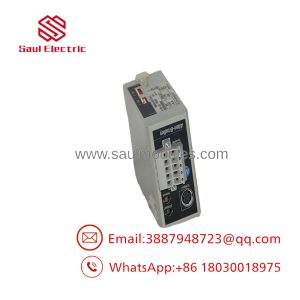
The Allen-Bradley 1746-INT4 is designed for applications requiring accurate thermocouple and millivolt measurements within an SLC 500 control system. Each of its four input channels is individually isolated, minimizing ground-loop interference and improving measurement stability in electrically noisy industrial environments. The module supports multiple thermocouple types while providing onboard linearization and cold-junction compensation.
Technical Specifications
| Parameter | Specification |
|---|---|
| Manufacturer | Allen-Bradley / Rockwell Automation |
| Model | 1746-INT4 |
| Product Family | SLC 500 |
| Product Type | Isolated Thermocouple/mV Analog Input Module |
| Number of Inputs | 4 Individually Isolated Channels |
| Supported Thermocouple Types | C, D, J, K, T, E, R, S, B, N |
| Millivolt Input Ranges | ±50 mV, ±100 mV |
| Resolution | 16-bit |
| A/D Conversion | Sigma-Delta Modulation |
| Update Time | 500 ms |
| Channel Bandwidth | 8 Hz |
| Cold Junction Compensation | Integrated, ±1.5°C Accuracy (0–70°C) |
| Open-Circuit Detection | Upscale, Downscale, or Zero Selectable |
| Isolation | Channel-to-Channel and Backplane Isolation |
| Backplane Current | 110 mA @ 5 VDC; 85 mA @ 24 VDC |
| Recommended Slot | Any SLC 500 slot except Slot 0 |
Field Application & The “Trench” Experience
A heat-treatment furnace began reporting temperature fluctuations of nearly 20°C during steady-state operation. Operators initially suspected failing Type K thermocouples and replaced several probes without improving process stability.
During troubleshooting, engineers compared each channel against a calibrated temperature simulator and discovered that one channel on the 1746-INT4 consistently reported a positive offset. After replacing the module and recalibrating the furnace control loop, temperature stability returned to normal, eliminating unnecessary product rejects.
Typical application scenarios include:
- Heat treatment furnace temperature monitoring
- Plastic extrusion barrel temperature control
- Industrial oven and kiln supervision
- Boiler combustion temperature measurement
- Reactor vessel process temperature monitoring
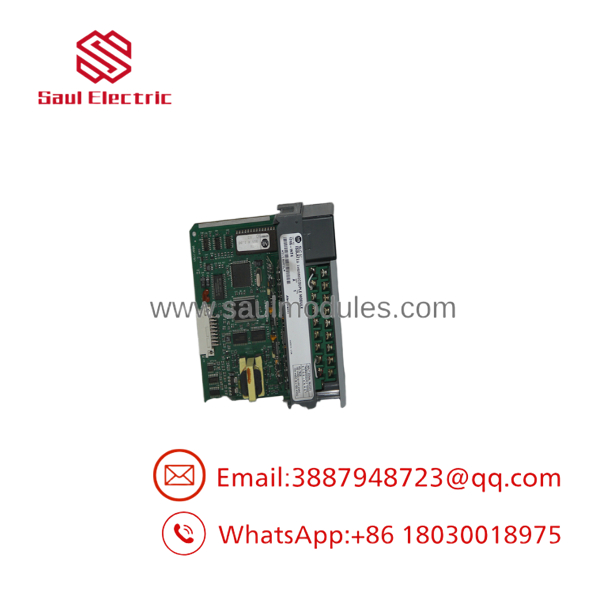
- 1746-INT4
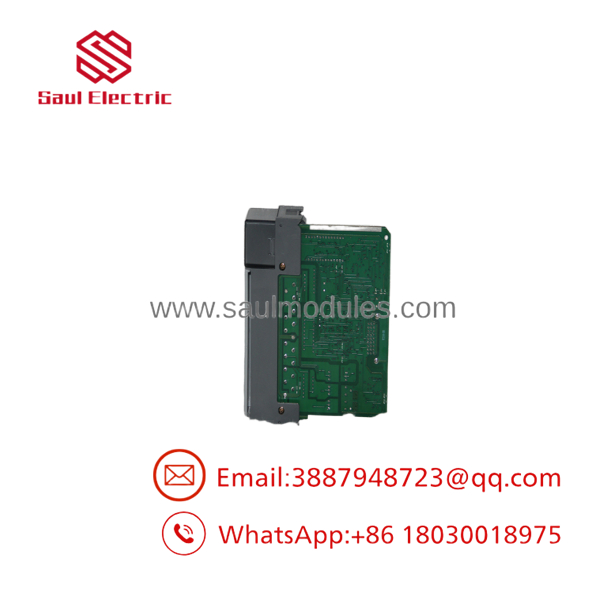
- 1746-INT4
Transparency SOP: QA & Testing
Each New Surplus or professionally Refurbished 1746-INT4 undergoes documented functional verification.
- Confirm catalog number, hardware revision, and identification labels.
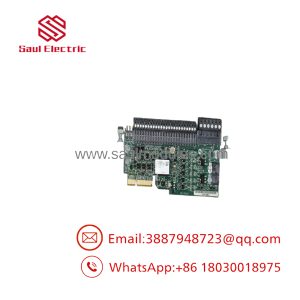
- Inspect PCB assemblies, terminal block, and backplane connector.
- Verify communication in a compatible SLC 500 chassis.
- Simulate multiple thermocouple types and millivolt signals using calibrated equipment.
- Validate cold-junction compensation and channel isolation.
- Confirm open-circuit detection, LED operation, and conversion accuracy.
- Package the module in ESD-safe materials with full inspection records.
The Veteran’s Tech Trap Guide
⚠️ Always match the configured thermocouple type to the installed sensor. Configuring a Type J input while wiring a Type K thermocouple can produce significant temperature errors without generating a hardware fault.
⚠️ Never extend thermocouple wiring with ordinary copper wire. Incorrect extension wire creates additional junctions that introduce measurement errors, especially over long cable runs.
PRO TIP: If every channel reports nearly the same temperature offset, inspect the cold-junction compensation (CJC) rather than replacing all thermocouples. A CJC problem typically affects every channel in a similar way.
PRO TIP: Route thermocouple wiring separately from motor and VFD power cables. Although each channel is isolated, electromagnetic interference can still reduce measurement stability in high-noise installations.
Dynamic FAQ
Q1. What signals does the 1746- accept?
The 1746- accepts both thermocouple and millivolt (mV) inputs. It supports thermocouple types C, D, J, K, T, E, R, S, B, and N, as well as ±50 mV and ±100 mV analog signals.
Q2. Are the four input channels electrically isolated?
Yes. Each input channel is individually isolated from the other channels and from the SLC backplane, reducing the effects of electrical noise and ground potential differences.
Q3. Does the module include cold-junction compensation?
Yes. The module incorporates automatic cold-junction compensation (CJC) with a typical accuracy of ±1.5°C over a 0–70°C ambient range, improving thermocouple measurement accuracy.
Q4. How are broken thermocouple wires detected?
The module supports configurable open-circuit detection, allowing failed sensors to be reported as upscale, downscale, or zero, depending on the selected configuration.
Q5. How is New Surplus authenticity verified?
Every unit is verified by checking the catalog number, inspecting the hardware, validating all four analog input channels, testing thermocouple and millivolt inputs, confirming isolation performance, and verifying successful operation in a compatible SLC 500 chassis.
Q6. Is the 1746- still used in industrial systems?
Yes. Although the SLC 500 platform is a legacy control family, the remains widely used to maintain existing process control systems in industries such as metals processing, food production, chemical manufacturing, and power generation. It is commonly available as New Surplus, professionally Refurbished, or repair-tested inventory.

 Start Chat


