





Description
Product Introduction & Engineering Value
In a 1394 motion control system, the system module is more than just a power supply. It establishes the DC bus, coordinates SERCOS communication, and provides the foundation on which every connected servo axis depends. When this module fails, multiple machine axes can become unavailable simultaneously.
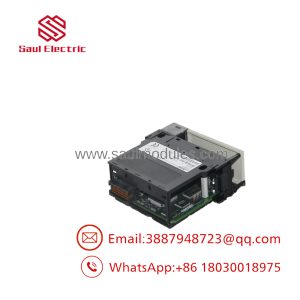
The Allen-Bradley 1394C-SJT05-D is a Series C SERCOS Interface System Module designed for the Bulletin 1394 multi-axis servo platform. It combines AC input conversion, DC bus generation, braking circuitry, and fiber-optic SERCOS communication into one assembly, reducing cabinet wiring while supporting synchronized multi-axis motion control.
Technical Specifications
| Parameter | Specification |
|---|---|
| Manufacturer | Allen-Bradley / Rockwell Automation |
| Model | 1394C-SJT05-D |
| Product Family | Bulletin 1394 Series C |
| Product Type | SERCOS Interface System Module |
| Supported Servo Axes | Up to 4 |
| Continuous Output Power | 5 kW (4 kW @ 380 V / 5 kW @ 460 V) |
| Input Voltage | 324–528 VAC, 3-Phase, 50/60 Hz |
| AC Input Current | 6.5 A |
| Nominal DC Bus Voltage | 530/680 VDC |
| Continuous DC Output Current | 7.36 A |
| Peak DC Output Current | 15 A |
| Peak Output Power | 28 kW |
| Internal Shunt Resistor | 200 W Continuous, 40 kW Peak (2 s max) |
| Line Loss Ride-Through | 20 ms |
| Efficiency | 99% |
| Weight | Approximately 10.7 kg (23.5 lb) |
Field Application & The “Trench” Experience
A corrugated packaging plant experienced intermittent shutdowns on a four-axis rotary die cutter. Servo amplifiers repeatedly reported DC bus undervoltage alarms, yet every individual axis module tested normally.
Engineers eventually traced the issue to a deteriorating 1394C-SJT05-D. The module was no longer maintaining a stable DC bus during rapid acceleration of all four axes. After replacing the system module and verifying the SERCOS ring, machine synchronization returned immediately without replacing any servo amplifiers.
Typical applications include:
- High-speed rotary printing presses
- CNC machining centers
- Multi-axis packaging and cartoning equipment
- Robotic palletizing systems
- Continuous material converting lines
Transparency SOP: QA & Testing
Each New Surplus or professionally Refurbished 1394C-SJT05-D undergoes a documented inspection procedure.
- Verify catalog number, Series C hardware revision, and identification labels.
- Inspect DC bus capacitors, power terminals, cooling assemblies, and fiber-optic ports.
- Perform insulation resistance and ground isolation testing.
- Energize the module using a controlled three-phase power source.
- Verify DC bus output voltage, internal shunt operation, and SERCOS communication.
- Test operation with compatible 1394 axis modules.
- Package using ESD-safe and shock-resistant materials with complete traceability.
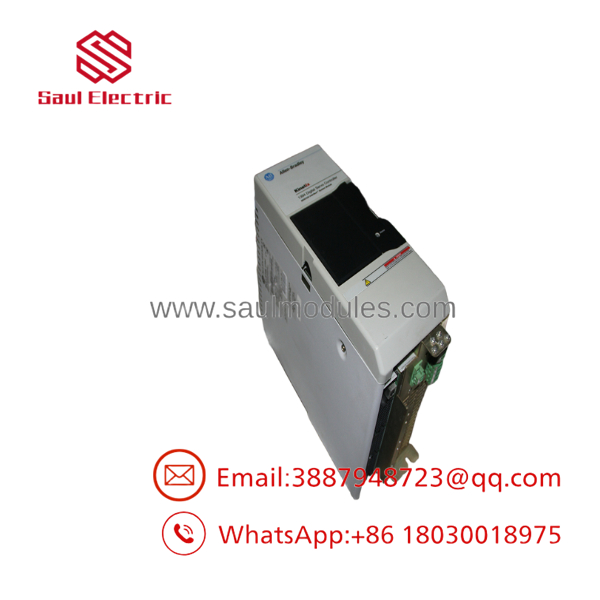
- 1394C-SJT05-D
The Veteran’s Tech Trap Guide
⚠️ Don’t replace only the system module after a DC bus fault. A failed axis module or shorted servo motor can overload the replacement unit during the first power-up.
⚠️ Inspect every SERCOS fiber connector. Dust contamination, damaged fiber ends, or incorrect ring connections often generate communication faults that appear to be hardware failures.
PRO TIP: Measure incoming three-phase voltage under load before replacing the module. Voltage imbalance or poor incoming power quality frequently produces nuisance undervoltage alarms that mimic a defective system module.
PRO TIP: Series C modules include improvements such as plug-in input terminals, integrated EMI filtering, and Smart Power functions. Confirm compatibility when replacing older Series A or Series B hardware in legacy installations.
Dynamic FAQ
Q1. What is the function of the 1394C-SJT05-D?
The 1394C- serves as the central SERCOS Interface System Module in a Bulletin 1394 motion system. It generates the common DC bus, manages SERCOS communication, and supplies power for connected servo axis modules.
Q2. How many servo axes can one 1394C- support?
A single module supports up to four servo axes when used with compatible 1394 axis modules and the appropriate system configuration.
Q3. Does the module include an internal braking resistor?
Yes. The includes an internal shunt resistor rated at 200 W continuous with a 40 kW peak dissipation capability for short-duration braking events.
Q4. Is the 1394C- still manufactured?
No. The Bulletin 1394 platform has been discontinued by Rockwell Automation. Replacement units are typically available as New Surplus, professionally Refurbished, or through certified repair providers.
Q5. How is New Surplus authenticity verified?
Each module is inspected for catalog number, hardware revision, power-stage integrity, DC bus performance, SERCOS communication, and successful operation with compatible 1394 motion hardware before shipment.
Q6. What should be checked before replacing the module?
Verify the incoming three-phase power, inspect the SERCOS fiber-optic ring, test connected axis modules for shorts, and confirm that the DC bus is fully discharged before servicing. These checks help prevent unnecessary replacement and protect the new module during commissioning.

 Start Chat


