





Description
Product Introduction & Engineering Value
Temperature monitoring across multi-zone heat processing equipment demands high channel density without sacrificing signal integrity. The Allen-Bradley 1746-NT8 packs eight direct thermocouple and millivolt input channels into a single SLC 500 slot, eliminating the need for external signal conditioners.
Engineers rely on this module to feed multi-point thermal profiles directly into RSLogix controller tags. Onboard Cold Junction Compensation (CJC) and open-circuit detection keep process loops protected against sensor wire breaks in harsh production environments.
Technical Specifications
| Specification | Parameter Value |
| Input Channels | 8 differential thermocouple/millivolt channels |
| Thermocouple Types | J, K, T, E, R, S, B, N |
| Millivolt Input Ranges | ±50 mV DC, ±100 mV DC |
| Analog-to-Digital Conversion | 16-bit sigma-delta |
| Backplane Current (5V DC) | 85 mA |
| Backplane Current (24V DC) | 160 mA |
| Channel Bandwidth / Filter Frequency | Configurable per channel (10 Hz, 50 Hz, 60 Hz, 250 Hz) |
| Cold Junction Compensation | 2 onboard CJC sensors on terminal block |
| Channel-to-Backplane Isolation | 500V DC continuous |
| Operating Temperature | 0°C to 60°C (32°F to 140°F) |
Field Application & The “Trench” Experience
During an overnight run at an aluminum extrusion plant, an old 4-channel temperature card threw open-circuit faults across two furnace zones, causing the supervisory system to trip heater contactors. Replacing the faulty card with a high-density 1746-NT8 restored furnace monitoring and freed up an extra rack slot for future expansion. The technician rewired the cold-junction thermistors, updated the module setup word in RSLogix 500 to match Type K sensor calibration, and brought the furnace back to soak temperature in under 45 minutes.
- Rubber Vulcanization Presses: Reading multi-zone platen temperature profiles across eight distinct mold cavity positions.
- Heat Treat Annealing Lehrs: Tracking thermal ramp rates across heating, soak, and cooling stages in continuous glass manufacturing.
- Chemical Batch Reactor Vessels: Monitoring internal process temperatures, jacket utility loops, and thermowell redundant pairs.
Transparency SOP: QA & Testing
- Terminal & CJC Sensor Inspection: Examining the removable terminal block for pin strain and verifying both internal Cold Junction Compensation thermistors are present and undamaged.
- Backplane Bus Power Verification: Powering the module in an SLC 500 rack to ensure 5V DC and 24V DC backplane current draws match factory tolerances.
- Multi-Type Millivolt Signal Injection: Using a calibrated precision thermocouple simulator to feed millivolt values corresponding to Type J, K, and T curves into all eight channels.
- Open-Loop & Noise Burn-In Testing: Toggling open-thermocouple detection bits in RSLogix 500 while running the module inside a burn-in chamber to test filter stability against electrical ambient noise.
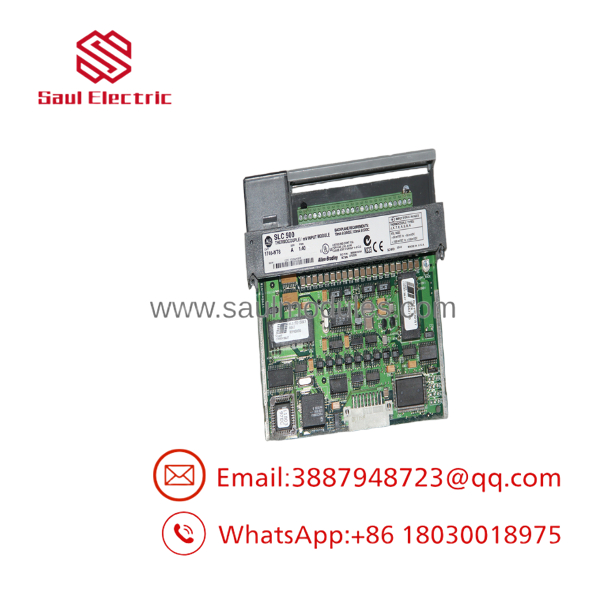
- 1746-NT8
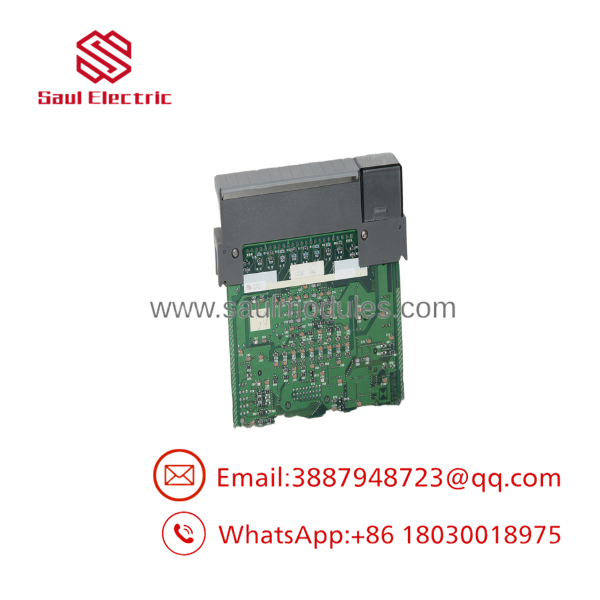
- 1746-NT8
The Veteran’s Tech Trap Guide
- ⚠️ Missing CJC Sensors on Terminal Block: The 1746-NT8 uses two physical cold-junction compensation thermistors embedded directly on its special removable terminal block (1746-N3). If you swap this card and accidentally reuse a standard 1746 terminal block without CJC thermistors, your temperature readings will drift wildly based on ambient control panel temperature changes.
- PRO TIP: Shield Wire Termination: Thermocouple extension wire picks up high levels of noise in environments with heavy VFD activity. Always ground extension wire shields at the module ground terminal or chassis earth bar—never ground both ends of a thermocouple shield, as ground loops will introduce major temperature measurement offsets.
- ⚠️ Filter Frequency vs. Loop Speed: Selecting a slow notch filter frequency (e.g., 10 Hz for high noise rejection) increases the update time across all eight channels. If your thermal process requires rapid fault detection, configure faster filter speeds (50 Hz or 60 Hz) on critical channels to prevent update lag.
Dynamic FAQ
Q: Can I mix different thermocouple types on the same 1746-NT8 module?
A: Yes. Each channel is individually software-configurable in RSLogix 500, allowing you to run a mix of Type K, Type J, or millivolt signals on a single card.
Q: What is the difference between the 1746-NT4 and 1746-NT8?
A: The 1746-NT4 provides 4 thermocouple channels, while the 1746-NT8 doubles the density to 8 channels in the same single-slot form factor with updated configuration word features.
Q: What terminal block does the 1746-NT8 require?
A: It requires the specialized 1746-N3 terminal block, which contains integrated cold-junction compensation sensors wired into the terminal assembly.
Q: Are replacement 1746-NT8 units tested for accuracy before shipment?
A: Yes. Every unit is tested using precision thermocouple calibrators across multiple sensor curves on an active SLC 500 backplane.

 Start Chat


