





Description
Product Introduction & Engineering Value
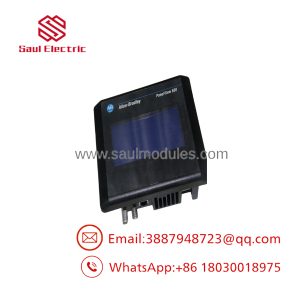
When an application demands switching a mix of 120V AC solenoid valves, 24V DC indicator lamps, and dry contact interlocks from the same rack slot, solid-state cards fall short. The Allen-Bradley 1746-OW16 features 16 individual electromechanical relay contacts, providing true physical isolation across mixed-voltage field devices.
Because dry relay contacts are indifferent to load polarity or voltage type, this card simplifies retrofits in legacy control panels with heterogeneous voltage requirements. Plant maintenance teams count on the 1746-OW16 for dependable, noise-immune isolation between sensitive backplane logic and noisy panel power distribution loops.
Technical Specifications
| Specification | Parameter Value |
|---|---|
| Number of Outputs | 16 electromechanical relay outputs (Normally Open) |
| Operating Voltage Range | 5 to 265V AC, 5 to 125V DC |
| Continuous Current per Point | 2.0 A max |
| Continuous Current per Module | 16.0 A total max (across two 8-point commons) |
| Contact Thermal Resistance | 30 mΩ initial contact resistance |
| Signal Delay (Off to On / On to Off) | 10.0 ms max / 10.0 ms max |
| Backplane Current (5V DC) | 170 mA |
| Backplane Current (24V DC) | 180 mA |
| Isolation | 1500V AC field-to-backplane, 1500V AC group-to-group |
Field Application & The “Trench” Experience
During an emergency overhaul of an old grain elevator control system, engineers needed to interface an SLC 500 rack with a mix of legacy 120V AC starter coils, 24V DC pilot lights, and 48V DC trip circuits. Instead of mounting a rack of external interposing relays, swapping in a single 1746-OW16 allowed them to terminate all three voltage levels directly onto the module’s removable terminal block. The isolated relay commons cleanly separated the 120V AC power bus from the low-voltage DC safety circuits without ground bounce or cross-talk.
- Water Treatment Pump Stations: Actuating 120V AC valve positioners while simultaneously switching 24V DC telemetry status inputs.
- Commercial Building HVAC Panels: Cycling 24V AC damper actuators and 120V AC exhaust fan motor starters across isolated contact groups.
- Material Handling Conveyor Interlocks: Providing dry potential-free contact closures to third-party OEM packaging machines.
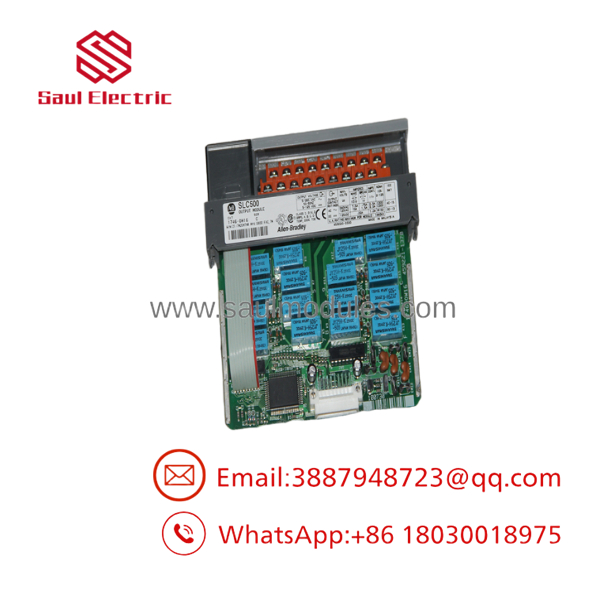
- 1746-OW16
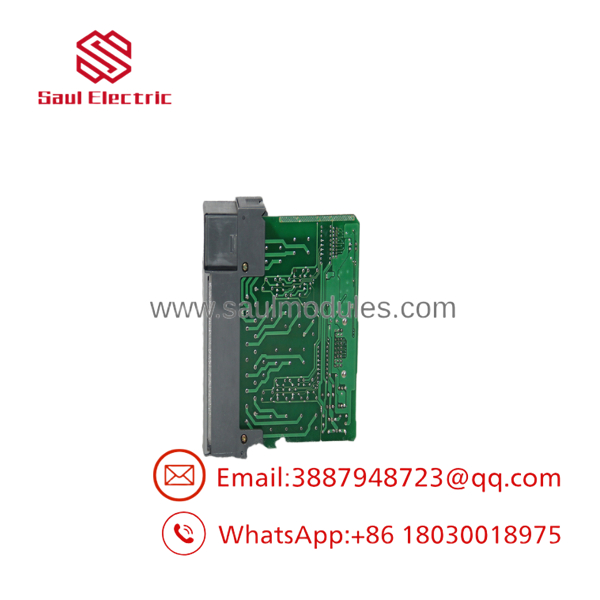
- 1746-OW16
Transparency SOP: QA & Testing
- Visual & Mechanical Inspection: Checking internal terminal block retention, inspect backplane gold edge connectors, and verifying relay housing condition.
- Coil Power Draw Test: Energizing all 16 internal relay coils simultaneously on a test backplane to measure total 24V DC backplane current consumption against 180 mA specification.
- Contact Resistance & Continuity Audit: Toggling every point via RSLogix 500 test routines while measuring contact resistance with a low-resistance ohmmeter to ensure zero contact pitting or high-resistance paths.
- High-Voltage Load Switching Test: Cycling all 16 contacts under active 120V AC 2A inductive loads inside a thermal burn-in enclosure for 12 hours.
The Veteran’s Tech Trap Guide
- ⚠️ Inductive Contact Arcing: Electromechanical relay contacts degrade rapidly when switching unsuppressed inductive loads (such as large AC contactor coils or DC solenoid valves). Always install RC snubbers across AC loads and flyback diodes across DC loads directly at the field device. Skipping suppression leads to contact pitting, contact welding, and premature module failure.
- PRO TIP: Group Current Limits: The 16 outputs are organized into two groups of 8 points (Group 0: points 0–7; Group 1: points 8–15), each sharing a common power terminal. Even though each contact handles 2.0A individually, the total current per group must not exceed 8.0A continuous. Balance heavy current loads across both groups to avoid burning out the common bus traces on the PCB.
- ⚠️ Mechanical Life vs. High Cycle Rates: Unlike solid-state transistor cards (like the 1746-OB16), relay contacts have a finite mechanical lifespan (typically 10 million operations mechanical, 100k operations at rated electrical load). Avoid using the 1746-OW16 for high-frequency PWM or fast pulse-counting applications—use transistor cards for rapid cycle rates.
Dynamic FAQ
Q: Can I mix AC and DC voltages on the same 1746- module?
A: Yes. The module features two electrically isolated groups of 8 channels. You can run 120V AC on the common for Group 0 (Terminals 0–7) and 24V DC on the common for Group 1 (Terminals 8–15).
Q: Does the 1746- require external 24V DC field power to operate?
A: No external field power is required to drive the internal relay coils; the module draws its relay coil excitation power directly from the 24V DC backplane rail provided by the SLC power supply.
Q: Is the terminal block removable?
A: Yes, the 1746- uses a standard Removable Terminal Block (1746-RTB), allowing rapid module swaps without disconnecting individual field wires.
Q: Are these replacement relay modules tested for contact degradation before dispatch?
A: Every unit undergoes rigorous contact resistance checks under active load switching on a live SLC 500 test rack to ensure zero pitted or sticky contacts.

 Start Chat


