





Description
Product Introduction & Engineering Value
The Allen-Bradley 1747-L543 represents the maximum memory capacity available in the SLC 5/04 controller lineup. Providing a massive 64K words of configurable user memory, it allows engineers to execute expansive program files, extensive recipe storage, and heavy data-logging routines without splitting logic across multiple processors or running into memory allocation limits.
Built on Rockwell’s reliable Data Highway Plus (DH+) network platform, the 1747-L543 handles high-speed communication up to 230.4 kbps across plant-wide systems. It is the premier choice for large-scale legacy manufacturing plants, extensive water treatment applications, and complex process skids integrated into PLC-5 or ControlLogix supervisory networks.
Technical Specifications
| Specification | Parameter Value |
| Processor Type | SLC 5/04 |
| User Memory | 64K Words (Configurable Program and Data Files) |
| Bit Execution Time | 0.9 µs minimum |
| Onboard Comm Ports | Port 1: Data Highway Plus (DH+ 3-pin phoenix); Port 2: RS-232 (DF1, ASCII, DH-485 protocol support) |
| DH+ Baud Rates | 57.6 kbps, 115.2 kbps, 230.4 kbps |
| Max Local I/O Capacity | 4,096 discrete points (up to 3 chassis / 30 slots max) |
| Backplane Current (5V DC) | 1.0 A (1000 mA) |
| Backplane Current (24V DC) | 200 mA |
| Program Backup Options | Lithium battery (1747-BA) required for volatile RAM retention |
| Flash Memory Support | 1747-M13 non-volatile flash memory module |
| Operating Temperature | 0°C to 60°C (32°F to 140°F) |
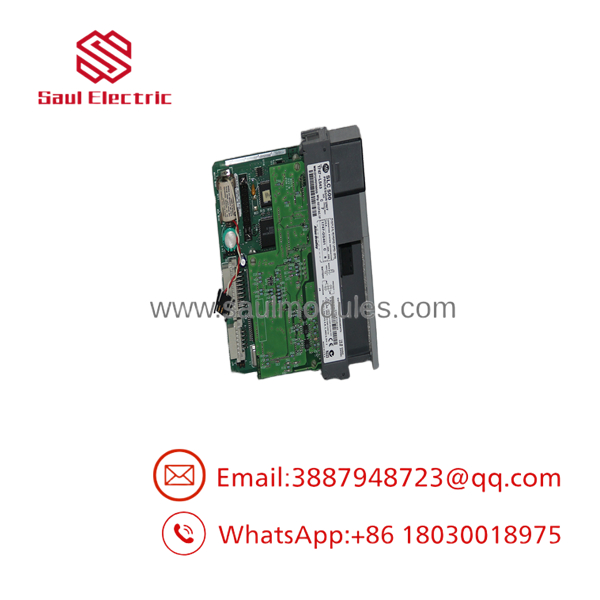
- 1747-L543
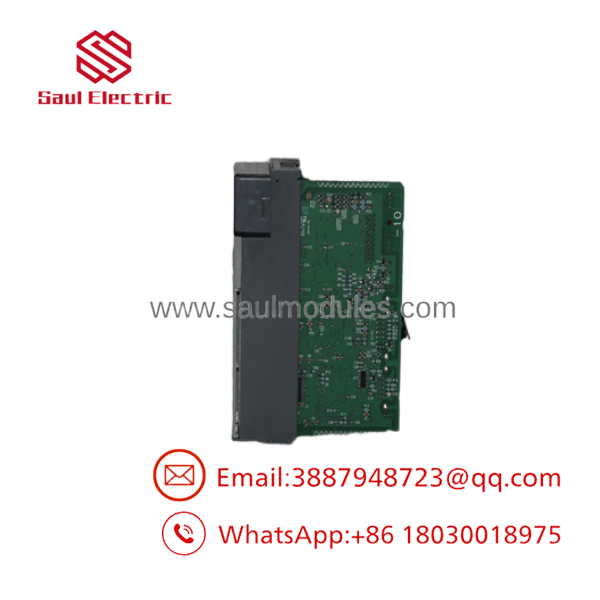
- 1747-L543
Field Application & The “Trench” Experience
A large batch chemical processing facility lost automated recipe management when an existing SLC 5/04 processor suffered a memory parity fault after years of continuous execution. The unit’s memory was heavily packed with complex floating-point scaling routines and over 40 distinct batch recipes. Swapping in a replacement 1747-L543 restored full production within 30 minutes. The technician loaded the 64K RSLogix 500 project file via the front RS-232 serial port, set the DH+ node address, reconnected the 3-pin DH+ network plug, and returned the keyswitch to RUN—instantly re-establishing communication with the SCADA host.
- High-Density Batch & Recipe Management: Storing complex batch profiles and execution formulas directly in the CPU’s expanded 64K memory space.
- Plant-Wide SCADA & Supervisory Networks: Exchanging real-time peer messaging over DH+ with PLC-5 processors or 1756-DHRIO ControlLogix gateways.
- Large-Scale Multi-Chassis Automation: Controlling large-footprint material handling systems spanning 3 chassis and hundreds of analog/digital I/O points.
Transparency SOP: QA & Testing
- Dual Port Physical & Pin Inspection: Auditing the 3-pin DH+ connector, RS-232 9-pin D-sub connector, keylock switch mechanism, and backplane gold edge contacts.
- Dual Port Live Communication Audit: Connecting the CPU to an active DH+ trunkline at 230.4 kbps while concurrently running RSLogix 500 programming sessions via the RS-232 serial port.
- 64K Memory Stress & Parity Testing: Filling the entire 64K memory array with stress-test program logic, cycling chassis power, and verifying volatile memory retention with a 1747-BA battery.
- Thermal Burn-In & Multi-Chassis Scan: Running the module in Slot 0 of a multi-chassis test rack inside a thermal chamber for 12 hours while monitoring active program execution and power rail stability.
The Veteran’s Tech Trap Guide
- ⚠️ DH+ Node Address Collision: Every node on a Data Highway Plus network must have a unique octal node address. Before putting a replacement 1747-L543 online, verify its assigned DH+ node address in the RSLogix 500 project file offline. Assigning a duplicate node address will immediately cause network packet collisions and disrupt communication across existing nodes.
- PRO TIP: Upgrading from 16K/32K Processors: If you are upgrading from a 1747-L541 (16K) or 1747-L542 (32K) to a 1747- (64K), the hardware drop-in is seamless. Simply change the processor type in RSLogix 500’s “Processor Status” menu to
1747-before downloading the program file. - ⚠️ High 5V DC Backplane Power Draw: The 1747- draws a full 1.0 Amp (1000 mA) from the 5V DC backplane rail. In large 10- or 13-slot racks filled with power-hungry analog or relay output cards, verify that your rack power supply (such as a 1746-P2 or 1746-P4) has enough remaining 5V headroom to prevent power supply trips.
Dynamic FAQ
Q: What is the difference between the 1747-L541, 1747-L542, and 1747-?
A: All three are SLC 5/04 processors equipped with DH+ and RS-232 ports, but they differ strictly in user memory capacity: the 1747-L541 offers 16K words, the 1747-L542 offers 32K words, and the offers the maximum 64K words.
Q: Can I program a 1747- using a standard USB-to-Serial adapter?
A: Yes. You can program through Channel 0 (RS-232 port) using a 1747-CP3 null-modem serial cable paired with a quality USB-to-RS232 adapter in RSLogix 500.
Q: Does the 1747- support non-volatile flash backup?
A: Yes. The 1747- supports the 1747-M13 flash memory module for non-volatile backup of user programs and data file configurations.
Q: Are replacement 1747- modules fully bench-tested before shipping?
A: Yes. Every unit undergoes live DH+ network testing, dual-port serial handshaking, full 64K RAM memory verification, and backplane load testing on an active SLC 500 chassis.

 Start Chat


