





Description
Product Introduction
The Allen-Bradley 1747-L551 is an SLC 5/05 processor from the SLC 500 family, providing 16K words of user memory with integrated Ethernet and RS-232 communication capability. It was widely installed in machine automation, process control, and OEM equipment where engineers needed SLC 500 reliability with Ethernet-based programming and data exchange.
In our field experience, the 1747-L551 remains one of the most requested SLC 500 replacement CPUs because it bridges older DH-485 systems and newer plant Ethernet networks. The limitation is age. This controller is discontinued, so firmware revision, Ethernet configuration, and spare availability must be checked before committing to a long-term repair strategy.
Key Technical Specifications
| Parameter | Value |
|---|---|
| Manufacturer | Allen-Bradley / Rockwell Automation |
| Catalog Number | 1747-L551 |
| Product Family | SLC 500 |
| Processor Type | SLC 5/05 Controller |
| User Memory | 16K words (16 KB class memory) |
| Communication Ports | Ethernet + RS-232 |
| Programming Software | RSLogix 500 |
| Ethernet Communication | Ethernet interface for programming and data communication |
| Maximum Digital I/O | 4,096 inputs + 4,096 outputs |
| Maximum Analog I/O | 480 points |
| Local Chassis Capacity | 3 chassis maximum |
| Local I/O Slots | 30 slots maximum |
| Typical Program Scan Time | Approximately 0.9 ms/Kword |
| Typical I/O Scan Time | Approximately 0.225 ms |
| Backup Memory | Flash EEPROM + battery-backed RAM |
| Operating Temperature | 0°C to +60°C |
| Mounting | 1746 SLC chassis rack mount |
| Lifecycle Status | Discontinued December 31, 2021 |
Application Scenarios & The “Trench” Experience
A common late-night call:
“The PLC is running, but nobody can connect.”
The processor LEDs look normal. The machine is still producing. The maintenance team assumes the Ethernet card failed.
The actual problem is usually simpler.
The replacement laptop has the wrong Ethernet driver settings, the processor IP address was never documented, or the old RSLogix 500 project did not include the communication configuration.
Typical applications include:
- Automotive Manufacturing – Assembly stations and tooling machines requiring Ethernet programming access and SLC 500 compatibility.
- Packaging Systems – Case packers, fillers, and conveyor controls using distributed I/O and operator interfaces.
- Water Treatment – Pump stations and process skids where remote monitoring over Ethernet reduces troubleshooting time.
- Material Handling – Conveyor networks requiring dependable PLC sequencing and HMI communication.
- OEM Machinery – Legacy equipment where replacing the entire PLC platform would require unnecessary downtime.
Field Case
A manufacturing plant had a failed SLC 5/05 processor controlling a packaging line. The spare 1747-L551 was installed, and the hardware powered up correctly.
The delay came afterward.
The original engineering laptop was gone, and the Ethernet configuration records were outdated. The maintenance team spent hours tracing network settings before reconnecting RSLogix 500 and downloading the application.
The replacement CPU solved the hardware issue quickly. Documentation quality determined the recovery time.
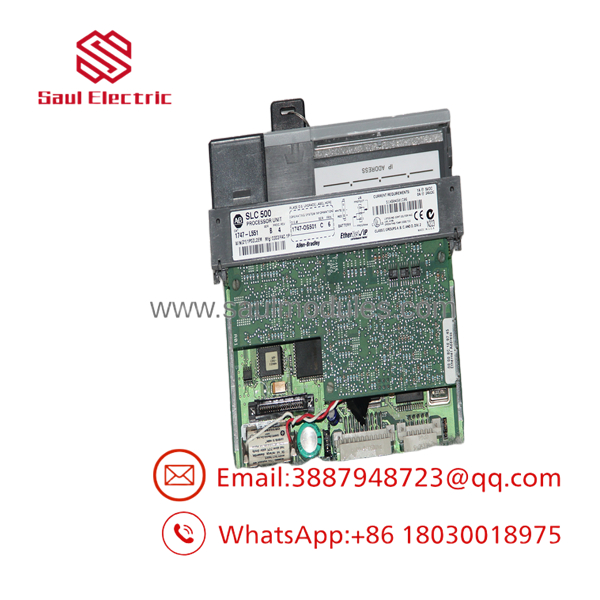
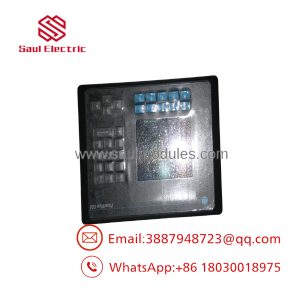
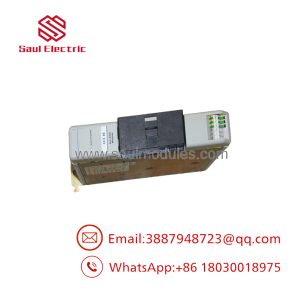
- 1747-L551
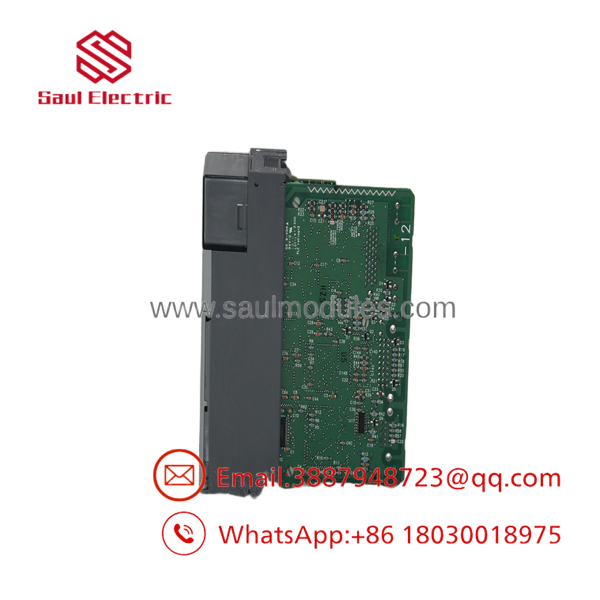
- 1747-L551
Transparency SOP: Quality Assurance & Testing
We don’t just ship boxes; we test them on actual Allen-Bradley SLC 500 racks.
- Inbound Inspection
- Verify Allen-Bradley label, catalog number, series, and hardware revision.
- Inspect Ethernet port, RS-232 connector, key switch, and backplane pins.
- Check for corrosion, repaired boards, or counterfeit markings.
- Live Rack Testing
- Install processor in an operating SLC 500 chassis.
- Verify CPU startup sequence and status indicators.
- Download and execute a test RSLogix 500 program.
- Confirm Ethernet and RS-232 communication.
- Electrical Parameter Checks
- Measure backplane current consumption.
- Verify stable processor operation during continuous scans.
- Test communication response and diagnostics.
- Firmware Verification
- Record firmware revision.
- Confirm compatibility with existing RSLogix 500 projects.
- Verify Ethernet configuration behavior.
- Final QC & Anti-static Packaging
- Complete functional inspection.
- Protect connectors against ESD damage.
- Package with anti-static materials.
The Veteran’s Tech Trap Guide
⚠️ Record the Ethernet settings before removing the old CPU. The 1747- stores communication configuration, but a replacement processor may require IP configuration before network access is restored.
❗ Do not assume every SLC 5/05 is identical. Series and firmware revisions can affect Ethernet behavior, available features, and communication compatibility. Verify the replacement revision before installation.
⚠️ Keep the EEPROM backup strategy documented. A failed battery without a valid program backup can turn a simple processor replacement into a complete software recovery project.
⚠️ Check power supply loading before blaming the CPU. SLC 500 processor faults are sometimes caused by weak rack power supplies or excessive module current draw.
Take photos of the old processor setup before removal. IP addresses, switch settings, and wiring details save hours later.
Frequently Asked Questions (FAQ)
Q1. What is the 1747-?
The is an Allen-Bradley SLC 5/05 controller with 16K words of user memory and integrated Ethernet and RS-232 communication.
Q2. Does the 1747- support Ethernet communication?
Yes. The SLC 5/05 family introduced Ethernet connectivity for programming, monitoring, and data communication. The processor also includes an RS-232 port.
Q3. Can I replace a 1747-L541 with a 1747-?
Usually, the memory and programming environment are similar, but the communication architecture is different. The adds Ethernet capability compared with the SLC 5/04 family. Verify network requirements and project configuration before replacement.
Q4. Is the 1747- still manufactured?
No. Rockwell Automation discontinued the 1747- on December 31, 2021. Available units are generally sourced through surplus inventory, repair channels, or refurbished automation suppliers.
Q5. Can the 1747- be hot-swapped?
No. Remove power before removing or installing the processor. Pulling the CPU from an energized SLC chassis can damage the backplane and interrupt machine operation.
Q6. Why is a surplus 1747- cheaper than buying directly from OEM?
Because the OEM channel no longer supplies new production units. Surplus suppliers obtain unused inventory from plant closures, excess stock, and equipment decommissioning. The important factor is whether the module has been tested, not simply whether it is labeled “new.”
Q7. Are refurbished 1747- processors reliable?
They can be reliable when tested correctly. A proper refurbishment process should include processor diagnostics, Ethernet communication testing, memory verification, firmware recording, and operation in a live SLC 500 rack.
Q8. What warranty is typically provided?
Qualified industrial automation suppliers commonly provide a 12-month warranty on tested new surplus and refurbished 1747- processors. Warranty coverage should always be confirmed before purchase.

 Start Chat


