





Description
Product Introduction & Engineering Value
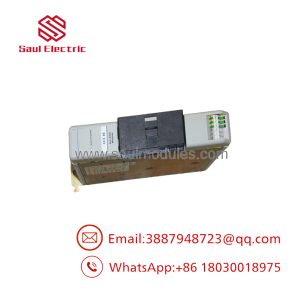
The Allen-Bradley 1756-CNBR is the classic redundant ControlNet bridge module for ControlLogix architectures. Featuring dual RG-6 coaxial BNC connectors (Channel A and Channel B), it provides hardware-level network media redundancy by automatically routing traffic across the secondary coaxial line if a cable fault, tap disconnection, or signal loss occurs on the primary leg.
Designed for standard-capacity applications supporting up to 64 CIP connections, the 1756-CNBR bridges the ControlLogix backplane to field-level ControlNet networks. It delivers time-deterministic I/O control and peer-to-peer processor interlocking in legacy process automation systems, water/wastewater skids, and material handling systems where seamless media failover is essential.
Technical Specifications
| Specification | Parameter Value |
| Protocol / Network | ControlNet (CIP over coaxial cable) |
| Media Redundancy | Dual RG-6 Coax BNC Ports (Channel A and Channel B) |
| Network Access Port (NAP) | 1 RJ-45 front programming port |
| Communication Rate | 5.0 Mbps (Deterministic) |
| CIP Connections | Up to 64 CIP Connections |
| Network Node Capacity | Up to 99 ControlNet nodes per trunkline |
| Backplane Current (5.1V DC) | 1.0 A (1000 mA) |
| Backplane Current (24V DC) | 3.0 mA |
| Power Dissipation | 5.1 Watts |
| Diagnostic Display | 4-character alphanumeric LED display & Status LEDs |
| Operating Temperature | 0°C to 60°C (32°F to 140°F) |
Field Application & The “Trench” Experience
In a municipal wastewater treatment plant, a main aeration blower control skid lost communication on Channel A when corrosion degraded a BNC tap connector in a high-humidity gallery. The 1756-CNBR instantly switched transmission to Channel B, preventing a process shutdown.
During the next maintenance window, technicians replaced the module with a bench-tested unit. By setting the top-mounted rotary switches to match the node address, seating the card into the ControlLogix chassis, and reconnecting both BNC cables, the new bridge automatically synchronized with the active network Keeper and resumed dual-redundant operation in minutes.
- Legacy Process Control Systems: Bridging primary ControlLogix CPUs to remote 1794 Flex I/O and 1771 I/O chassis over redundant coaxial media.
- Redundant Coaxial Trunklines: Ensuring non-stop transmission in harsh industrial environments prone to physical cable damage or environmental degradation.
- Deterministic Controller Messaging: Transferring time-critical interlock signals between distributed ControlLogix racks without packet collision risks.
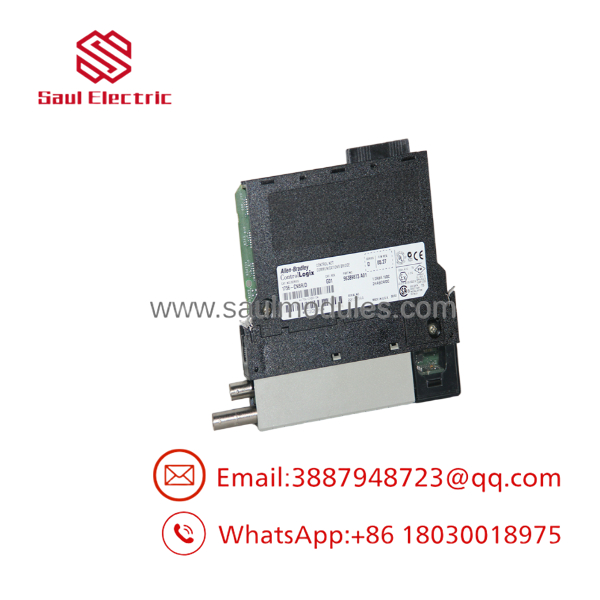
- 1756-CNBR
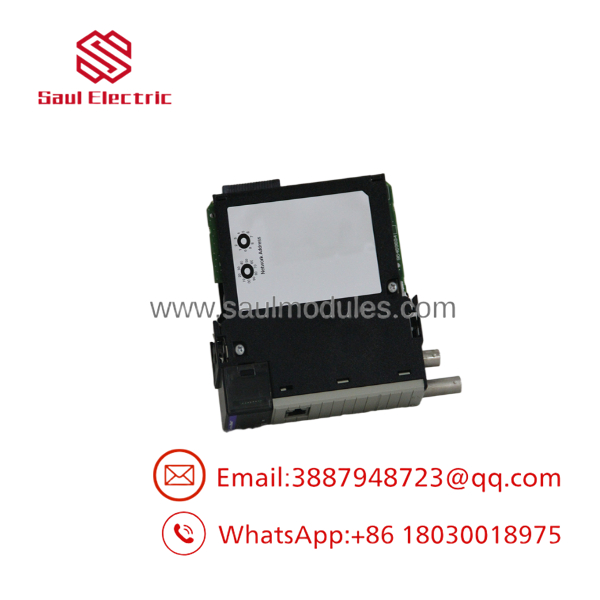
- 1756-CNBR
Transparency SOP: QA & Testing
- Dual BNC & NAP Mechanical Inspection: Inspecting both Channel A and Channel B coaxial connectors, front RJ-45 NAP port, node address rotary switches, and backplane gold edge connectors.
- Dual-Channel Cable Failover Verification: Connecting the module to a live dual-media ControlNet network test loop; disconnecting Channel A during active I/O traffic to confirm automatic, error-free switchover to Channel B.
- 64-Connection Limit & Keeper Schedule Test: Exercising the module up to its 64 CIP connection ceiling using RSNetWorx for ControlNet to verify memory integrity and schedule transfer.
- Thermal Chamber Burn-In: Subjecting the module to continuous high-load network traffic in a 60°C environmental test cell for 12 hours while monitoring backplane current draw and transceiver stability.
The Veteran’s Tech Trap Guide
- ⚠️ Difference Between 1756-CNBR and 1756-CN2R: The 1756-CNBR supports up to 64 CIP connections, while the newer 1756-CN2R supports 128 CIP connections. While a 1756-CN2R can replace a 1756-CNBR in almost any system, replacing a 1756-CN2R with a 1756-CNBR can cause connection allocation faults if your network schedule requires more than 64 CIP connections.
- PRO TIP: Rotary Node Switch Alignment: Ensure the two top-mounted decimal rotary switches are set to the exact node address of the card being replaced before sliding the module into the backplane. Incorrect node addressing will result in duplicate node faults or loss of network communication.
- ⚠️ Coaxial Tap & Termination Resistor Requirements: ControlNet coaxial networks require proper 75 Ω BNC terminating resistors at both physical ends of the trunkline. Damaged taps or missing terminators cause standing wave reflections that manifest as intermittent
ERRdisplay codes or channel offline alarms on the 1756-CNBR.
Dynamic FAQ
Q: Can the 1756-CNBR operate with only one coaxial cable connected?
A: Yes. Connecting a single coax cable to Channel A allows full normal operation. The module will display a minor status warning indicating that Channel B is offline.
Q: How do I connect my programming PC to a 1756-CNBR locally?
A: You can connect a PC running RSLogix 5000 / Studio 5000 using a 1784-PCC or 1784-U2CN cable plugged into the RJ-45 Network Access Port (NAP) on the front of the module.
Q: Do I need to reload the network schedule when replacing a 1756-CNBR?
A: If the replacement card is assigned the exact same node address as the original, it will automatically receive the network schedule from the active ControlNet Keeper on the network upon power-up.
Q: Are replacement 1756-CNBR modules fully tested before dispatch?
A: Yes. Every 1756-CNBR module undergoes live dual-channel failover testing, active RSNetWorx schedule sync checks, 64-connection load testing, and thermal burn-in on a live ControlLogix chassis.

 Start Chat


