





Description
Product Introduction & Engineering Value
The Allen-Bradley 1756-IM16I is designed for heavy-duty industrial and power distribution environments where 200/240V AC field signals must be brought directly into a ControlLogix rack. The “I” designation indicates true channel-to-channel isolation, giving all 16 input points an independent common circuit reference.
Featuring 250V continuous channel-to-channel optical and galvanic isolation, the 1756-IM16I allows engineers to safely monitor discrete inputs originating from multiple independent 220V AC power feeds or phase sources without phase-to-phase short circuit risks. This complete isolation protects sensitive ControlLogix backplane logic from ground loops, high voltage spikes, and phase mismatches common in large-scale utility and manufacturing operations.
Technical Specifications
| Specification | Parameter Value |
| Module Type | Isolated High-Voltage Digital Input Module |
| Number of Inputs | 16 Individually Isolated Channels |
| Voltage Category | 200/240V AC (50/60 Hz) |
| Operating Voltage Range | 159 to 265V AC, 47 to 63 Hz |
| Input On-State Voltage | 159 to 265V AC |
| Input Off-State Voltage | 0 to 40V AC |
| Input Current (Nominal) | 10 mA @ 240V AC (60 Hz) |
| Channel Isolation | 250V continuous (channel-to-channel & channel-to-backplane) |
| Hardware Delay Times | Off-to-On: 12 ms max / On-to-Off: 28 ms max (+ filter delay) |
| Backplane Current (5.1V DC) | 100 mA |
| Backplane Current (24V DC) | 3.0 mA |
| Power Dissipation | 5.8 Watts |
| Removable Terminal Block (RTB) | 1756-TBCH or 1756-TBS6H (36-pin) |
| Operating Temperature | 0°C to 60°C (32°F to 140°F) |
Field Application & The “Trench” Experience
In a power plant substation monitoring system, auxiliary status switches from multiple 230V AC circuit breakers needed to be interfaced into a central ControlLogix PLC. Because the circuit breakers were powered from different station service transformers, using a grouped non-isolated input card would have required extensive intermediate interposition relays to isolate the conflicting AC power sources.
Installing a 1756-IM16I enabled direct wiring of all 230V AC status contacts directly to the module’s 36-pin terminal block. The individual channel-to-channel isolation allowed completely different AC sources and phase legs to be connected safely across adjacent terminals, saving hours of panel assembly labor and eliminating 16 external isolation relays.
- Substation & Power Distribution: Directly monitoring auxiliary status contacts from 220V/240V AC switchgear, breakers, and transfer switches.
- Heavy Industrial Motor Control (MCC): Reading 220V AC seal-in and fault contacts from high-power motor starters powered by separate control transformers.
- Facility Infrastructure: Gathering status inputs from HVAC chillers, backup generators, and UPS systems operating on 200–240V AC control voltage loops.
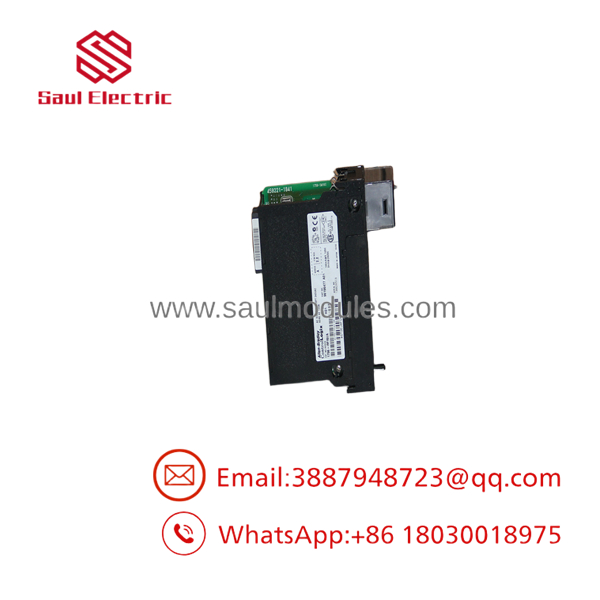
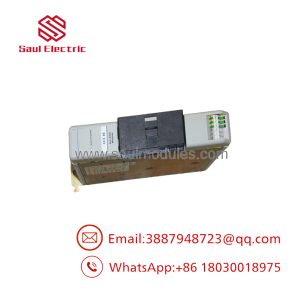
- 1756-IM16I
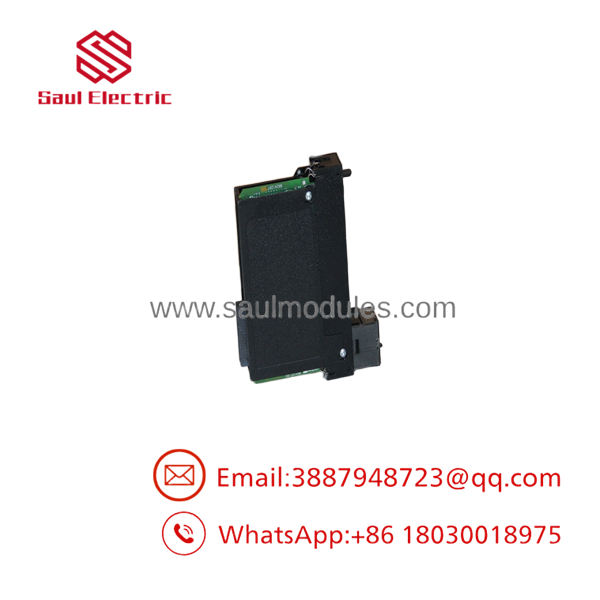
- 1756-IM16I
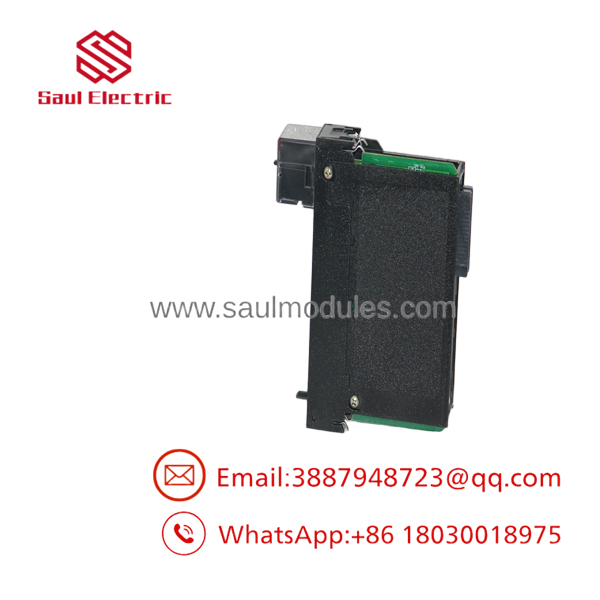
- 1756-IM16I
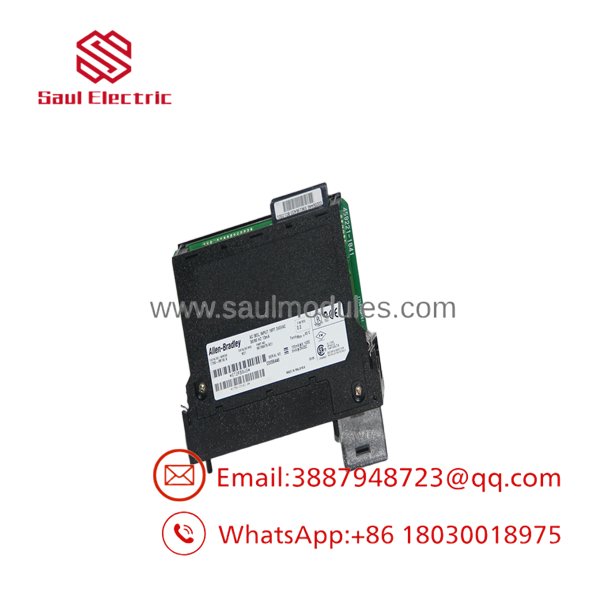
- 1756-
Transparency SOP: QA & Testing
- Terminal Block & Physical Isolation Inspection: Examining 36-pin RTB connection guides, LED status indicators (OK & 16 Channel LEDs), module chassis housing, and backplane gold edge contacts.
- 16-Channel High-Voltage Switching Audit: Applying 230V AC field voltage across all 16 channels to verify On-State (≥159V AC) and Off-State (≤40V AC) threshold boundaries and confirm zero false triggering.
- Channel-to-Channel Isolation Stress Test: Subjecting adjacent isolated terminals to high voltage potential differences to confirm 250V galvanic optical isolation integrity and verify no signal cross-talk between channels.
- Thermal Chamber Burn-In: Running full 16-channel active 240V AC energization inside a 60°C test chamber for 12 hours to verify thermal performance, current draw, and stable backplane bus communications.
The Veteran’s Tech Trap Guide
- ⚠️ 120V AC vs. 240V AC Module Mix-Up (1756-IA16I vs. 1756-): The 1756-IA16I is a 120V AC isolated input module (79–132V AC range), whereas the requires 159 to 265V AC to turn ON. Applying 120V AC to a 1756- will fail to reach the 159V AC minimum threshold, causing input points to remain permanently in an OFF state.
- PRO TIP: Leakage Current & Off-State Bleed Resistors: When driving 1756- inputs with solid-state AC output devices or proximity sensors, ensure the sensor’s off-state leakage current is below 2.5 mA. High leakage currents can cause the input point to stay energized (“ghost ON”). Install a parallel load resistor if necessary to bleed off leakage current.
- ⚠️ Wiring 36-Pin RTB for Isolated Channels: Because every channel on the 1756- is completely isolated, each input channel has its own dedicated
INandRETURNterminal pair. Unlike standard non-isolated cards (e.g., 1756-IA16), there are no internal common buses shared across points on the terminal block—every channel requires its own 2-wire connection.
Dynamic FAQ
Q: Can I connect different AC power phases to different channels on the same 1756-?
A: Yes. Because each of the 16 channels is individually isolated up to 250V continuous, you can safely connect different AC phases or completely independent 200–240V AC power sources across separate channels.
Q: Which removable terminal block (RTB) is required for the 1756-?
A: The module requires a 36-pin terminal block—either the 1756-TBCH (cage-clamp) or 1756-TBS6H (spring-clamp). Standard 20-pin RTBs are not compatible.
Q: Can I use the 1756- for DC voltage inputs?
A: No. The 1756- is strictly designed for 200/240V AC signals (47–63 Hz). For isolated DC inputs, use a DC isolated module like the 1756-IB16I (24V DC) or 1756-IH16I (125V DC).
Q: Are replacement 1756- modules fully bench-tested before shipping?
A: Yes. Every 1756- card undergoes 16-channel high-voltage AC threshold verification, channel-to-channel isolation stress testing, backplane logic checks, and 12-hour thermal chamber burn-in.

 Start Chat


