





Description
Product Introduction & Engineering Value
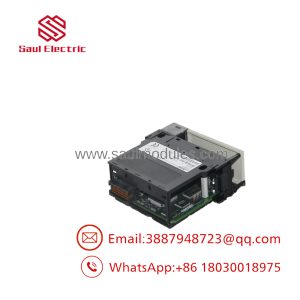
The Allen-Bradley 1756-L55M24 represents the high-capacity standard of the ControlLogix 5555 controller family. It pairs the 1756-L55 processor chassis with a factory-installed 1756-M24 memory daughterboard, providing 3.5 MB of user logic/data RAM paired with 4 MB of integrated non-volatile flash memory.
Designed for heavy industrial processing plants, high-speed motion routines, and large-scale SCADA environments, the 1756-L55M24 solved a critical limitation of earlier L1/L55 processors by offering onboard non-volatile flash backup. On power cycles, the module can load user project files directly from the internal flash memory back into active RAM—eliminating total code loss during extended plant outages or battery discharge events.
Technical Specifications
| Specification | Parameter Value |
| Module Type | ControlLogix 5555 CPU Processor |
| Total Memory Capacity | 7.5 MB (via installed 1756-M24 daughterboard) |
| Active Logic & Data Memory | 3.5 MB |
| Non-Volatile Flash Memory | 4.0 MB |
| Communication Port | RS-232 Serial (DF1 / DH-485 / ASCII via 1756-CP3) |
| Non-Volatile Memory Backup | Image load from flash on power-up (User configurable) |
| Backup Battery Options | 1756-BA1 or 1756-BATM battery module |
| Backplane Current (5.1V DC) | 1250 mA (1.25 A) |
| Backplane Current (24V DC) | 14 mA |
| Power Dissipation (Max) | 5.7 Watts |
| Programming Software | RSLogix 5000 (Versions 8 through 16) |
| Operating Temperature | 0°C to 60°C (32°F to 140°F) |
Field Application & The “Trench” Experience
In a large water treatment utility, a main filtration skid was controlled by a 1756-L55M24 running RSLogix 5000 v15. During a seasonal maintenance shutdown, the backplane battery drained completely. When power was restored 3 weeks later, the processor initialized without dropping its application file—because the 1756-M24 card’s 4MB flash storage auto-restored the project back into RAM upon boot.
Maintaining identical hardware during emergency replacements is critical for utilities locked into validated software environments. Swapping in a replacement 1756-L55M24 enabled the municipal plant to restore complete operation without undergoing a costly system migration to ControlLogix L7x/L8x hardware or modifying verified PLC tag structures.
- High-Tag-Count Process Facilities: Running complex batch routines, PID loops, and dense network communication maps.
- Large Manufacturing Lines: Managing multi-chassis ControlNet and EtherNet/IP topologies with large I/O configurations.
- Critical Utilities & Off-Grid Skids: Operating in remote locations where flash memory boot recovery protects against long-term power loss.
Transparency SOP: QA & Testing
- Daughterboard & Card Seating Inspection: Verifying the internal 1756-M24 flash memory card connection pins, battery terminal clips, faceplate keyswitch, and backplane contact gold plating.
- Serial Connection & Flash Image Burn Test: Connecting via RSLogix 5000 over a 1756-CP3 cable, flashing firmware up to v16, and testing non-volatile memory image saves/restores.
- Power-Cycle Recovery Audit: Disconnecting main chassis power for 4 hours with no battery installed to verify that project data auto-loads correctly from 1756-M24 flash on boot.
- Thermal Chamber Burn-In: Executing high-duty-cycle ladder logic on a fully loaded test chassis inside a 60°C environmental chamber for 12 hours while monitoring thermal output and backplane current stability.
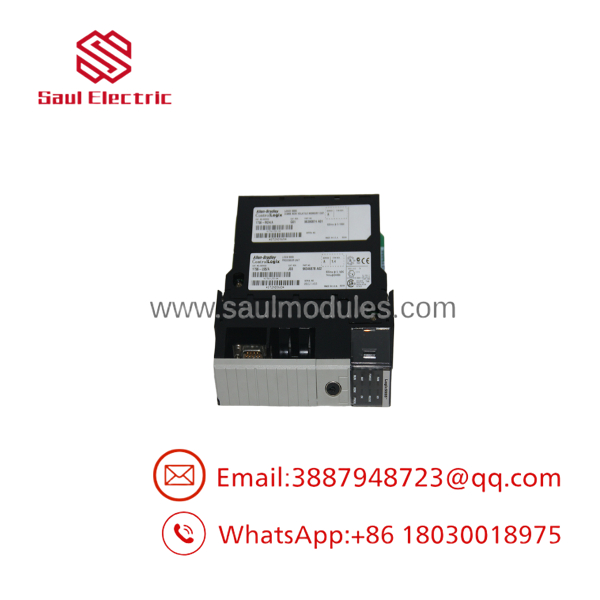
- 1756-L55M24
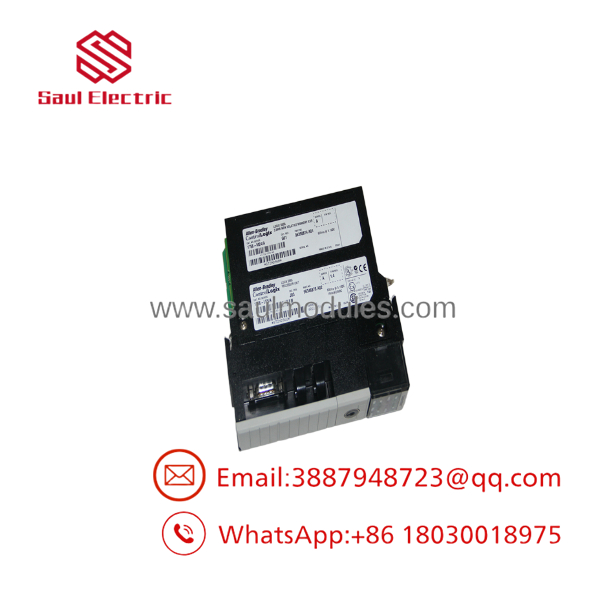
- 1756-L55M24
The Veteran’s Tech Trap Guide
- ⚠️ Firmware Version Ceiling (Max v16): The 1756-L55 family cannot be upgraded beyond RSLogix 5000 Version 16. If your project requires RSLogix 5000 v17–v20 or Studio 5000 v21+, you must upgrade to a ControlLogix L6x (e.g., 1756-L63) or L7x/L8x series processor.
- PRO TIP: Configurable Flash Load Settings: The 1756-M24 daughterboard flash memory doesn’t just store code—in RSLogix 5000, set the module property to “Load Image on Corrupt Memory” or “Load Always on Power Up” to guarantee instant recovery from unexpected battery failures.
- ⚠️ Higher 5.1V Backplane Power Draw: The 1756- draws 1.25 Amps (1250 mA) @ 5.1V DC from the backplane—nearly double the current of older 1756-L1 processors. Ensure your chassis power supply (e.g., 1756-PA72 / 1756-PB72) has adequate 5V current headroom if adding multiple communication cards to the rack.
Dynamic FAQ
Q: What is the main difference between a 1756-L1M1 and a 1756-?
A: The 1756-L1M1 is a Logix5550 CPU with 512 KB SRAM and no non-volatile memory (max v13). The 1756- is a Logix5555 CPU offering 3.5 MB active RAM plus 4 MB non-volatile flash memory (max v16).
Q: Which programming software version is required for the 1756-?
A: It is programmed using RSLogix 5000 (supported from Version 8 through Version 16).
Q: What backup battery does the 1756- require?
A: It uses a standard 1756-BA1 lithium battery, or the high-capacity 1756-BATM off-board battery module for extended hold-up time.
Q: Are replacement 1756- processors fully bench-tested before delivery?
A: Yes. Every 1756- CPU undergoes flash memory read/write cycles, RSLogix 5000 serial handshake verification, backplane current load testing, and 12-hour 60°C thermal burn-in.

 Start Chat


