





Description
Product Introduction & Engineering Value
The Allen-Bradley 1756-L64 sits at the top tier of the ControlLogix 5560 series, quadrupling the memory footprint of the 1756-L62 (16 MB vs. 4 MB). It was engineered specifically to address massive automation applications—such as plant-wide SCADA integration, complex batch processing (ISA-88), and heavy multi-chassis motion coordination—where standard 2MB or 4MB controllers run out of tag memory.
Designed to operate within the RSLogix 5000 environment (firmware v16 through v20), the 1756-L64 delivers exceptional processing throughput while providing non-volatile data protection via removable 1784-CF128 CompactFlash cards. This allows complete system restoration—including compiled code, firmware, tag commentary, and network routing tables—without requiring a local PC.
Technical Specifications
| Specification | Parameter Value |
| Module Type | ControlLogix 5564 CPU Processor |
| User Logic & Data Memory | 16.0 MB |
| I/O Memory | 474 KB |
| Non-Volatile Memory | Optional CompactFlash (1784-CF128 – up to 128 MB) |
| Communication Port | RS-232 Serial (DF1 / DH-485 / ASCII via 1756-CP3) |
| Backup Battery Type | 1756-BA2 (Lithium Battery Assembly) |
| Backplane Current (5.1V DC) | 1200 mA (1.20 A) |
| Backplane Current (24V DC) | 14 mA |
| Power Dissipation (Max) | 3.5 Watts |
| Programming Software | RSLogix 5000 (Versions 16 through 20) |
| Operating Temperature | 0°C to 60°C (32°F to 140°F) |
Field Application & The “Trench” Experience
In a large automotive body-in-white welding plant, multiple robotic cells, safety gates, and fieldbus networks converged on a single master PLC chassis. When memory utilization on the line’s existing 1756-L63 (8 MB) exceeded 90%, online logic edits were blocked, preventing engineers from adding required safety interlocking routines.
Upgrading the processor to a 1756-L64 immediately expanded active RAM to 16 MB. The conversion was seamless—by flashing the 1756-L64 to match the existing v19 firmware and downloading the project file, the plant reclaimed over 50% memory headroom. Online editing capabilities were restored with zero changes required to physical I/O wiring, network bridging modules, or field devices.
- Automotive & Material Handling: Orchestrating complex robot cell handshakes, conveyor routing, and high-density EtherNet/IP networks.
- Large-Scale Batching & Chemical Process: Managing extensive recipe management files, detailed alarm logs, and dense PID control loops.
- Refinery & Utility SCADA Hubs: Serving as a central data aggregation node across multiple remote sub-chassis and supervisory HMI systems.
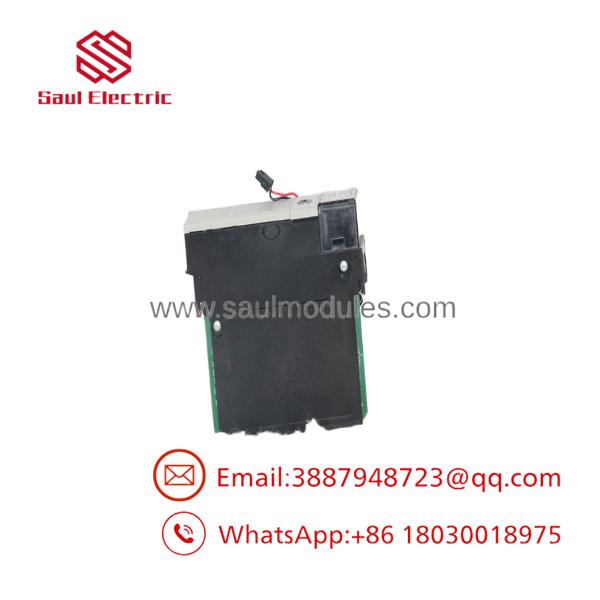
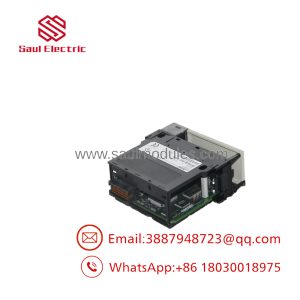
- 1756-L64
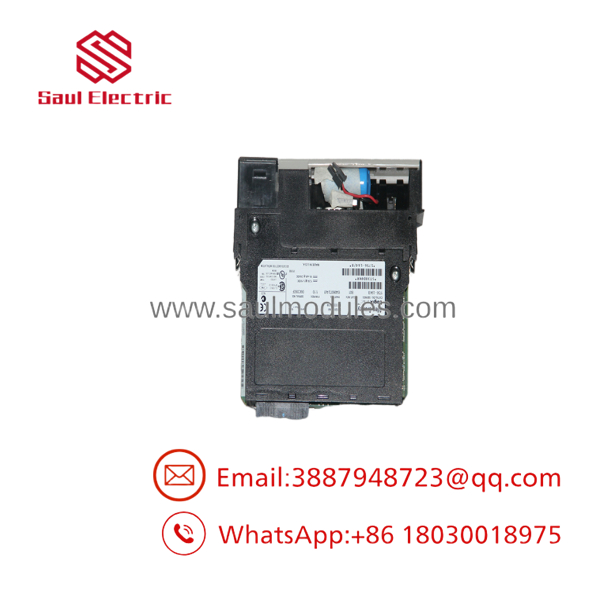
- 1756-L64
Transparency SOP: QA & Testing
- Physical & Memory Socket Inspection: Checking key switch operation, front CompactFlash access door, socket pin integrity, faceplate LEDs, and gold backplane connector contacts.
- Serial Handshake & Firmware Verification: Flashing firmware (v16 through v20) and establishing serial communications via a 1756-CP3 cable to verify memory allocation and execution stability.
- Non-Volatile Backup & Battery Recovery Audit: Writing project images to a 1784-CF128 CompactFlash card, removing power and the 1756-BA2 battery, and verifying automatic image loading upon reboot.
- Thermal Chamber Burn-In: Running heavy ladder, function block, and sequential function chart routines inside a 60°C test chamber for 12 hours on a live ControlLogix backplane.
The Veteran’s Tech Trap Guide
- ⚠️ Firmware Version Support Starts at v16: Unlike lower-capacity L6x cards (like the L61/L62) that support RSLogix 5000 v12+, the 1756-L64 requires RSLogix 5000 Version 16 or higher (up to v20). It cannot be flashed to firmware versions 12, 13, or 15.
- PRO TIP: Reserve Non-Volatile Space for Firmware: When storing a 16 MB project file onto a 1784-CF128 CompactFlash card, ensure the card has sufficient space if you select the option to “Include Firmware Image”. Saving both the 16MB project file and the processor firmware image ensures a blank replacement CPU can auto-boot without needing a firmware update tool (ControlFlash).
- ⚠️ Check 1756-BA2 Battery Status: Because the 1756-L64 manages a large 16 MB SRAM memory block, battery health is vital. If the red
BATLED turns ON, replace the 1756-BA2 lithium battery immediately while cabinet power is ON to prevent total project memory corruption during a power cycle.
Dynamic FAQ
Q: What is the main difference between the 1756-L63 and the 1756-L64?
A: The 1756-L63 provides 8 MB of user memory, whereas the 1756-L64 provides 16 MB of user memory, doubling the capacity for large-scale applications and large tag databases.
Q: Which software version is required to program the 1756-L64?
A: The 1756-L64 is programmed using RSLogix 5000 (supported from Version 16 through Version 20).
Q: Can I replace a 1756-L64 with a newer 1756-L74 controller?
A: Yes, but it requires upgrading your software project to Studio 5000 (v21+) and converting the firmware, as L7x controllers do not support RSLogix 5000 v20 or below.
Q: Are replacement 1756-L64 modules fully bench-tested before delivery?
A: Yes. Every 1756-L64 processor undergoes 16MB memory block verification, CompactFlash read/write testing, RS-232 serial communication checks, and 12-hour 60°C thermal burn-in.

 Start Chat


