





Description
Product Introduction
The Allen-Bradley 1756-OW16I is a high-density, 16-channel isolated relay output module built for ControlLogix chassis. It provides individual, channel-to-channel galvanic isolation across 16 Normally Open (N.O.) dry contact mechanical relays. This design allows engineers to switch completely different voltage levels—ranging from 24V DC logic loops to 240V AC motor contactor circuits—on a single module footprint without adding interposing isolation relays.
Unlike non-isolated output modules or standard solid-state cards like the 1756-OB16E, the 1756-OW16I provides true physical contact separation. This prevents backplane noise coupling, handles high-voltage field spikes, and allows flexible wiring across varied field power supplies across remote skids.
Key Technical Specifications
| Parameter | Value / Specification |
| Outputs | 16 Individually Isolated Normally Open (Form A) Contacts |
| Operating Voltage Range | 5 to 265V AC | 5 to 125V DC |
| Output Current Rating (per Point) | 2.0 A @ 240V AC / 24V DC (Resistive) |
| Output Current Rating (per Module) | 20.0 A max total load across all channels |
| Minimum Contact Load | 10 mA @ 5V DC |
| Channel-to-Channel Isolation | 250V Continuous (Galvanic Contact Isolation) |
| Switching Rate | 1 Hz max under full load (mechanical life limits) |
| Backplane Current (5.1V DC) | 100 mA |
| Backplane Current (24V DC) | 2.5 mA |
| Power Dissipation | 4.5 W max @ 60°C |
| Thermal Dissipation | 15.3 BTU/hr |
| Removable Terminal Block | 1756-TBCH (36-Pin Screw) or 1756-TBS6H (36-Pin Spring Clamp) |
Application Scenarios & The “Trench” Experience
A field technician tries to control three separate equipment skids—one running 120V AC valve actuators, one operating 24V DC indicator stacks, and one feeding a 48V DC trip circuit—out of a single remote I/O panel. Landing these mixed voltages on a standard non-isolated card short-circuits the power supplies. The technician faces a choice: install dozens of bulky DIN-rail interposing relays or drop in a 1756-OW16I. By utilizing the module’s 250V individual channel isolation, all three systems wire directly into a single slot, saving panel space and hours of cabinet wiring.
Target Application Scenarios
- Interfacing Mixed-Voltage Systems: Switches different field power sources (e.g., 24V DC, 120V AC, and 240V AC) within the same physical module.
- Safety & Interlock Circuit Integration: Provides true dry-contact physical isolation for hardwired master control relays and ESD trip loops.
- Utility & Water Substation Control: Operates high-voltage breaker trip coils and remote telemetry equipment requiring isolated dry contacts.
- Legacy OEM Machinery Retrofits: Replaces old mechanical relay banks when upgrading legacy systems to ControlLogix PAC architecture.
Field Case Study
A power generation skid lost several output points on a solid-state card during a field transformer short. High-voltage back-feed passed through the common bus, burning out adjacent I/O modules across the rack. To prevent future back-feed damage, the plant swapped the damaged card for a bench-tested 1756-OW16I. The module’s mechanical contacts provided complete physical isolation, preventing field power surges from entering the ControlLogix backplane during subsequent electrical faults.
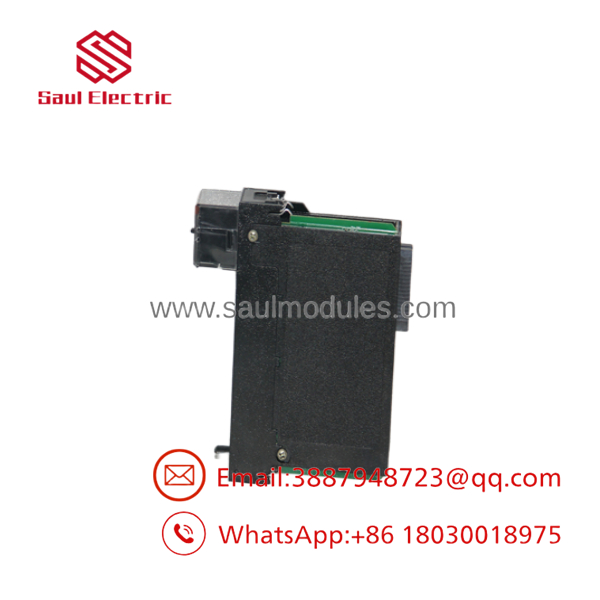
- 1756-OW16I
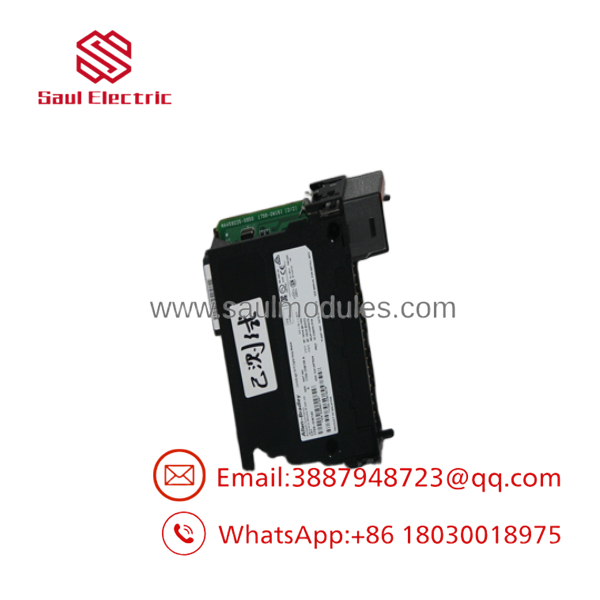
- 1756-OW16I
Transparency SOP: Quality Assurance & Testing
We don’t just ship boxes; we test them on actual Allen-Bradley racks. Every 1756- module passing through our workshop undergoes a strict 5-step verification process:
- Inbound Mechanical Inspection: Examining the high-density backplane connector pins, side latches, and checking for mechanical relay contact wear or loose housing seals.
- Live Rig Chassis Test: Installing the card into an active 1756 chassis running under power to verify backplane boot initialization and diagnostic LED patterns.
- Contact Resistance Audit: Exercising all 16 Form A relays under active electrical load to measure contact resistance (verifying low milliohm readings across open/closed states).
- Channel Isolation Testing: Applying test voltage between adjacent channel terminals to confirm 250V galvanic isolation with zero leakage current between channels.
- ESD Static Neutralization & Final Packaging: Discharging static risks at an ESD-certified workstation before vacuum-sealing the card in static shielding bags with fresh desiccant.
The Veteran’s Tech Trap Guide (Crucial Value-Add)
⚠️ Mechanical Contact Life vs. Inductive Loads: Remember that the 1756- uses physical mechanical relays, NOT solid-state transistors. Driving highly inductive loads (like large solenoid valves or motor starter coils) without installing an RC arc suppressor (snubber) across AC contacts or a flyback diode across DC coils will pit the relay contacts, welding them shut over time.
❗ Watch Your Switching Frequency: Mechanical relays have a finite life cycle (typically 100,000 operations under full load). Do NOT use this module for fast-cycling applications like PWM pulse trains or high-speed indexing conveyors. Use a solid-state sourcing card like the 1756-OB16E for high-frequency switching.
⚠️ Terminal Block Requirement: The 1756- requires a 36-pin Removable Terminal Block (RTB) such as the 1756-TBCH or 1756-TBS6H because every channel needs two dedicated terminals for its isolated contact pair. A standard 20-pin RTB (like the 1756-TBNH) will not fit this module housing.
Frequently Asked Questions (FAQ for Conversion)
Q: Can I mix AC and DC voltages on the same 1756- card?
A: Yes. Because every channel is individually isolated (channel-to-channel) up to 250V, you can wire 120V AC on Point 0, 24V DC on Point 1, and 240V AC on Point 2 without any crosstalk or short circuits between channels.
Q: What is the difference between the 1756- and the 1756-OX8I?
A: The 1756- offers 16 channels of Normally Open (Form A) relay contacts. The 1756-OX8I offers 8 channels of Form C contacts (providing both Normally Open and Normally Closed terminals per point). If you need N.C. contacts for fail-safe circuits, choose the 1756-OX8I.
Q: Is the 1756- hot-swappable in a live chassis?
A: Yes, it supports RIUP (Removal and Insertion Under Power). You can pull and insert the module without disrupting adjacent I/O cards or stopping the backplane. Always isolate field power at the terminal block before pulling the wiring harness.
Q: Does the 1756- require external field power to drive the internal relays?
A: No. The internal relay coils are powered directly from the ControlLogix backplane (5.1V and 24V DC rails). Field voltage is only used for the load side passing through the isolated mechanical contacts.
Q: What warranty comes with this module?
A: Every New Surplus and Refurbished 1756- relay output card includes our full 12-month operational warranty. If a module experiences hardware failure under standard operating conditions within one year, we issue an immediate replacement or full credit.

 Start Chat


