





Description
Product Introduction
The Allen-Bradley 1769-L27ERM-QBFC1 is an all-in-one CompactLogix 5370 L2 controller designed to pack high-performance processing, motion capabilities, and high-density embedded I/O into a single footprint. Operating on 24VDC panel power, it acts as the primary control center for complex machinery without requiring a rack full of separate expansion cards right out of the box.
Featuring dual EtherNet/IP ports with embedded switch technology, the 1769-L27ERM-QBFC1B supports Device Level Ring (DLR) topologies and up to 4 axes of synchronized CIP Motion over Ethernet. Its integrated hardware suite includes 16 24VDC digital inputs, 16 24VDC sourcing outputs, 4 universal analog inputs, 2 analog outputs, and 4 high-speed counters, making it the most versatile stock unit in the L2 family.
Key Technical Specifications
| Parameter | Value |
| User Memory | 1 MB SRAM / Flash |
| Embedded Digital I/O | (16) 24VDC Sink/Source Inputs | (16) 24VDC Sourcing Outputs |
| Embedded Analog I/O | (4) Universal Analog Inputs (Voltage/Current) | (2) Analog Outputs |
| High-Speed Counters | (4) High-Speed Counters (HSC / Quadrature Encoder Inputs) |
| CIP Motion Support | Up to 4 Axes of Integrated Motion over EtherNet/IP |
| EtherNet/IP Ports | (2) RJ45 Ports with Embedded Switch (DLR & Linear Topologies) |
| EtherNet/IP Nodes | Supports up to 16 Ethernet Nodes |
| Expansion Capability | Supports up to (4) 1769 Compact I/O Modules (Right-Side) |
| Power Supply Voltage | 24VDC Integrated Power Supply (18–31.2VDC range) |
| SD Memory Card | 1GB SD Card Included (1784-SD1 default, up to 32GB supported) |
| Programming Software | Studio 5000 Logix Designer (v20 through v36+) |
Application Scenarios & The “Trench” Experience
The Trench Story
It is 1:00 AM on a high-throughput pharmaceutical packaging line. An unexpected power surge knocks out the main CPU and onboard analog card of a compact cartoning machine. The line requires synchronous servo driving for the product pusher alongside mixed analog pressure monitoring and high-speed registration mark tracking. Trying to source three individual modules and a standalone CPU to rebuild the system takes days. Swapping in a single 1769-L27ERM-QBFC1B unit gives you the CPU, 4 axes of CIP Motion over Ethernet, analog channels, and high-speed counter inputs on a single block. You upload the Studio 5000 project, re-bind the CIP Motion drives over DLR, and get the line running before the morning shift arrives.
Specific Applications
- High-Speed Flow Wrappers: Executes registration mark tracking using onboard high-speed counter inputs while driving 3 axes of CIP Motion (feed belt, rotary knife, film draw) over EtherNet/IP.
- Compact Liquid Filling Machines: Reads flow meter analog feedback on embedded analog inputs and directly controls 24VDC filling solenoids with zero backplane bus delay.
- Automated Case Packers: Coordinates layer-forming servos over DLR network loops while reading safety door interlocks via embedded 24VDC digital inputs.
- OEM Skid Automation: Serves as a standalone system controller running local PID loops, pump motor speed commands, and valve status monitoring with minimal panel footprint.
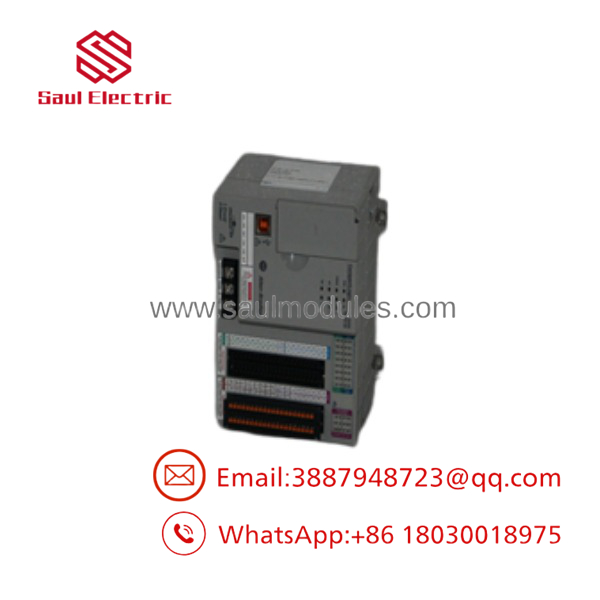
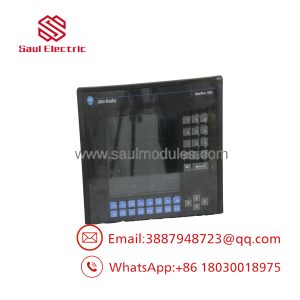
- 1769-L27ERM-QBFC1
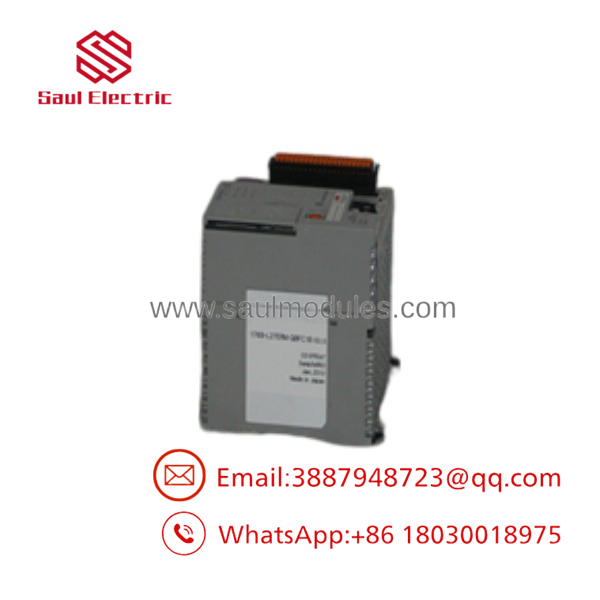
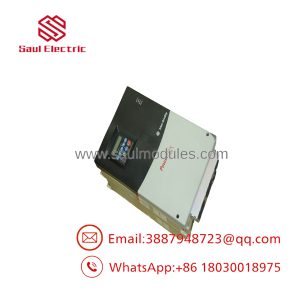
- 1769-L27ERM-QBFC1
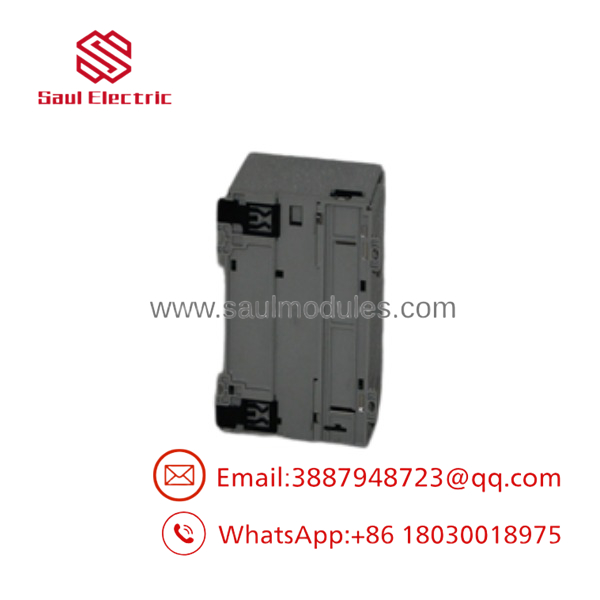
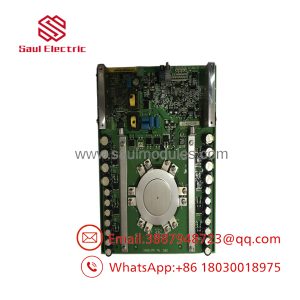
- 1769-L27ERM-QBFC1
Transparency SOP: Quality Assurance & Testing
We put every 1769-L27ERM-QBFC1B controller through strict functional bench testing prior to shipment:
- Physical & Port Inspection: We verify plastic enclosure latches, inspect the 24VDC power terminal wiring block, check the SD card slot spring-latch, and inspect both RJ45 port pins for bent contacts.
- 24VDC Power-Up & Energy Storage Module Test: The controller is powered up on a 24VDC bench line to verify internal power rails and confirm the built-in capacitor-based Energy Storage Module (ESM) charges fully without battery fault flags.
- Dual Ethernet DLR & CIP Motion Test: We link both RJ45 ports into an active DLR network with a Kinetix 350 servo drive, executing a 4-axis CIP Motion profile to verify packet synchronization and zero dropped motion frames.
- Embedded I/O Channel Sweep: All 16 digital inputs, 16 digital outputs, 4 analog inputs, 2 analog outputs, and high-speed counter channels are injected with calibrated test signals to verify 100% register accuracy in Studio 5000.
- Firmware Flashing & Memory Scrub: We cycle firmware loads (e.g., v24 to v33), format the SD card, and run memory write stress cycles to ensure complete hardware reliability.
The Veteran’s Tech Trap Guide
- ⚠️ Do Not Exceed the 4-Module Expansion Limit: The 1769-L27ERM-QBFC1B has embedded I/O, but it only supports up to FOUR additional 1769 expansion modules mounted on its right side. Adding a 5th expansion card causes a backplane hardware fault that prevents the CPU from going into RUN mode.
- ❗ Mind the End Cap (1769-ECR) Requirement: Like all 1769 systems, the expansion bus MUST be terminated with a 1769-ECR (or 1769-ECL) bus end cap on the far right side of the rack—even if you are NOT using any right-side expansion modules. Leaving the end cap off results in an immediate major fault.
- ⚠️ Set Embedded Analog Inputs Correctly (Voltage vs. Current): The embedded analog inputs on the QBFC1B are universal, but you must select Current (4–20mA) or Voltage (0–10V) mode both in the Studio 5000 module configuration properties AND via physical DIP switch/wiring settings. Applying 24V to a channel set for current will damage the internal sampling shunt.
- ❗ No Battery Required (ESM Technology): The 5370 L2 series uses an internal Energy Storage Module (ESM) rather than a 1769-BA lithium battery to save RAM contents to flash during power loss. If you see a power-down fault, do not look for a battery door—verify that the internal ESM has been given 5 minutes under power to charge fully.
Frequently Asked Questions
Q: What do the letters “” stand for in the catalog number?
The suffix breaks down the embedded hardware feature set: Q = 24VDC Digital Inputs (16) and Outputs (16); B = Sourcing Outputs; F = Universal Analog Inputs (4) and Outputs (2); C = High-Speed Counters (4); 1B = Revision/Power Configuration indicator (24VDC embedded supply).
Q: Does the 1769-L27ERM- support traditional 1768 or 1756 SERCOS motion cards?
No. Motion control on the is executed strictly as CIP Motion over EtherNet/IP (controlling networked drives like Kinetix 350, Kinetix 5500, or PowerFlex 525/755 drives over standard Ethernet cabling).
Q: Can I program the using RSLogix 5000 v20?
Yes. The is supported starting in RSLogix 5000 Version 20 and can be flashed up through all modern versions of Studio 5000 Logix Designer (v21 through v36+).
Q: What is the maximum number of EtherNet/IP nodes this controller can manage?
The supports up to 16 EtherNet/IP nodes. Node counts include IP-addressable field devices like drive controllers, remote I/O adapters (e.g., 1769-AENTR or POINT I/O 1734-AENT), and networked HMIs.
Q: What warranty comes with your surplus and refurbished units?
Every unit we ship is covered by our full 12-month replacement warranty. If a hardware defect occurs within 365 days under normal operating conditions, we replace the controller immediately from our ready stock or process a full refund.
Q: Do I need a separate 1769 power supply module for this CPU?
No. The features a built-in 24VDC power supply terminal block directly on the front panel of the processor unit. You wire your panel’s 24VDC power supply directly to the CPU terminals.

 Start Chat


