





Description
Product Introduction & Engineering Value
Accurate process control begins with reliable measurement. If analog input data drifts or becomes unstable, operators often spend hours tuning PID loops when the real issue lies in signal acquisition. The input module is the foundation of every analog control strategy.
The Allen-Bradley 1771-IFE was developed for the PLC-5 platform to acquire analog process signals from transmitters, sensors, and instrumentation. It supports multiple voltage and current ranges, configurable channel modes, and communicates with the processor through block transfer instructions. Although Rockwell Automation discontinued the module in 2017, it remains widely used in legacy PLC-5 installations where long-term compatibility is essential.
Technical Specifications
| Specification | Value |
|---|---|
| Manufacturer | Allen-Bradley / Rockwell Automation |
| Catalog Number | 1771-IFE |
| Product Family | PLC-5 1771 I/O |
| Module Type | Analog Input Module |
| Input Channels | 16 Single-Ended or 8 Differential (Selectable) |
| Resolution | 12-bit (12-bit + Sign on Bipolar Ranges) |
| Voltage Input Ranges | 0–5V, 1–5V, ±5V, 0–10V, ±10V DC |
| Current Input Ranges | 0–20 mA, 4–20 mA, ±20 mA |
| Accuracy | ±0.1% Full Scale @ 25°C |
| Channel Update Time | 18 ms (8 Differential), 36 ms (16 Single-Ended) |
| Data Format | Natural Binary or BCD (Scaled to ±9999) |
| Backplane Current | 750 mA @ 5V DC |
| External Power Required | No |
| Wiring Arm | 1771-WG |
| Mounting | Single Slot in 1771 I/O Chassis |
| Communication Method | Block Transfer Read (BTR) / Block Transfer Write (BTW) |
Field Application & The “Trench” Experience
During the modernization of a pharmaceutical batching system, engineers noticed that several pressure transmitters occasionally reported impossible values, causing unnecessary batch interruptions. Initial troubleshooting focused on replacing transmitters and recalibrating instruments, but the problem persisted.
A closer inspection revealed that several channels on the original analog input module had been configured for voltage input while the field transmitters were delivering 4–20 mA signals. After correcting the jumper settings, downloading the proper block transfer configuration, and verifying channel scaling, the measurements stabilized immediately. No PLC logic changes were required.
Typical applications include:
- Boiler drum level monitoring using differential pressure transmitters.
- Catalytic cracking unit temperature acquisition from analog signal conditioners.
- Water treatment chemical dosing systems collecting multiple 4–20 mA flow and pH measurements.
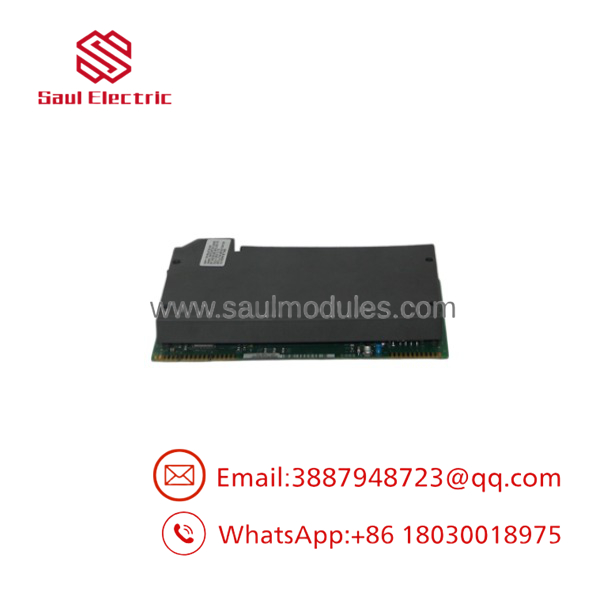
- 1771-IFE
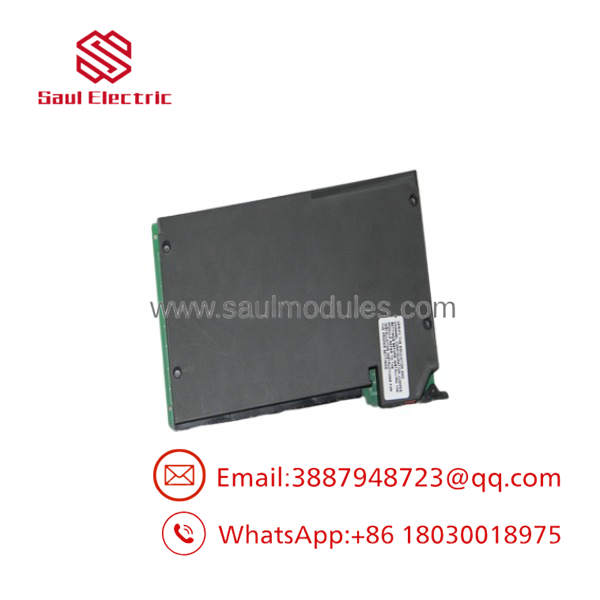
- 1771-IFE
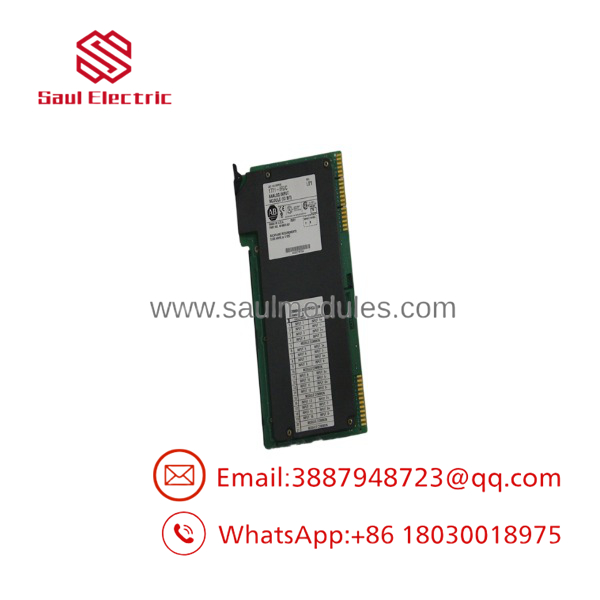
- 1771-IFE
Transparency SOP: QA & Testing
Every 1771-IFE undergoes a documented inspection before shipment.
- Verify the catalog number, series revision, and manufacturer identification.
- Inspect the PCB, edge connector, and terminal wiring interface for physical damage.
- Install the module in a PLC-5 1771 chassis.
- Inject calibrated voltage and current signals into every channel.
- Confirm BTR/BTW communication, channel accuracy, and diagnostic status.
- Record test data before classifying the unit as New Surplus or Refurbished.
The Veteran’s Tech Trap Guide
⚠️ Check the Hardware Jumpers Before Downloading Configuration
The 1771-IFE uses internal configuration jumpers to select single-ended versus differential operation and voltage versus current input. Incorrect jumper settings can produce misleading readings even when the PLC program is correct.
⚠️ Don’t Ignore Block Transfer Configuration
Unlike modern Logix analog modules, the 1771-IFE depends on Block Transfer Read (BTR) and Block Transfer Write (BTW) instructions for configuration and data exchange. Missing or incorrect block transfer logic is one of the most common causes of startup issues.
PRO TIP: Before replacing the module, disconnect the field wiring and inject a calibrated 4–20 mA or voltage signal directly into the input terminals. Many “failed” analog cards are ultimately traced to damaged transmitters, grounding problems, or incorrect signal scaling rather than defective hardware.
Dynamic FAQ
Q1. How many analog inputs does the 1771-IFE support?
The module supports 16 single-ended inputs or 8 differential inputs, selectable through hardware configuration.
Q2. Which analog signal ranges are supported?
The 1771-IFE accepts 0–5V, 1–5V, ±5V, 0–10V, ±10V DC and 0–20 mA, 4–20 mA, ±20 mA input signals.
Q3. Does the module require an external power supply?
No. The module receives operating power directly from the 1771 I/O chassis backplane and does not require a separate external power supply.
Q4. Is the 1771-IFE compatible with all PLC-5 chassis?
Yes. The module is compatible with 1771 I/O chassis that support block transfer capability and can be installed in any I/O slot within the chassis.
Q5. How is New Surplus inventory verified?
Each module is inspected for physical integrity, connector condition, analog input accuracy, block transfer communication, and overall functional performance using calibrated voltage and current sources before shipment.
Q6. Is the 1771-IFE still available from Rockwell Automation?
No. Rockwell Automation discontinued the 1771-IFE on May 31, 2017. It is commonly sourced today as New Surplus or professionally refurbished inventory for maintaining existing PLC-5 systems.

 Start Chat


