





Description
Product Introduction
The Allen-Bradley 56SAM-844 is being identified in industrial-part references as an analog I/O module associated with the legacy SLC 500 platform. However, reliable OEM-level documentation for this exact part number is difficult to establish from publicly indexed sources. That makes physical verification especially important before procurement.
Do not confuse 56SAM-844 with standard catalog numbers such as 1746-IF8 or 1746-NI8. Those are established Rockwell SLC 500 modules, while the 56SAM designation may represent a third-party, application-specific, or modified assembly. The exact electrical interface, input ranges, resolution, and terminal layout must therefore be verified against the installed hardware.
Key Technical Specifications
| Parameter | Specification |
|---|---|
| Part Number | 56SAM-844 |
| Claimed Manufacturer Association | Allen-Bradley / Rockwell Automation |
| Platform Association | SLC 500 |
| Product Category | Analog I/O Module |
| Reported Input Channels | 8 |
| Reported Resolution | 16-bit |
| Chassis Interface | SLC 500-style chassis |
| Exact Input Type | Verify before ordering |
| Input Range | Verify before ordering |
| Isolation | Verify before ordering |
| Terminal Configuration | Verify against actual module |
| Lifecycle | Legacy / secondary-market identification |
Important technical warning: I would not publish 56SAM-844’s voltage/current ranges, isolation specifications, or terminal pinout as confirmed facts without an OEM datasheet or a clear photograph of the actual module. For procurement, that distinction matters.
If the intended part is actually a standard Allen-Bradley 1746-series analog module, the catalog number should be checked carefully. A one-character or one-digit difference can point to a completely different I/O architecture.
Application Scenarios & The “Trench” Experience
This is the kind of spare that creates trouble when purchasing teams work from an old spreadsheet instead of the actual card.
A maintenance technician pulls the failed module and finds 56SAM-844 on the label. The buyer searches the number, finds several vague listings, and orders a supposedly equivalent analog card. It fits the chassis. The PLC powers up.
Then the process values are wrong.
That’s the dangerous part. Physical fit does not establish signal compatibility.
- Legacy PLC Systems — Analog Process Monitoring — Potentially used for analog signal acquisition in an SLC 500-based control architecture.
- Industrial Instrumentation — Transmitter Inputs — Applicable only after confirming whether the actual module accepts 4-20 mA, voltage, thermocouple, RTD, or another signal type.
- Machine Automation — Analog Feedback — Could be used for pressure, temperature, position, or speed feedback depending on the verified module configuration.
- Process Control — Distributed Analog Measurement — Relevant where an existing SLC 500 installation depends on an obsolete analog interface.
- Plant Maintenance — Legacy I/O Replacement — Secondary-market sourcing can make sense when an exact, documented replacement is required during an outage.
Field case — plausible replacement scenario:
A legacy process skid begins showing an impossible pressure value. The transmitter checks correctly at the field junction box. The wiring checks out. The PLC input channel is eventually identified as the suspect.
The maintenance team removes the module and records 56SAM-844.
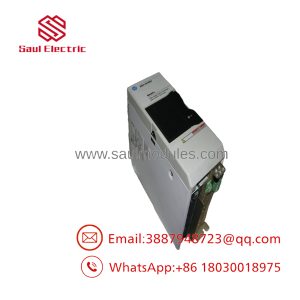
Before purchasing, they photograph the front label, terminal strip, circuit-board markings, and chassis position. The supplier provides photographs of the actual replacement rather than a catalog stock image. The two assemblies are compared point-by-point.
That extra verification prevents a very common failure: installing a physically compatible card with the wrong electrical input characteristics.
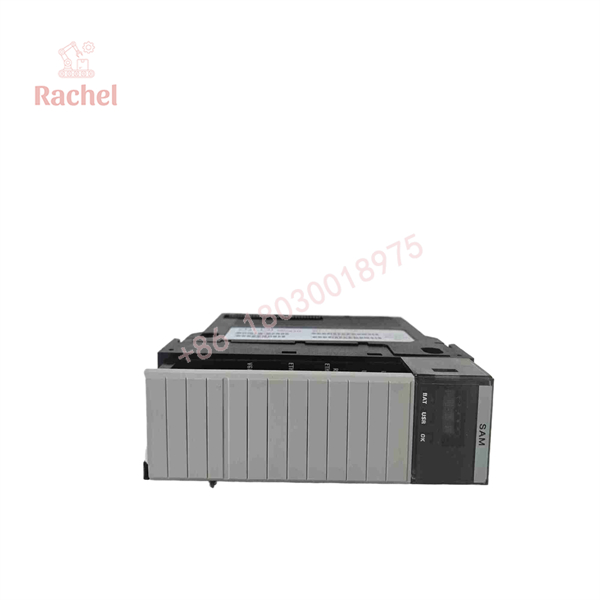
56SAM-844
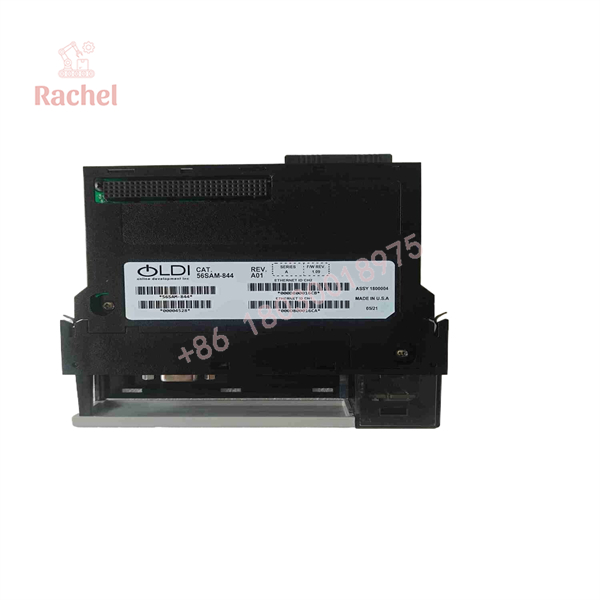
56SAM-844
Transparency SOP: Quality Assurance & Testing
Because the exact OEM specification for 56SAM-844 is not sufficiently established in public documentation, testing should begin with identification rather than assumptions.
- Inbound Inspection
- Verify the complete 56SAM-844 marking.
- Photograph the nameplate, PCB labels, terminal block, and revision markings.
- Check for cracked housings, corrosion, bent terminals, and evidence of repair.
- Compare the physical layout against the failed unit.
- Live Rig Testing
- Install the module only in a confirmed compatible chassis.
- Verify PLC recognition and module operation.
- Apply known analog test signals to each channel.
- Confirm that the PLC receives stable, repeatable values.
- Electrical Parameter Checks
- Determine the actual input type before applying test signals.
- Test each channel across its documented operating range.
- Verify channel-to-channel behavior and any available isolation.
- Check for abnormal offset, drift, noise, or saturation.
- Firmware / Revision Verification
- Record module revision and any identifiable firmware information.
- Compare revisions with the installed card.
- Do not assume revision interchangeability without documentation.
- Final QC & Anti-static Packaging
- Record serial/lot information and test results.
- Photograph the tested module.
- Use ESD-safe packaging.
- Clearly identify the unit as new surplus, used, or refurbished.
For this particular part number, the identification step is part of quality control. Testing the wrong module very thoroughly still gives you the wrong spare.
The Veteran’s Tech Trap Guide (Crucial Value-Add)
- ⚠️ Stop at the catalog number. If you have 56SAM-844 in your inventory, photograph the physical module before ordering. Public documentation for this exact designation is not strong enough to justify guessing at its electrical characteristics.
- ❗ Do not substitute 1746-IF8 or another SLC 500 analog card just because it fits the rack. Input ranges, resolution, channel architecture, and configuration can differ.
- ⚠️ Verify the signal type first. A 4-20 mA transmitter, ±10 V signal, RTD, and thermocouple input require completely different analog front ends. Never energize an unknown input channel based on an assumption.
- ❗ Record the old channel values before removal. Save the PLC data table values, scaling parameters, channel configuration, and transmitter ranges. Otherwise, you may solve the hardware problem and create a scaling problem immediately afterward.
Frequently Asked Questions (FAQ for Conversion)
Q1. What is Allen-Bradley 56SAM-844?
Available secondary-market references associate the number with an SLC 500 analog I/O module, but reliable OEM documentation for this exact designation is limited. I would require a photograph or OEM document before treating the identification as definitive.
Q2. Is 56SAM-844 the same as 1746-IF8?
There is not enough reliable evidence to state that. Do not purchase 1746-IF8 as a direct substitute solely from the 56SAM-844 number. Compare the physical hardware and electrical specifications.
Q3. How many analog channels does it have?
Some secondary-market descriptions identify eight analog channels, but that specification should be confirmed from the actual unit or manufacturer documentation before engineering use.
Q4. What input signal does it accept?
This is one of the specifications I would not guess for 56SAM-844. Confirm whether the particular module is configured for current, voltage, temperature, or another analog signal type before connecting field wiring.
Q5. Can it be replaced while the SLC 500 rack is powered?
Do not assume hot-swapping capability. Standard SLC 500 I/O replacement procedures depend on the exact hardware and installation. Follow the Rockwell documentation and plant electrical isolation procedure before removing an unknown legacy module.
Q6. Why is this part difficult to identify?
The 56SAM-844 designation does not appear to have the same level of publicly available OEM documentation as standard Rockwell catalog numbers such as 1746-IF8. It may represent a specialized or modified assembly, making the physical nameplate and PCB markings particularly important.
Q7. Is surplus 56SAM-844 safe to use?
Potentially, but only after identification and functional testing. For a legacy analog module, ask the supplier for the actual module photographs, PCB/revision markings, channel test results, condition classification, and written warranty. If those cannot be provided, treat the part as unverified inventory rather than a confirmed replacement.

 Start Chat


