





Description
Product Introduction
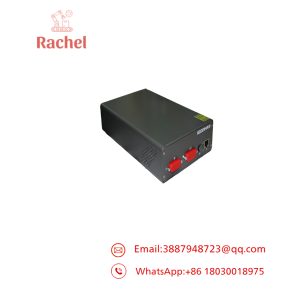
The AutomationDirect D4-RSDC is the DC-powered serial remote I/O slave for the DirectLOGIC DL405 family. It works with the D4-RM Remote Master module installed in the CPU base. The slave accepts a 24 VDC supply and communicates over a shielded twisted-pair cable, allowing I/O bases to be located up to approximately 1.2 km from the main controller (distance depends on baud rate and cable quality).
Each D4-RM master can support up to seven D4-RSDC (or D4-RS) slaves. The communication is asynchronous to the CPU scan, so the remote I/O is best suited for applications that do not require update on every scan cycle. The module includes its own 24 VDC power supply circuitry and uses a simple 5-pin terminal block for the serial link.
Because the product is discontinued, verified surplus units remain the practical source for maintaining existing DL405 remote I/O systems.
Key Technical Specifications
| Parameter | Value |
|---|---|
| Function | Serial Remote I/O Slave |
| Compatible Master | D4-RM |
| Power Supply | External 24 VDC |
| Communication | RS-485 style twisted-pair (shielded, 24 AWG min) |
| Max. Slaves per Master | 7 |
| Max. Masters per System | 2 (D4-430/D4-440) or 3 (D4-450) |
| Baud Rate | Up to 38.4 kbaud |
| Max. Distance | Approx. 1.2 km (cable and baud-rate dependent) |
| Connection | 5-pin terminal block |
| Mounting | Installs in any DL405 I/O base |
| Status | Discontinued by manufacturer |
Application Scenarios & The “Trench” Experience
It’s 01:45 and a remote I/O drop on a long conveyor line has failed. The main DL405 CPU is still running, but the distant station is offline. You need a known-good D4-RSDC that accepts the existing 24 VDC supply and twisted-pair cable so the remote base can come back online without pulling new wire.
- Distributed Machine Control – Packaging, material handling, or assembly lines with I/O located far from the main panel – Reduces long home-run wiring by placing the slave near the field devices.
- Large Process or Conveyor Systems – Multiple remote stations daisy-chained from one D4-RM – Supports up to seven slaves per master for moderate distributed architectures.
- Legacy DL405 Maintenance – Keeping older systems operational after the product was discontinued – Verified surplus units extend the life of existing installations.
- Cost-Sensitive Retrofits – Applications that still use the original serial remote I/O scheme – Avoids a full migration to newer fieldbus systems when only the slave has failed.
Field Case Study
A distribution center lost a remote I/O station controlling a sorting conveyor 800 feet from the main panel. The original D4-RSDC was no longer available from the OEM. A tested surplus unit was installed the next morning. After confirming the 24 VDC feed and the twisted-pair polarity, the station returned to service and the line resumed full operation within two hours.
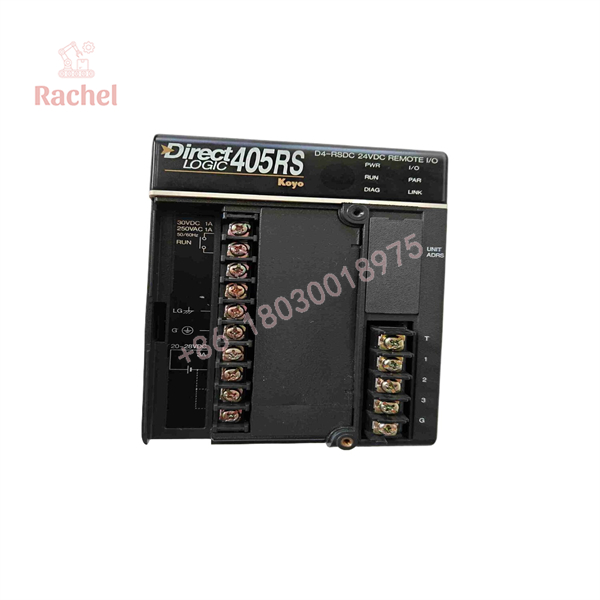
D4-RSDC
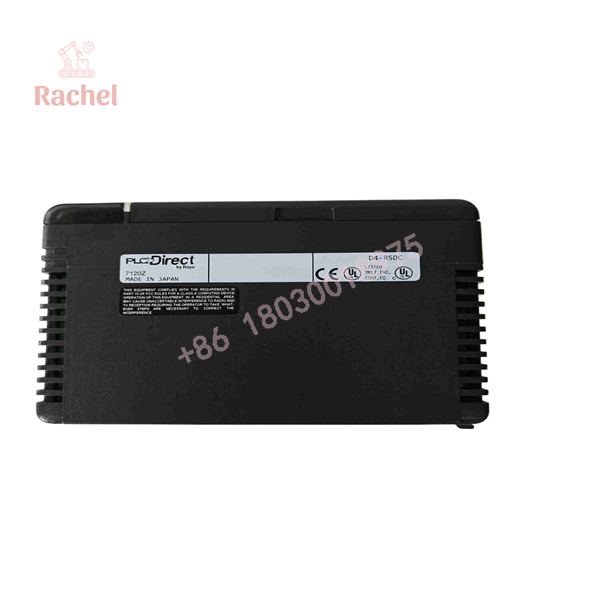
D4-RSDC
Transparency SOP: Quality Assurance & Testing
We don’t just ship boxes; every unit is checked for basic functionality.
- Inbound Inspection – OEM part-number verification, terminal-block condition, and housing integrity.
- Live Rig Testing – Powered at 24 VDC with a D4-RM master; communication link and status indicators verified.
- Electrical Parameter Checks – Supply current and serial-port signal integrity confirmed.
- Configuration Notes – Any visible jumpers or settings documented.
- Final QC & Packaging – Functional observation, serial documentation, and protective packaging for industrial shipment.
The Veteran’s Tech Trap Guide
⚠️ Must be paired with a D4-RM. The D4-RSDC will not function without a Remote Master in the CPU base. Confirm the master is present and healthy before troubleshooting the slave.
❗ Cable and termination matter. Use shielded twisted-pair (24 AWG minimum) with overall foil shield. Incorrect cable or missing termination can cause intermittent communication or complete link failure.
⚠️ Asynchronous update. Remote I/O is not updated every CPU scan. Do not use it for high-speed or tightly synchronized control loops.
❗ Discontinued product. New production has ended. Match the hardware revision to the existing system when possible, and keep a verified spare if the remote network is critical.
Frequently Asked Questions (FAQ for Conversion)
Q: What is the difference between D4-RS and D4-RSDC?
A: The D4-RSDC is the DC-powered version (external 24 VDC). The D4-RS is the AC-powered counterpart. Functionally they serve the same remote-slave role with the D4-RM.
Q: How many slaves can one master support?
A: Up to seven D4-RSDC (or D4-RS) slaves per D4-RM master.
Q: What cable is required?
A: Shielded twisted-pair with overall foil shield, 24 AWG minimum. Maximum distance is approximately 1.2 km depending on baud rate and cable quality.
Q: What warranty is provided?
A: 12 months from ship date on tested new-surplus units.
Q: Why is this sometimes cheaper than original list price?
A: The product is discontinued. Genuine units recovered from surplus inventory cost less while remaining original AutomationDirect/Koyo hardware.
Q: Can it be used with newer AutomationDirect controllers?
A: It is designed specifically for the DL405 remote I/O system with the D4-RM master. It is not compatible with newer CLICK, Do-more, or Productivity series remote I/O.
Q: Is the module still supported?
A: Official new production has ended. Documentation and repair knowledge remain available through specialty industrial suppliers, but long-term availability depends on remaining surplus stock.

 Start Chat


