





Description
Product Introduction
The Bently Nevada 3500/60 163179-01 is a six-channel Temperature Monitor designed for the 3500 Machinery Protection System. It accepts both Resistance Temperature Detector (RTD) and Thermocouple (TC) inputs, continuously conditions the signals, compares measured temperatures against configured alarm limits, and reports abnormal operating conditions before equipment damage occurs. Unlike the 3500/61, the 3500/60 does not provide recorder outputs.
In our field experience, temperature faults usually develop much more slowly than vibration problems, but they’re just as destructive if ignored. Bearing metal temperatures, winding temperatures, and lube oil temperatures often provide the first indication of developing equipment problems. One thing to watch out for is selecting the correct rear I/O module. Bently Nevada offers both isolated and non-isolated versions depending on the sensor type and installation requirements.
Key Technical Specifications
| Parameter | Value |
|---|---|
| Manufacturer | Bently Nevada |
| Model | 3500/60 |
| Part Number | 163179-01 |
| Product Type | Temperature Monitor |
| System Platform | 3500 Machinery Protection System |
| Monitoring Channels | 6 |
| Supported Inputs | RTDs and Thermocouples |
| Alarm Processing | User-programmable Alert and Danger setpoints |
| Recorder Outputs | Not Supported |
| Configuration Software | 3500 Rack Configuration Software |
| TMR Compatibility | Supported in Triple Modular Redundant systems |
| Operating Function | Continuous machinery temperature monitoring |
Application Scenarios & The “Trench” Experience
The vibration looked perfect.
Bearing temperatures didn’t.
I’ve watched crews spend hours investigating vibration probes while the real issue was a blocked lubrication line causing bearing temperatures to climb steadily. The vibration monitor never alarmed because the shaft was still stable. The 3500/60 identified the problem long before bearing damage occurred.
Sometimes temperature tells the story first.
Typical Applications
Power Generation – Steam Turbine Bearings –
Monitors bearing metal temperatures to prevent lubrication failures and thermal damage.
Oil & Gas – Compressor Trains –
Measures bearing and process temperatures using RTDs and thermocouples for continuous machinery protection.
Petrochemical Plants – Large Pumps –
Provides early warning of overheating caused by lubrication loss or excessive mechanical loading.
Industrial Manufacturing – Electric Motors –
Monitors stator winding and bearing temperatures to reduce unexpected shutdowns.
Mining & Metals – Critical Rotating Equipment –
Tracks gearbox and bearing temperatures operating under heavy mechanical loads.
Field Replacement Example
A combined-cycle power station repeatedly experienced high-temperature alarms on one turbine bearing.
The RTDs passed calibration.
The field wiring tested correctly.
After replacing the 3500/60 163179-01, the temperature readings stabilized immediately. Further inspection found an intermittent input circuit on the original monitor rather than a faulty sensor. The replacement avoided unnecessary bearing disassembly.
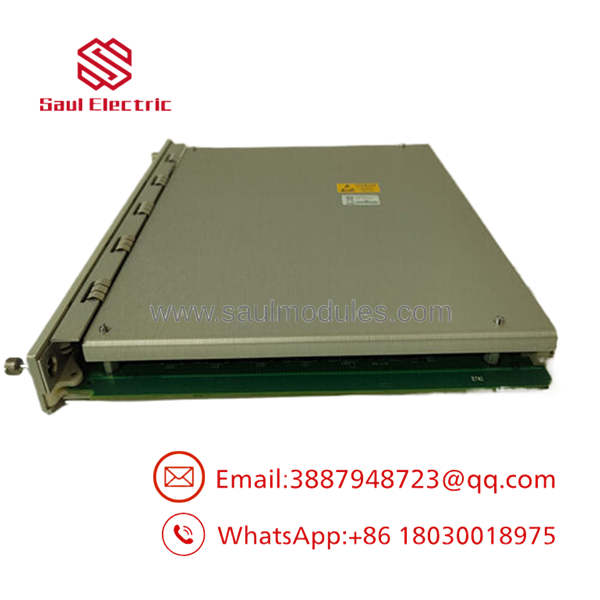
- 3500/60 163179-01
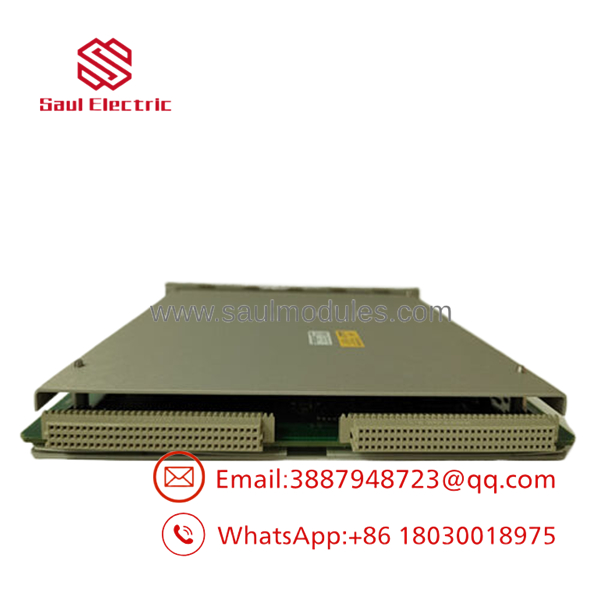
- 3500/60 163179-01
Transparency SOP: Quality Assurance & Testing
We don’t just ship boxes; we test them on actual Bently Nevada 3500 racks.
1. Inbound Inspection
- Verify OEM labels, serial numbers, and date codes.
- Inspect PCB condition and edge connectors.
- Check for evidence of previous repair or counterfeit components.
2. Live Rig Testing
- Install the module in a functioning 3500 rack.
- Simulate RTD and thermocouple inputs across all six channels.
- Verify Alert and Danger alarm operation.
- Confirm communication with the Rack Interface Module or TDI.
3. Electrical Parameter Checks
- Verify channel accuracy.
- Measure input response.
- Confirm alarm switching performance.
- Check channel stability during continuous operation.
4. Firmware Verification
- Record hardware and firmware revisions.
- Verify compatibility with the installed rack configuration.
- Archive functional test records.
5. Final QC & Anti-Static Packaging
- Complete a full operational inspection.
- Package using ESD-safe materials.
- Protect connectors during shipment.
- Maintain complete traceability for every tested module.
The Veteran’s Tech Trap Guide
⚠️ Don’t mix isolated and non-isolated I/O modules.
The 3500/60 supports multiple rear I/O module options. Installing the wrong version can produce unstable temperature readings or ground-loop problems. Verify the original hardware before replacement.
❗ Configure every channel correctly.
An RTD channel configured as a thermocouple—or the reverse—will generate incorrect readings that can easily be mistaken for sensor failures.
⚠️ Watch the wiring polarity.
Thermocouple extension cables must match the sensor type. A mismatched extension cable introduces measurement errors that become more noticeable as temperature rises.
❗ Take a backup before replacing the module. Trust me.
Always save the existing 3500 Rack Configuration. Restoring alarm limits and sensor types from memory after replacement is a frustrating way to spend an afternoon.
Frequently Asked Questions (FAQ)
Q1: What is the primary function of the 3500/60 163179-01?
A: It continuously monitors up to six RTD or thermocouple inputs, compares measured temperatures against user-configured alarm limits, and supplies temperature data to the 3500 Machinery Protection System.
Q2: How is the 3500/60 different from the 3500/61?
A: Both modules provide identical six-channel temperature monitoring. The 3500/61 adds recorder outputs for each channel, while the 3500/60 does not.
Q3: Can the module accept both RTDs and thermocouples?
A: Yes. The monitor supports RTD, thermocouple, or mixed input configurations when used with the appropriate rear I/O module and configured through the 3500 Rack Configuration Software.
Q4: Is the 3500/60 suitable for Triple Modular Redundant (TMR) systems?
A: Yes. In TMR applications, temperature monitors are installed in groups of three, allowing the system to use voting logic to improve availability and reduce single-point failures.
Q5: Is the module hot-swappable?
A: No. Replace the module only during an approved maintenance outage. Removing an active temperature monitor while machinery is operating temporarily eliminates temperature protection for the connected channels.
Q6: Why are surplus modules less expensive than buying directly from the OEM?
A: Most surplus inventory originates from plant upgrades, cancelled projects, or unused maintenance stock. Lower pricing reflects procurement channels rather than reduced performance. Functional testing, traceability, and documented inspection are the factors that matter most.
Q7: What warranty is typically available?
A: Most reputable industrial automation suppliers provide a 12-month warranty on professionally tested surplus or refurbished Bently Nevada 3500/60 163179-01 modules. Before purchasing, request the six-channel functional test report, input calibration verification, and serial-number traceability.



 Start Chat


