





Description
Product Introduction & Engineering Value
Hook option C (The Veteran’s Take): I’ve sold control hardware across a lot of PLC families, and the Berghof C-series occupies a spot I’ve come to respect — it’s the controller OEMs pick when they want German-built real-time control with a clean, open toolchain rather than a walled-garden ecosystem.
The C1CPU-4S-07 is the CPU module at the heart of that proposition. It’s programmable in IEC 61131-3 via CoDeSys or in C for the low-level crowd, and its interface set — Ethernet at 10/100 Mbit, USB host, CAN, serial — covers the comms landscape most machines actually need. Real-time capable, medium-to-high performance class, and compact enough to slot into tight OEM control enclosures. When one dies in the field, the machine it runs is usually an OEM machine whose builder standardized on Berghof years ago — and finding the exact variant fast is the whole game.
Technical Specifications
Descriptive parameters, so bolded list treatment this time:
- Product type: PLC CPU module / real-time controller
- Programming: IEC 61131-3 (CoDeSys 2.3) and C language
- Performance class: Medium-to-high performance, real-time capable
- Ethernet interface: 10/100 Mbit/s, TCP/IP and UDP/IP
- USB: Host interface for peripherals and storage
- CAN: Standard CAN interface for I/O and device networking
- Serial: Additional serial communication capability per build
- Expansion: Operates within the Berghof CONTROL-series I/O and bus architecture
- Construction: Compact module format for OEM machine control enclosures
- Manufacturer: Berghof Automation GmbH, Eningen, Germany
- Family/variant: C1CPU-4S-07 (4S denotes the family build; trailing digits are the order variant)
- Revision compatibility: Verified against your system’s version requirements at order
Field Application & The “Trench” Experience
The Trench Story: A municipal water-treatment OEM called on a Tuesday with a peculiar failure: one of their Berghof-based skid controllers was up on the network but “thinking slowly” — HMI refreshes lagging, alarms arriving seconds late. The C1CPU module had survived a lightning-induced surge on the site’s poorly grounded solar supply, and while it hadn’t died outright, its watchdog behavior had gone inconsistent. The nasty part was diagnosis: everything looked fine on the bench until you loaded the application and watched timing under real I/O traffic. We shipped them a tested replacement, but the call I remember was their senior tech saying, “The damaged CPU passed your basic tests too — how do you catch this?” The honest answer is that partial surge damage on a real-time controller is a load-dependent fault, and it takes application-level bench testing to surface. That’s why ours get exercised with a real program under simulated I/O, not just powered up. The replacement went in clean, and the site got a surge suppressor on the DC supply as a post-mortem action item — the CPU was the symptom, the grounding was the disease.
Niche application scenarios:
- Membrane bioreactor skid control at municipal wastewater plants — sequential batch processing logic with analog-heavy I/O over CAN.
- Special-purpose OEM machine controllers in laboratory automation — compact real-time control with CoDeSys-programmed motion and sequencing.
- Remote pumping-station RTU duty — Ethernet backhaul to SCADA with local autonomous control during comms loss.
- Shipyard crane and hoist auxiliary control enclosures — rugged German-built CPU modules in salt-air electrical rooms.
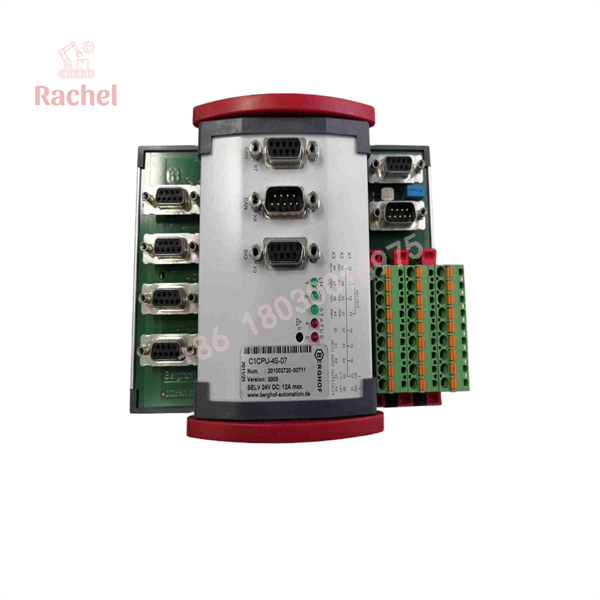
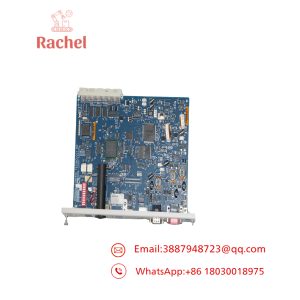
C1CPU-4S-07
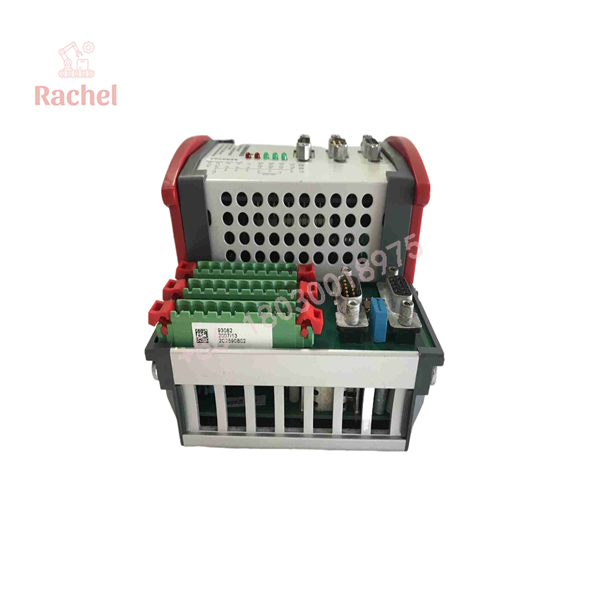
C1CPU-4S-07
Transparency SOP: QA & Testing
Numbered sequence, because a CPU earns the full treatment:
- Intake inspection — housing, connector condition, label and serial verification against Berghof build records.
- Power-up on current-limited supply — inrush behavior and current draw within spec.
- Boot and firmware check — module boots to ready state, firmware version documented and matched to customer requirements.
- Interface verification — Ethernet link at 10/100, CAN bus traffic, USB host, and serial comms each exercised individually.
- Application-level load test — a reference control program runs on the module under simulated I/O traffic, verifying real-time task timing and watchdog behavior.
- Final QC sign-off — serialized test record generated and packed with the unit.
The Veteran’s Tech Trap Guide
⚠️ Back up the application before the old CPU dies completely. The program lives in the module’s memory, and a dying CPU can corrupt it on its way out. If your controller is misbehaving, get a program upload and a checksum confirmation now — the replacement is cheap; re-engineering a lost OEM program isn’t.
PRO TIP: Watch the firmware/software pairing. Berghof C-series modules pair with specific CoDeSys/target runtime versions. A replacement CPU with a mismatched firmware version can refuse a program download or run it with timing quirks. Confirm your project’s target version before ordering and, if needed, we’ll match the firmware before shipment.
⚠️ Don’t diagnose a “bad CPU” without checking the supply first. Like the surge story above: real-time controllers misbehave in strange ways on noisy or sagging DC supplies. Measure the 24 V rail under load, check the grounding, and look for correlation with pump or drive switching events before condemning the module.
PRO TIP: CAN termination is the classic silent killer on these systems. If the replacement CPU “can’t see” the I/O drops, check the bus terminators at both physical ends before assuming a faulty module. An unterminated CAN segment produces errors that look exactly like a dead interface on the module you just installed.
Dynamic FAQ
Q1: Is the C1CPU-4S-07 a direct replacement for other C1CPU-4S variants (e.g., -01-1131)?
The 4S family shares a platform, but trailing digits identify build and order variants, and Berghof systems are revision-sensitive. Send us your full part number and the application’s target runtime version — we confirm the exact variant and firmware pairing before shipping.
Q2: How do I recover the program from my old CPU if it’s still partially working?
Upload it immediately via CoDeSys over Ethernet and verify the checksum. If the module is unreliable, repeated upload attempts can still succeed. If it’s already dead, check for an OEM backup, a project archive, or contact the machine builder — we’ll do everything we can to match you with a module pre-paired to your software version.
Q3: Can you pre-load my application before shipment?
Yes. Send us your program file and target runtime version, and we’ll load it onto the CPU and run it under simulated I/O on the bench. The unit arrives ready to install — which on an OEM machine in the field is worth far more than a blank module.
Q4: What does “New Surplus” mean for this CPU, and is it genuine Berghof?
Genuine Berghof Automation manufacture that never entered service — excess OEM, integrator, or distributor stock. Original labels and serials intact, verified against factory records, and every unit passes the full bench sequence above with the QA record packed in the box.
Q5: What warranty do you offer?
Both New Surplus and Refurbished carry our full functional warranty covering processor, memory, all communication interfaces, and DOA replacement. Current term for this SKU is quoted at order time.
Q6: Do you stock the rest of the Berghof CONTROL system — I/O, comms, power?
We regularly stock Berghof CPU variants, I/O modules, and communication cards. Buying the full set from one vendor means we can bench-verify the CPU against the actual I/O configuration it will run before it ships.

 Start Chat


