





Description
Core Product Summary (Brand / Model / Key Attributes)
The DKC03.3-040-7-FW is a digital AC servo drive controller from the Bosch Rexroth Indramat ECO DRIVE03 (EcoDrive 03) family, part number R911279428 in its documented configuration. The designation decodes as follows: DKC03 is the drive controller series for the ECO DRIVE03 platform, “.3” is the hardware version, “040” is the rated current class of 40 A, “7” is the 700 V DC bus voltage class, and “-FW” indicates that the firmware is supplied as an external, exchangeable module rather than fixed in the unit.
The controller rectifies a three-phase mains input of 200–480 V AC (±10 %, 50–60 Hz) onto a DC bus with 700 V nominal voltage (500–800 V range) and converts it into regulated phase currents for Indramat servo motors, with a 40 A rated output and a maximum output voltage of 800 V at up to 1000 Hz. It supports position, velocity, and torque control modes, communicates via a PROFIBUS-DP interface module, and integrates into multi-axis ECO DRIVE03 systems powered from a shared DC bus.
Key Technical Specifications
| Parameter | Value |
|---|---|
| Product family | Bosch Rexroth Indramat ECO DRIVE03 (EcoDrive 03) drive controller |
| Model / designation | DKC03.3-040-7-FW (documented part number R911279428) |
| Designation decode | DKC03 = ECO DRIVE03 controller; .3 = version 3; 040 = 40 A type current; 7 = DC 700 V; FW = external firmware module |
| Rated current | 40 A |
| Continuous current | 16 A at 4 kHz; 12.5 A at 8 kHz |
| DC bus nominal voltage | 700 V DC (operating range 500–800 V DC) |
| Mains input | 200–480 V, ±10 %, 1/3-phase AC, 50–60 Hz (±2 Hz) |
| Input current | 16 A |
| Output | 3-phase, 40 A, max. 800 V, up to 1000 Hz |
| Control voltage | 24 V DC |
| Control power consumption | 21 W |
| Power loss | 180 W |
| Control modes | Position control, velocity control, torque control |
| Communications | PROFIBUS-DP (via DKC03.3-LK-PBK02 interface module); RS-232/RS-485 serial interface; analog interface |
| Firmware | External firmware module (-FW), mounted outside the controller housing for access and replacement |
| Short circuit current rating | 42,000 A rms |
| Branch circuit protection fuse | 20 A |
| Cooling | Internal blower (forced ventilation) |
| Operating temperature | 45 °C nominal; 55 °C with reduced performance |
| Altitude | Installation up to 1000 m without performance degradation |
| Pollution degree | 2 (IEC 60664-1) |
| Dimensions | 360 × 261 × 65 mm |
| Clearances | 150 mm above, 80 mm below |
| Weight | 5.7 kg |
| Approvals | UL 508 (file E134201),CSA C22.2 名列前茅4-05, CE |
| Wiring | AWG 12 copper conductors |
Detailed Product Overview
The ECO DRIVE03 family is Bosch Rexroth Indramat’s modular servo drive platform for industrial motion control, and the DKC03.3-040-7-FW is its 40 A controller for the 700 V DC bus class. In the platform architecture, a mains feed module rectifies the supply onto a shared DC bus, and individual DKC drive controllers hang off that bus to convert intermediate-circuit energy into precisely regulated motor currents. This allows multi-axis machines to share braking energy across the common bus rather than burning it in bleeder resistors.
The drive supports the three classical servo control modes — position, velocity, and torque — making it suitable both for coordinated multi-axis motion under a higher-level controller and for autonomous single-axis positioning tasks. Its compatible motor family is the Indramat MKD series of AC servo motors, alongside other Indramat servo machines matching the voltage and current class.
The “-FW” designation is significant for maintenance: the firmware is housed in a separate module mounted outside the controller housing, so firmware can be inspected, replaced, or upgraded without opening the power section. Firmware versions are application-specific, and the DKC03.3 in particular is associated with the PROFIBUS-DP interface (via the optional DKC03.3-LK-PBK02 card), which provides fast cyclic data exchange with PLCs and HMIs in decentralized motion architectures.
Electrically, the unit accepts a wide 200–480 V AC input range, making one hardware variant usable across regional supply standards, and it carries a UL 508 / CSA listing. Thermal management is by internal blower, and installation requires 150 mm clearance above and 80 mm below the unit for airflow. The 40 A rating applies as the peak/type current class; continuous current depends on the pulse frequency, at 16 A at 4 kHz and 12.5 A at 8 kHz.
Typical applications include material handling systems (conveyors, palletizers), packaging machinery controlling rollers, belts, and feeders, CNC machine tools, and printing presses — machinery classes where ECO DRIVE03 was deployed extensively in the 2000s and which today are maintained through the spares and repair market.
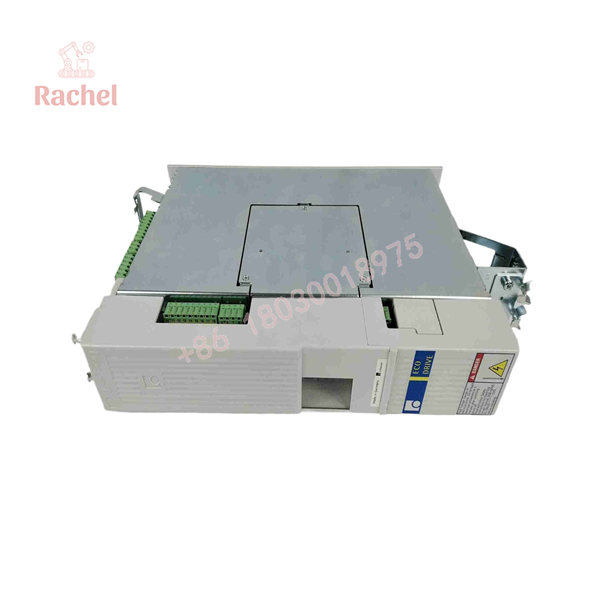
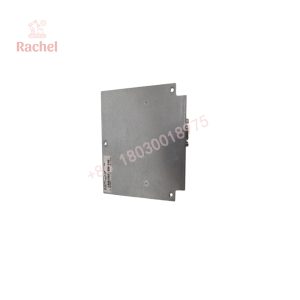
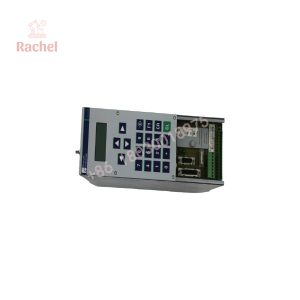
DKC03.3-040-7-FW
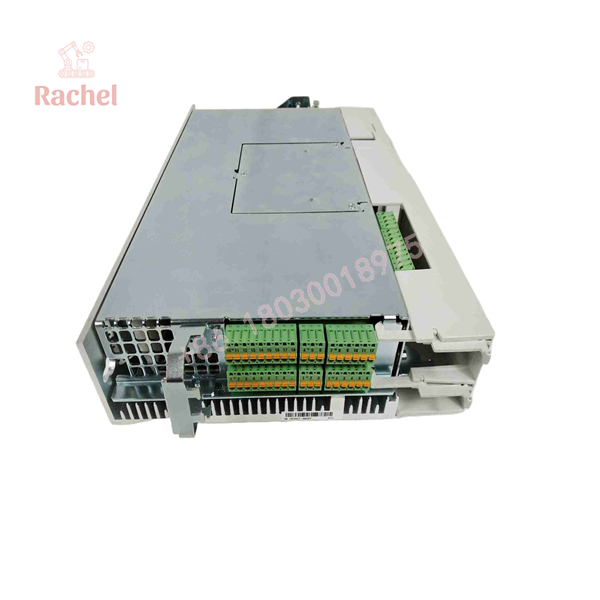
DKC03.3-040-7-FW
Engineering Selection Highlights
- Designation decode for ordering — DKC03.3-040–7-FW: series 03, version 3, 40 A current class, 700 V DC bus, external firmware. Each field is an ordering parameter; a mismatched current class or voltage class will not fit the application.
- Firmware module is application-specific — the -FW module carries the application firmware (e.g., PROFIBUS, FLP flying-saw, standard motion firmware); a replacement controller must receive the correct firmware version for the machine, or be exchanged with its original firmware module.
- Continuous vs. peak current — the 40 A figure is the type/peak current; continuous capability is 16 A at 4 kHz and 12.5 A at 8 kHz pulse frequency. Size the motor and duty cycle against the continuous rating at the selected pulse frequency.
- Wide mains range — 200–480 V AC ±10 % covers 230 V and 400/480 V regional supplies; verify the actual supply voltage against the DC bus link (700 V nominal, 500–800 V range) expected by the system’s feed module.
- DC bus sharing — in multi-axis ECO DRIVE03 systems the DKC connects to the common DC bus; when adding or replacing axes, confirm the feed module’s regenerative and bleeder capacity matches the enlarged axis count.
- Thermal installation — internal blower cooling requires 150 mm clearance above and 80 mm below; respect the 45 °C nominal ambient (55 °C with reduced performance) and 1000 m altitude limit.
- Protection and wiring — 20 A branch circuit protection fuse, AWG 12 copper wiring, 42 kA rms short-circuit rating; the control section needs a separate 24 V DC supply (21 W) that must remain available for diagnostics even when mains is removed.
- Motor pairing — verify the motor’s continuous and peak current, voltage class (matching the 700 V bus), and feedback type against the drive’s supported motor list (MKD-series and compatible Indramat servo motors).
Dimensions, Mounting & Connection Notes
- Dimensions: 360 × 261 × 65 mm
- Weight: 5.7 kg
- Mounting: cabinet-mounted drive controller in the ECO DRIVE03 lineup; maintain 150 mm clearance above and 80 mm below for the internal blower cooling
- Power connections: three-phase mains/DC bus per the system configuration; motor output 3-phase up to 800 V, 40 A; AWG 12 copper wiring
- Control connections: 24 V DC control voltage terminal, serial RS-232/RS-485 diagnostic interface, analog interface, and the option slot for the DKC03.3-LK-PBK02 PROFIBUS-DP card
- Firmware module: externally mounted -FW module, accessible without opening the power section
- Protection: 20 A branch circuit fuse required on the supply
System Compatibility & Integration Requirements
| Item / Dependency | Verified Compatibility or Requirement | Practical Note |
|---|---|---|
| Platform | Bosch Rexroth Indramat ECO DRIVE03 modular drive system | Connects to the shared DC bus of a multi-axis system supplied by a mains feed module |
| DC bus | 700 V DC nominal (500–800 V DC) | Must match the feed module and other axes’ voltage class |
| Mains supply | 200–480 V AC ±10 %, 1/3-phase, 50–60 Hz ±2 Hz, 16 A input | One hardware variant covers common regional supplies |
| Control voltage | 24 V DC, 21 W | Separate control supply; allows diagnostics with mains removed |
| Motors | Indramat MKD-series AC servo motors and compatible servo machines | Match motor current and feedback type to drive capability |
| Communications | PROFIBUS-DP via optional DKC03.3-LK-PBK02 interface card; RS-232/RS-485 serial; analog interface | The DKC03.3 firmware family uses the PROFIBUS-DP interface |
| Firmware | External -FW module, mounted outside the housing | Must match the machine’s application firmware version |
| Protection | 20 A branch circuit fuse; 42,000 A rms short-circuit rating;UL 508 (E134201) / CSA C22.2 名列前茅4-05 | Wire with AWG 12 copper conductors |
| Environment | 45 °C nominal / 55 °C reduced; ≤1000 m altitude; pollution degree 2 | 150 mm top / 80 mm bottom clearance for blower airflow |
FAQ
What is the DKC03.3-040-7-FW?
It is a 40 A digital servo drive controller from the Bosch Rexroth Indramat ECO DRIVE03 family, operating on a 700 V DC bus with an external, replaceable firmware module.
What does each part of the designation mean?
DKC03 identifies the ECO DRIVE03 controller series, “.3” the hardware version 3, “040” the 40 A current class, “7” the 700 V DC bus voltage class, and “-FW” the external firmware module.
What supply does the drive need?
A three-phase mains input of 200–480 V AC (±10 %, 50–60 Hz) at up to 16 A for the power section, plus a separate 24 V DC control supply consuming about 21 W.
How much current can it deliver continuously?
The 40 A figure is the type/peak current class. Continuous output is 16 A at a 4 kHz pulse frequency and 12.5 A at 8 kHz.
What communications does it support?
PROFIBUS-DP via the optional DKC03.3-LK-PBK02 interface card, plus RS-232/RS-485 serial and analog interfaces for setup and single-axis operation.
What does the “-FW” firmware module mean for maintenance?
The firmware resides in a module mounted outside the controller housing, so it can be replaced or transplanted without opening the power section — when swapping a failed drive, the original firmware module is transferred to the replacement to preserve the machine’s application program version.
Which motors does it drive?
Indramat MKD-series AC servo motors and other compatible Indramat servo machines matching the 700 V bus class and 40 A current rating.
What are its approvals and protection ratings?
UL 508 (file E134201),CSA C22.2 名列前茅4-05, CE; 42,000 A rms short-circuit current rating; pollution degree 2; installation up to 1000 m altitude without derating.
Verification & Troubleshooting Notes
- Drive will not enable: verify the 24 V DC control supply is present (the drive needs control voltage before it will respond to enable commands), then check the DC bus voltage is within 500–800 V — an uncharged or undervoltage bus blocks enabling.
- Firmware mismatch after drive exchange: confirm the -FW module from the original drive was transferred and seated correctly; the replacement will not run the machine’s application without its original firmware version.
- Overtemperature or frequent thermal derating: check the 150 mm top / 80 mm bottom clearances, confirm the internal blower runs, clean the fan and heatsink, and verify cabinet ambient stays within 45 °C (55 °C reduced-performance limit).
- PROFIBUS communication errors: verify the DKC03.3-LK-PBK02 card is seated, bus termination is present at both segment ends, and the configured station address and baud rate match the PLC project.
- Motor runs rough or trips on overcurrent: confirm the motor cable and feedback connections match the drive’s configured motor type (MKD series), check the continuous current demand against the 16 A @ 4 kHz / 12.5 A @ 8 kHz rating at the selected pulse frequency, and inspect for short circuits in the motor circuit.
- Mains input problems: the supply must be within 200–480 V AC ±10 % and 50–60 Hz ±2 Hz; the 20 A branch fuse protects the input — verify supply voltage balance on all three phases.
- Diagnostics: use the RS-232/RS-485 serial interface with the EcoDrive 03 diagnostic tooling to read the error history and status before replacing hardware; many faults (bus undervoltage, control voltage, temperature) have external causes.
- The power section works at DC bus voltages up to 800 V — allow the bus to discharge per the specified wait time after removing mains before any wiring or module work, and observe lockout procedures for the shared DC bus in multi-axis cabinets.

 Start Chat


