





Description
Product Introduction
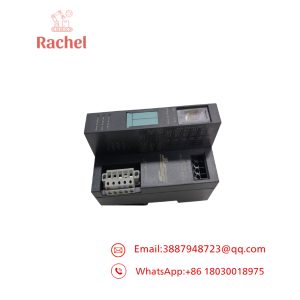
The Daiichi DDK SAN3-40S is a single-axis servo controller and torque driver engineered for the AFC3000 electric nutrunner system. Designed for automotive powertrain assembly and high-precision industrial fastening, it directly powers and monitors DDK NFT-series electric nutrunners (such as the NFT-801RM3-S). It operates on 200–240 VAC power to execute real-time closed-loop torque and angle profiles.
Unlike standard industrial servo drives that only regulate motor speed or basic positioning, the SAN3-40S integrates specialized fastening logic natively. It processes real-time strain gauge torque transducer signals alongside resolver positioning data. This allows the controller to evaluate yield points, detect cross-threading, and output pass/fail (OK/NG) judgments directly to the plant PLC network without latency or external calculation modules.
Key Technical Specifications
| Parameter | Specification |
| Compatible Platform | Daiichi Dentsu (DDK) AFC3000 Nutrunner System |
| Supported Actuators | DDK NFT-Series Servo Nutrunners (e.g., NFT-801RM3-S) |
| Input Power Voltage | 3-Phase 200 to 240 VAC (50/60 Hz) |
| Rated Output Current | 40 A peak/rated drive capacity |
| Control Modes | Dual closed-loop Torque, Angle, Yield, and Speed control |
| Feedback Interfaces | Dedicated dual connectors for Torque Transducer & Resolver/Encoder |
| Digital I/O | Multi-point parallel I/O for start/stop, recipe selection, and OK/NG signals |
| Serial Communication | RS232 / RS485 for parameter setup and torque curve data upload |
| Mounting Style | Panel / Control Cabinet Vertical Mounting |
| Operating Temperature | 32°F to 113°F (0°C to +45°C) |
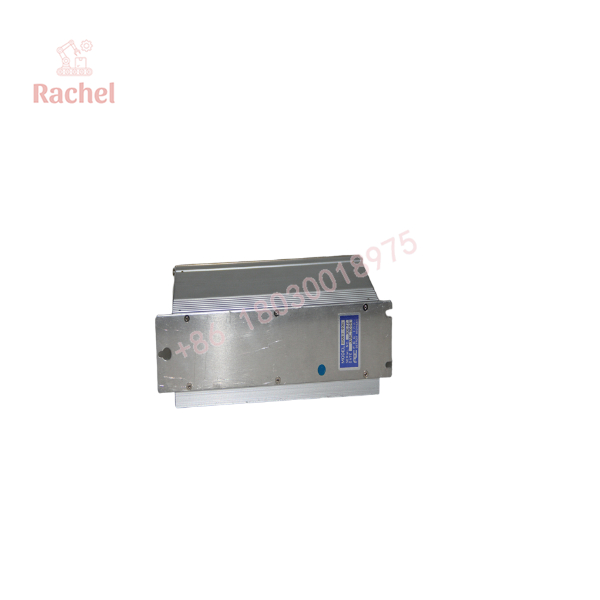
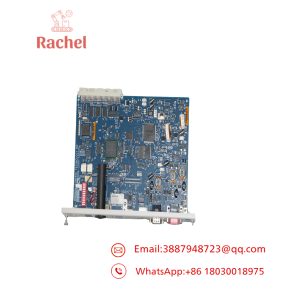
SAN3-40S
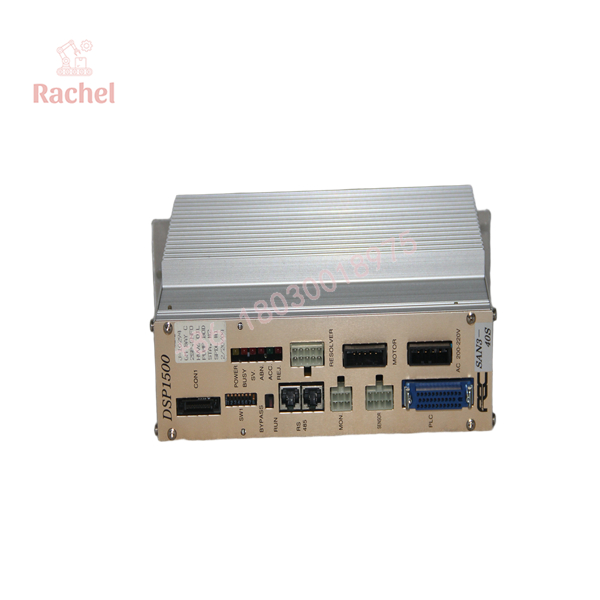
SAN3-40S
Application Scenarios & The “Trench” Experience
It’s 2:10 AM on the engine dress line. Cylinder head bolt station #3 throws an unrecoverable driver fault. The torque controller dropped off the network, locking the spindle mid-cycle and stopping the line at a loss of $1,500 per minute. Upgrading the station to a new-generation controller requires updating the master PLC communications, re-validating joint torque curves, and rewriting safety interlocks—wasting days you don’t have. You need a drop-in replacement SAN3-40S driver, configured with the correct parameter profile, swapped onto the backplane to restore joint tightening before the morning shift starts.
- Automotive Powertrain Assembly – Engine & Transmission Bolting – Executes multi-stage torque and angle sequences on critical joint connections (cylinder heads, flywheels, connecting rods).
- EV Battery Manufacturing – Battery Pack Frame Fastening – Drives precision electric nutrunners to achieve tight torque tolerances without damaging sensitive module casings.
- Heavy Equipment Production – Chassis & Axle Assembly Stations – Controls high-torque fixed spindles running automated multi-bolt patterns linked to central quality-tracking servers.
Field Case Study:
A transmission plant in Indiana experienced a complete driver breakdown on an automated 4-spindle bolt tightening rig. The original SAN3-40S driver suffered an internal power stage failure due to line voltage spikes. The OEM quoted a 14-week lead time for modern platform upgrades. We dispatched a verified surplus SAN3-40S unit via express freight. The site engineer transferred the stored fastening program via serial utility, verified transducer zero-balance, and got the spindle running calibrated production joints in less than 3 hours.
Transparency SOP: Quality Assurance & Testing
We don’t just ship boxes; we test them on actual DDK test benches.
- Inbound Physical Inspection: Thorough verification of heatsink condition, inspection of power terminal blocks, and check for damaged pins on feedback and serial communication connectors.
- Live Power & Internal DC Bus Test: Powered on 3-phase 230 VAC to verify internal power supply rails, cooling fan operation, and front display diagnostics.
- Closed-Loop Fastening Simulation: Connected to a matching DDK NFT nutrunner on a joint simulator to execute full torque-angle curves and verify accuracy against a calibrated reference cell.
- Transducer & Encoder Feedback Audit: Verification of strain gauge bridge excitation voltage, signal linearity, and resolver position tracking to guarantee zero signal noise.
- Anti-Static & ESD Packaging: Complete ESD clearing, sealing in heavy anti-static shielding bags, and packing in custom shock-absorbing foam before shipment.
The Veteran’s Tech Trap Guide
⚠️ Watch Out for Firmware & Suffix Variations (SAN3-40 vs. SAN3-40M vs. SAN3-40S):
Do not assume all SAN3-40 models are identical. The “S” designation typically identifies specific control board revisions or communication protocols. If you load a program file saved from a standard SAN3-40 into a SAN3-40S without checking option card assignments, the unit may throw a parameter mismatch error or fail to handshake with the PLC.
❗ Never Swap Feedback Cables Under Power:
The dedicated torque transducer and resolver cables carry sensitive excitation voltages. Unplugging these heavy military-style connectors while the unit is powered will spark the transducer bridge circuit and permanently burn out the controller’s analog input board.
⚠️ Zero-Balance the Torque Transducer After Replacement:
When installing a replacement driver onto an existing nutrunner spindle, always run the transducer calibration zero-balance routine in the software before running live production bolts. Residual strain offset will cause false joint OK readings or early torque cut-offs.
❗ Check Transceiver Cable Shielding Grounding:
High-frequency noise from nearby VFDs easily corrupts strain-gauge signals. Ensure the overall cable shield on the DDK feedback harness is clamped solidly to chassis ground at the cabinet entry plate—do not leave it floating.
Frequently Asked Questions
Q: Is the SAN3-40S a direct drop-in replacement for the standard SAN3-40 controller?
A: Physically and electrically, the mounting footprint, input power terminals, and main connector pinouts match. However, you must verify parameter structures and software settings to ensure complete compatibility with your host controller.
Q: Can I use this driver with standard third-party servo motors?
A: No. The SAN3-40S contains proprietary firmware and hardware interfaces specifically designed for DDK strain-gauge torque transducers and resolver-equipped NFT series electric nutrunners.
Q: Does this unit support hot-swapping while the main control cabinet is energized?
A: No. Hot-swapping is not supported. Always disconnect main 3-phase power and wait for the internal DC bus capacitors to fully discharge before removing power terminals or feedback connectors.
Q: How do I back up and transfer fastening parameters to the new module?
A: Connect a PC to the front RS232/RS485 diagnostic port using the Daiichi DDK support software. You can upload the existing fastening program (torque limits, angle windows, ramp speeds) from the original unit and download it directly to the replacement driver.
Q: What warranty coverage comes with this surplus module?
A: Every SAN3-40S controller we supply is backed by our full 12-month replacement warranty. If the unit fails under normal operating conditions during the warranty period, we replace it directly from stock.

 Start Chat


