





Description
Product Introduction & Engineering Value
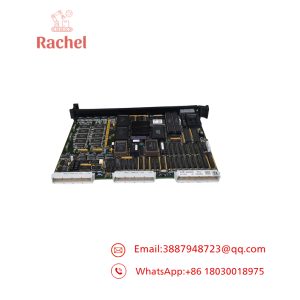
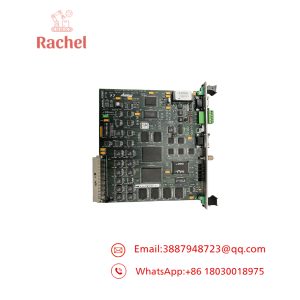
The ACC-24E2 sits at the hardware boundary between a Delta Tau motion controller and the amplifier or motor interface. Its primary job is to provide the servo interface circuitry needed by the PMAC architecture, including direct digital PWM operation and related feedback/control signals. The board itself contains no processor; motion calculations remain with the host PMAC/UMAC controller.
For a legacy UMAC machine, that distinction is important. Replacing an ACC-24E2 is not simply a matter of matching the physical 3U card size. Board addressing, Servo IC assignment, clock-source jumpers, controller type, and firmware configuration all affect whether the replacement communicates correctly with the host system.
Technical Specifications
| Specification | ACC-24E2 |
|---|---|
| Board Type | Axis expansion / servo interface |
| Standard Servo Channels | 2 |
| Optional Channels | 2 additional channels with Option 1 |
| Servo Interface | PMAC2-style direct PWM |
| Stepper Interface | PFM / pulse-and-direction capability |
| Host Controllers | UMAC Turbo PMAC / UMAC and MACRO Station architectures |
| Bus Interface | High-speed UBUS expansion bus |
| Rack Format | Industrial 3U rack |
| Servo IC | Integrated PMAC2-style Servo IC |
| Base Board Power | Approximately 700 mA at +5 V for the standard ACC-24E2 |
| Position Compare | High-speed compare output circuitry |
| Maximum Compare Driver Frequency | 5 MHz with specified DS75451N driver |
| Board Addressing | DIP-switch configurable |
| Configuration Variables | Turbo PMAC I7200–I7999 ranges, depending on Servo IC assignment |
The original Delta Tau documentation states that the standard ACC-24E2 contains one four-channel Servo IC but uses channels 1 and 2 on the base board; the optional assembly exposes channels 3 and 4. Up to eight ACC-24E2x boards can be connected to one UMAC, allowing substantially more servo interface channels when the appropriate options are installed.
The documented base-board power requirement is approximately 700 mA at +5 V. Optional versions can have additional ±12 V requirements depending on the installed DAC/analog-interface configuration, so the exact board option should be identified before sizing the rack power supply.
Field Application & the “Trench” Experience
A practical replacement scenario is a legacy UMAC machine where one servo axis suddenly stops responding. The amplifier passes its own checks, the motor is electrically healthy, and the host PMAC controller remains online. The fault is eventually isolated to the axis-interface card.
An engineer replacing the ACC-24E2 would first record the existing S1 DIP-switch configuration and jumper positions. After installing the replacement in the 3U rack, the board must be assigned the correct external Servo IC address so that the host controller’s I-variable configuration corresponds to the physical card. The manual explicitly maps the first through eighth external boards to Servo ICs 2 through 9.
Specific application scenarios
- Multi-axis CNC equipment: Direct PWM interface between UMAC/PMAC motion control and external servo amplifiers.
- Precision machine tools: Servo-axis expansion where additional PMAC2-style interfaces are required.
- Semiconductor or inspection equipment: Motion systems using tightly synchronized PMAC-controlled axes.
- Linear-motion platforms: Interface to PWM-capable amplifiers driving linear or rotary servo motors.
- Legacy MACRO motion systems: ACC-24E2 configurations can be used with compatible MACRO Station architectures.
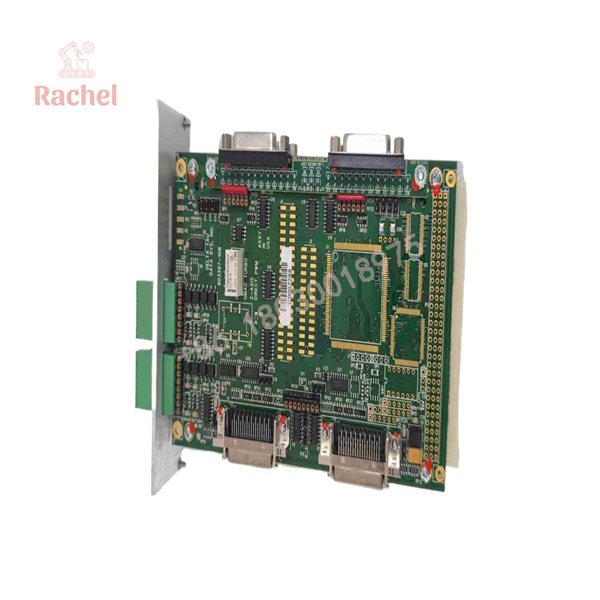
ACC-24E2
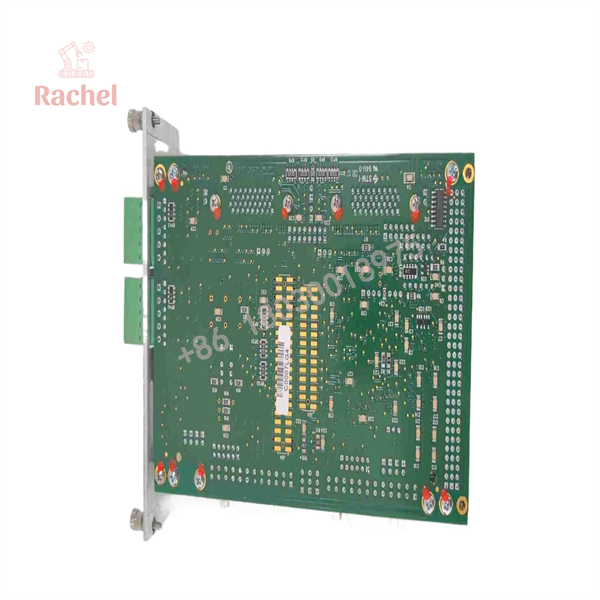
ACC-24E2
Transparency SOP: QA & Testing
For New Surplus or refurbished ACC-24E2 inventory, a visual inspection alone is not enough. This is a configuration-sensitive motion-control board.
Recommended test sequence:
- Part identification — Verify the Delta Tau ACC-24E2 designation and inspect the board revision and installed options.
- PCB inspection — Check connectors, IC sockets, DIP switches, jumpers, edge contacts, and signs of corrosion or rework.
- Power verification — Confirm the board receives the expected rack supply, with particular attention to the documented +5 V requirement.
- UBUS communication — Install the board in a compatible UMAC/MACRO test rack and verify that the host recognizes the assigned Servo IC.
- Axis interface test — Connect an appropriate test amplifier or controlled simulator and verify PWM/PFM output behavior.
- Feedback verification — Confirm the applicable encoder/flag inputs and axis status signals.
- Configuration check — Confirm that the I-variable range corresponds to the board’s DIP-switch address.
The original manual specifically warns that the phase clock and servo clock must be configured correctly and that a timing conflict can produce a watchdog condition. Modern UMAC Turbo firmware can automatically set clock settings beginning with the documented firmware revision, but the actual installed controller and firmware should be verified before relying on that behavior.
The Veteran’s Tech Trap Guide
⚠️ Trap #1 — Installing the card without checking S1
The ACC-24E2’s S1 DIP switch is not cosmetic. Several S1 positions determine the board number, Servo IC number, I-variable range, and base address. For example, the first UMAC board corresponds to Servo IC 2 and I7200, while subsequent settings move through the I7300–I7900 ranges.
PRO TIP: Photograph the DIP switches before removing the old card. It is one of the easiest pieces of evidence to preserve and one of the easiest to overlook.
⚠️ Trap #2 — Mixing UMAC and MACRO Station settings
The manual provides different switch arrangements for Turbo 3U PMAC/UMAC use and MACRO Station use. Do not copy a setting from another ACC-24E2 installation without confirming the host controller architecture.
⚠️ Trap #3 — Assuming every ACC-24E2 has four usable axes
The standard ACC-24E2 is a two-axis board. Channels 3 and 4 require the appropriate optional piggyback assembly. A listing that simply says “4-axis ACC-24E2” may actually describe an ACC-24E2 fitted with an option. Verify the hardware configuration before procurement.
⚠️ Trap #4 — Changing clock jumpers casually
Servo and phase clocks are system-level timing resources. Incorrect jumper configuration can cause timing conflicts or watchdog problems. Treat clock-source settings as part of the machine configuration, not as generic factory defaults.
Dynamic FAQ
What is the Delta Tau ACC-24E2?
The ACC-24E2 is a UMAC/PMAC2-style axis expansion board providing two direct-PWM servo interface channels. It plugs into a Delta Tau industrial 3U rack and communicates with the host controller through UBUS.
How many axes does an ACC-24E2 support?
The standard board provides two servo channels. An appropriate Option 1 piggyback assembly adds two more, producing a four-channel configuration.
Is ACC-24E2 a motion controller?
No. It does not contain its own processor. The board provides servo-interface circuitry while the UMAC/PMAC host performs the motion-control functions.
Can ACC-24E2 control stepper motors?
The documented hardware supports PFM stepper outputs, including pulse and direction signals, in addition to direct PWM servo interfaces. The exact jumper configuration must match the intended operating mode.
What should I check before ordering a replacement?
Verify the ACC-24E2 model, board revision, installed Option 1 assembly, host controller type, S1 DIP-switch configuration, jumper settings, and connector arrangement. These details can materially affect compatibility even when two boards carry the same basic ACC-24E2 designation.
How should New Surplus or refurbished ACC-24E2 stock be verified?
Confirm the board label and revision, inspect the PCB and connectors, then test it in a compatible UMAC/MACRO environment. A meaningful test should include UBUS communication, Servo IC recognition, axis output, and relevant feedback/flag signals. New Surplus describes inventory condition; warranty coverage should be confirmed with the supplier rather than assumed.

 Start Chat


