





Description
Product Introduction & Engineering Value
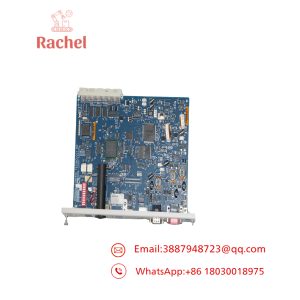
The ACC-24E2A is intended for motion systems where the controller needs an analog interface to external servo amplifiers. Its hardware supports ±10 V velocity, torque, and sinusoidal phase-current commands, along with pulse-and-direction operation for suitable applications. The board communicates with the host CPU through the expansion bus rather than operating as an independent motion controller.
That makes the board particularly relevant when maintaining an existing Delta Tau UMAC installation. The controller, amplifier, feedback device, and ACC-24E2A must be treated as one configured motion-control chain. Board addressing, jumpers, encoder wiring, and software I-variables all matter during replacement.
Technical Specifications
| Specification | ACC-24E2A |
|---|---|
| Board Type | Analog axis expansion board |
| Standard Axis Channels | 2 |
| Optional Channels | 4 with Option 1A |
| Servo Command | Analog ±10 V |
| Command Modes | Velocity, torque, sinusoidal phase current |
| Stepper Output | Pulse and direction |
| Encoder Interface | TTL-level quadrature encoder |
| Host Controllers | UMAC / MACRO Station CPU |
| Host Interface | UBUS / expansion port |
| Base Power | +5 V @ 0.55 A ±10%; +15 V @ 0.16 A ±10%; -15 V @ 0.07 A ±10% |
| Option 1A Power | +5 V @ 0.95 A ±10%; +15 V @ 0.30 A ±10%; -15 V @ 0.12 A ±10% |
| Operating Temperature | 0°C to 45°C |
| Storage Temperature | -25°C to 70°C |
| Humidity | 10–95%, non-condensing |
| Mounting | Delta Tau industrial 3U rack |
| Dimensions without Option 1A | 6.4 × 3.94 × 0.80 in |
The published ACC-24E2A manual specifies the base-board and Option 1A power requirements above. It also states that the board carries CE and UL/cUL safety approvals in the documented configuration.
The standard board provides channels 1 and 2. Option 1A adds the circuitry and connectors for channels 3 and 4 associated with the same Servo IC. The additional channels use ±10 V command circuitry.
Field Application & the “Trench” Experience
A typical legacy-machine failure starts with an axis that still has a healthy motor and amplifier but no usable command from the motion controller. After checking the amplifier enable and fault circuits, the engineer traces the problem back to the analog axis interface.
With an ACC-24E2A replacement, the critical work begins before the card is powered. The existing S1 address configuration, jumper positions, encoder connections, amplifier command wiring, and UMAC software variables need to be documented. The manual provides eight UMAC board-address configurations, assigning successive boards to Servo ICs 2 through 9 and corresponding I-variable ranges from I7200 through I7900.
Once configured correctly, the board can provide the analog command and feedback path between the UMAC controller and the external servo amplifier.
Specific application scenarios
- CNC servo-axis control: ±10 V velocity or torque commands to external servo drives.
- Precision positioning equipment: Closed-loop motion using TTL quadrature encoder feedback.
- Legacy machine-tool retrofits: Maintaining existing analog servo amplifiers while retaining the Delta Tau controller architecture.
- Multi-axis UMAC systems: Adding additional analog-controlled axes through ACC expansion cards.
- MACRO Station installations: Providing analog servo interfaces for compatible distributed motion architectures.
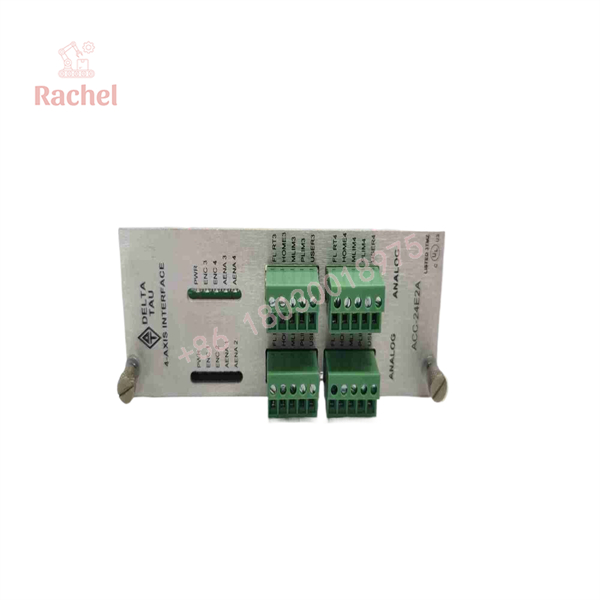
ACC-24E2A
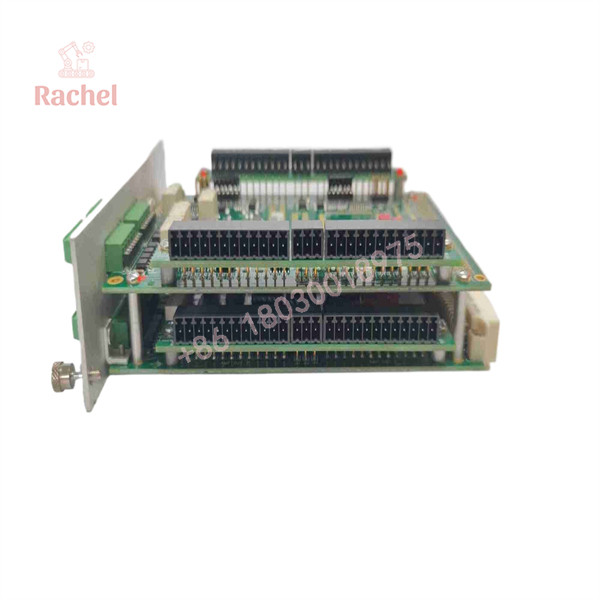
ACC-24E2A
Transparency SOP: QA & Testing
For New Surplus or refurbished ACC-24E2A stock, a power-on test alone is not enough. The board is highly dependent on its configuration.
Inspection and test sequence:
- Identity check — Verify ACC-24E2A model, board revision, and whether Option 1A is installed.
- PCB inspection — Examine edge contacts, terminal blocks, encoder connectors, jumpers, DIP switches, and analog circuitry.
- Power test — Verify the +5 V and ±15 V supply requirements under controlled conditions.
- UBUS test — Install the card in a compatible UMAC test rack and verify Servo IC communication.
- Analog-output test — Verify the appropriate ±10 V command outputs using a calibrated measurement setup.
- Encoder test — Feed known TTL quadrature signals into the encoder interface and verify position feedback.
- Configuration verification — Confirm the board address and corresponding UMAC I-variable range.
- Option verification — If fitted with Option 1A, test channels 3 and 4 independently.
One important power-system detail: Delta Tau warns that more than four ACC-24E2A boards equipped with Option 1A can exceed the available ±15 V capacity of ACC-E1 or ACC-F1 UMAC power supplies. An external ±15 V supply may therefore be required in larger configurations.
The Veteran’s Tech Trap Guide
⚠️ Trap #1 — Confusing ACC-24E2A with ACC-24E2
They are related boards, but they serve different amplifier interfaces. The ACC-24E2A is specifically the analog amplifier breakout, while the ACC-24E2 is associated with digital/PWM amplifier interfaces. The ACC-24E2A provides ±10 V analog command outputs.
⚠️ Trap #2 — Assuming every ACC-24E2A is four-axis
The standard ACC-24E2A has two channels. Channels 3 and 4 require Option 1A. A replacement should therefore be compared against the installed hardware rather than just the base model number.
PRO TIP: Photograph S1, all E-point jumpers, and the installed Option 1A assembly before removing the original board. The jumper configuration can be just as important as the model number.
⚠️ Trap #3 — Getting the UMAC board address wrong
S1 determines the board number and associated Servo IC/I-variable range. The documented first UMAC configuration uses Servo IC 2 / I7200, with subsequent board positions progressing through Servo IC 9 / I7900. A wrong address can make a perfectly good replacement appear defective.
⚠️ Trap #4 — Ignoring the ±15 V supply budget
Large UMAC systems using multiple Option 1A boards can run into the ±15 V power limitation identified by Delta Tau. This should be checked during system expansion or replacement planning.
Dynamic FAQ
What is the Delta Tau ACC-24E2A?
It is a UMAC/MACRO analog axis expansion board that provides PMAC2-style servo interface circuitry, including analog ±10 V command outputs and TTL encoder inputs.
How many axes does the standard ACC-24E2A support?
The base board provides two channels. An Option 1A board adds channels 3 and 4, allowing a four-channel configuration.
What type of servo command does it provide?
The ACC-24E2A supports ±10 V velocity commands, ±10 V torque commands, and sinusoidal ±10 V phase-current commands. It also supports pulse-and-direction outputs for appropriate applications.
Does ACC-24E2A contain its own motion-control CPU?
No. It is an expansion/interface board. The motion-control processing is performed by the compatible UMAC or MACRO Station CPU, with the ACC-24E2A communicating through the expansion bus.
Can I replace an ACC-24E2A with an ACC-24E2?
Not as a blind drop-in substitution. The two boards are members of the same ACC family but provide different amplifier interfaces. The ACC-24E2A is the analog version, while the ACC-24E2 is associated with PWM/digital amplifier interfaces. Verify the servo amplifier’s command interface before selecting a replacement.
How should New Surplus ACC-24E2A stock be verified?
Verify the exact model and board revision, determine whether Option 1A is installed, inspect all connectors and jumpers, and test the card in a compatible UMAC/MACRO environment. Functional testing should include the UBUS/Servo IC interface, analog outputs, and encoder inputs. New Surplus describes the inventory condition; warranty coverage should be confirmed with the supplier in writing.

 Start Chat


