





Description
Product Introduction & Engineering Value
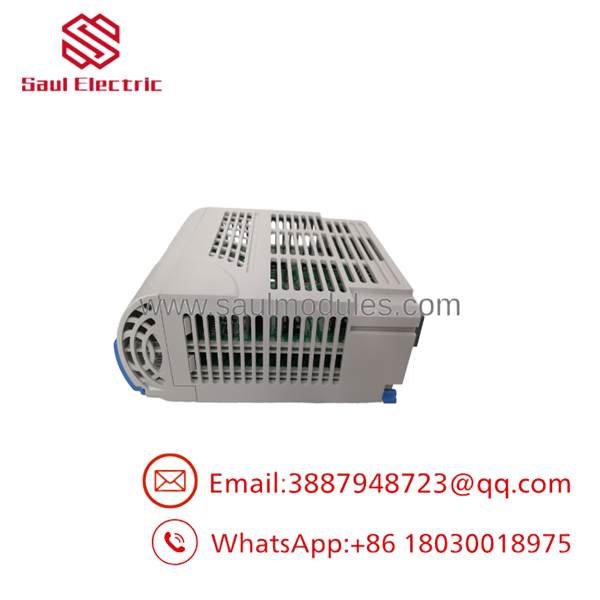
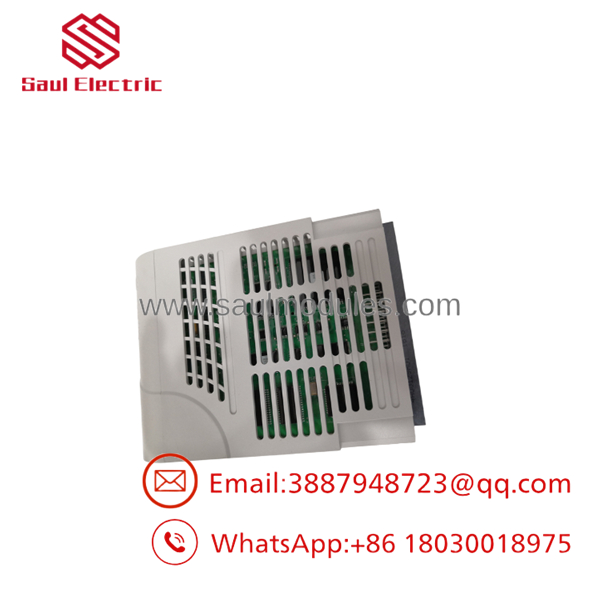
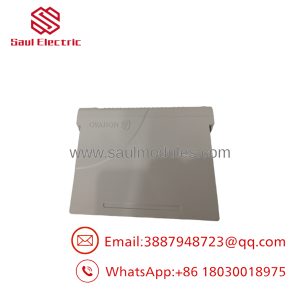
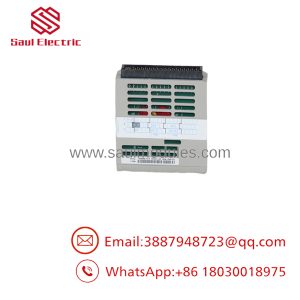
The Emerson Ovation 1C31166G02 is a serial link controller electronics module used in legacy Ovation DCS installations. Emerson’s spare-parts documentation specifically associates it with the R1120 CPU architecture, while industrial replacement listings identify the communication interface as RS-485, 4-wire, with an EMOD/PMOD configuration.
This is a communication component, not a conventional analog or digital field I/O card. That distinction matters during replacement. The existing chassis configuration, companion PMOD, CPU generation, and serial-link architecture should be checked before substituting another Ovation communications module.
Technical Specifications
| Parameter | Specification |
|---|---|
| Part Number | 1C31166G02 |
| Manufacturer | Emerson |
| System | Ovation DCS |
| Module Description | EMOD Assembly, Link Controller |
| Controller Architecture | R1120 CPU |
| Communication Type | Serial link |
| Interface | RS-485 |
| Wiring | 4-wire |
| Module Architecture | EMOD + PMOD |
| Application | Ovation system serial communications |
| Weight | Approximately 0.70 lb / 0.32 kg in supplier specifications |
| Lifecycle Status | Listed as discontinued by Radwell |
Emerson’s factory spare-parts list is particularly useful here because it directly identifies the assembly as “EMOD ASSY, LINK CONTROLLER (R1120 CPU).” Radwell independently lists the same part as a serial link controller with RS-485, 4-wire communication and R1120 CPU compatibility.
Some third-party listings claim additional protocol, baud-rate, temperature, and port specifications. Those values are not confirmed in the Emerson spare-parts document reviewed here, so they should not be treated as definitive specifications without checking the applicable Ovation hardware manual or the module’s engineering documentation.
Field Application & the “Trench” Experience
A realistic outage scenario is straightforward.
A plant has an older Ovation controller node communicating through a serial-link assembly. During troubleshooting, the node stops exchanging data with the associated serial network. The technician initially suspects the field device because the downstream equipment has also stopped updating.
The better diagnostic sequence is to work from the communication boundary inward: verify the serial wiring, termination and companion module first, then isolate the 1C31166G02 EMOD. If the replacement is ordered, the engineer should compare the existing assembly against the R1120 CPU / EMOD + PMOD configuration, rather than selecting a newer Ovation communication module simply because it appears functionally similar.
Specific application scenarios
- Legacy boiler control communications: serial data exchange between an Ovation control node and associated legacy equipment.
- Plant auxiliary-system integration: serial communications serving equipment that remains connected to an older Ovation architecture.
- Remote equipment communication: maintaining an established serial-link path where replacing the complete control architecture is not economically justified.
The objective is simple: restore the existing communication architecture without introducing an unverified hardware substitution.
1C31166G02
1C31166G02
Transparency SOP: QA & Testing
For new-surplus or refurbished 1C31166G02 inventory, use a component-specific inspection process:
- Part-number inspection
Verify the complete marking:1C31166G02. Do not accept1C31166G01,1C31166G04, or another visually similar Ovation module as an equivalent without documented engineering approval. - Hardware inspection
Examine the PCB, connectors, module housing, identification labels, mounting hardware, and any visible evidence of corrosion, contamination, impact, or thermal damage. - Architecture verification
Confirm that the intended application uses the R1120 CPU architecture and the corresponding EMOD/PMOD arrangement. Emerson explicitly identifies the 1C31166G02 as the link-controller EMOD. - Communication test
Where a compatible Ovation test setup is available, verify the serial-link function with the appropriate companion hardware rather than relying solely on a visual inspection. - Documentation
Record the part number, revision/markings, condition, test result, and warranty supplied with the unit.
Emerson states that its factory-certified Ovation replacement parts are subject to quality procedures covering design, manufacture, installation, and testing.
The Veteran’s Tech Trap Guide
⚠️ PRO TIP — Verify the CPU generation.
The biggest procurement mistake is treating 1C31166G02 as a generic serial communications card. Emerson’s own documentation ties this exact part to the .
⚠️ Do not ignore the PMOD.
Listings identify the assembly as EMOD + PMOD. If the existing installation contains a companion personality module, document its part number before removing the failed EMOD.
⚠️ Four-wire RS-485 is not simply “RS-485.”
Do not assume a two-wire replacement or another serial interface has the same electrical arrangement. The available part-specific documentation identifies the 1C31166G02 as RS-485, 4-wire.
PRO TIP: Photograph the existing module and companion PMOD before disassembly. For legacy Ovation systems, the assembly relationship can be just as important as the individual part number.
Dynamic FAQ
What is the Emerson 1C31166G02?
It is an Ovation serial link controller EMOD assembly associated with the architecture. Emerson’s official spare-parts document gives this exact description.
Is 1C31166G02 an I/O module?
It should not be categorized as a conventional field I/O module. It is identified as a Link Controller EMOD assembly, used for serial communication within the Ovation architecture.
What communication interface does it use?
Available part-specific listings identify RS-485 with 4-wire communication.
What CPU is associated with 1C31166G02?
The exact Emerson spare-parts listing associates this module with the .
Is 1C31166G02 obsolete?
At least one major industrial replacement supplier lists the part as discontinued by the manufacturer. That makes condition, revision, provenance, and testing particularly important when purchasing replacement stock.
What should I verify when purchasing New Surplus stock?
Request clear confirmation of 1C31166G02, physical condition, packaging status, manufacturing markings/revision, test status, and warranty. “New surplus” should mean unused inventory; it should not automatically be interpreted as newly manufactured OEM production. For a discontinued Ovation component, those distinctions are important.

 Start Chat


