





Description
Product Introduction & Engineering Value
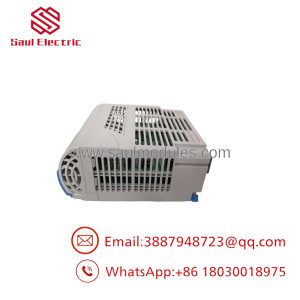
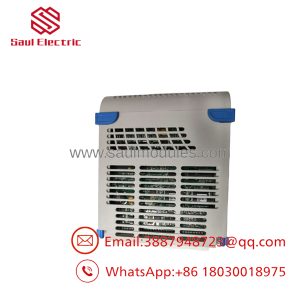
The Emerson Ovation 1C31179G02 is the four-channel Electronics Module used in the Ovation Media Attachment Unit (MAU). The MAU provides the interface between the controller/PCRR side and remote Ovation nodes through fiber-optic communication. Emerson’s spare-parts documentation specifically identifies the G02 version as a four-channel MAU EMOD.
The important replacement detail is the companion Personality Module. Documentation for the MAU architecture identifies the 1C31179 electronics module as the logic/power portion and the 1C31181 personality module as the optical interface. The exact G02/G02 combination supports four channels using 850 nm optics.
Technical Specifications
| Parameter | Specification |
|---|---|
| Part Number | 1C31179G02 |
| Manufacturer | Emerson |
| Control Platform | Ovation |
| Assembly Type | EMOD Assembly |
| Function | Media Attachment Unit |
| Channel Capacity | 4 remote-node channels |
| Primary Architecture | MAU |
| Companion PMOD | 1C31181G02 for 850 nm / 4-channel configuration |
| Optical Wavelength | 850 nm |
| Documented Optical Distance | Up to 2 km |
| System Role | Fiber-optic interface between PCRR/controller and remote nodes |
| Module Components | Attachment Unit Logic Board (LAU) within EMOD |
The MAU architecture uses the 1C31179 electronics module to house the Attachment Unit Logic Board (LAU). The associated personality module contains the Attachment Unit Personality Board (PAU), which handles the optical interface and fiber connectors.
Optical Configuration Matters
The documented combinations are particularly important:
| EMOD | PMOD | Channels | Optics | Maximum Link |
|---|---|---|---|---|
| 1C31179G01 | 1C31181G01 | 2 | 850 nm | 2 km |
| 1C31179G02 | 1C31181G02 | 4 | 850 nm | 2 km |
| 1C31179G01 | 1C31181G03 | 2 | 1300 nm | 4 km |
| 1C31179G02 | 1C31181G04 | 4 | 1300 nm | 4 km |
The source documentation also recommends keeping optical links below approximately 3.7 km to avoid requiring extended PCRR timeout periods. More importantly, an Ovation controller-cabinet MAU must use the same optical type—850 nm or 1300 nm—for the remote nodes it serves.
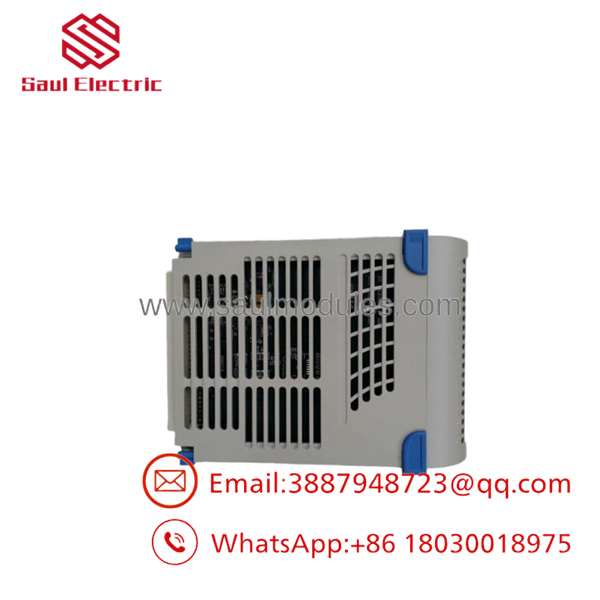
1C31179G02
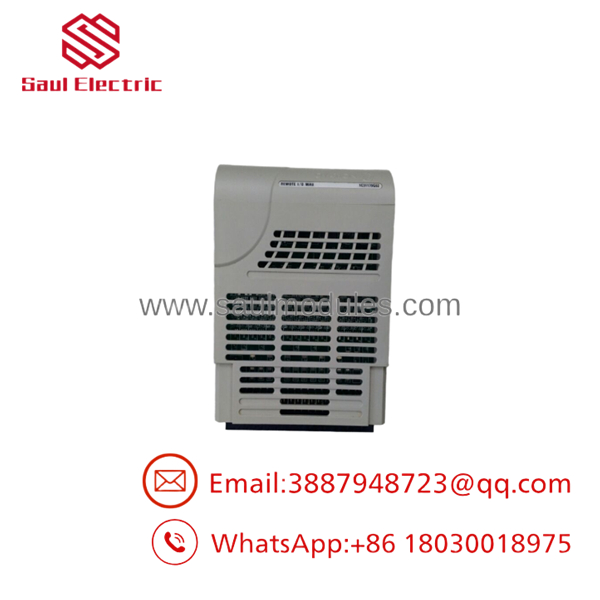
1C31179G02
Field Application & the “Trench” Experience
Picture a legacy Ovation installation with several remote I/O nodes distributed around a power-generation facility. A remote node suddenly disappears from the control system. The field I/O cards look normal. Power is present. The first instinct is often to replace the remote-node controller.
That is not necessarily the fault.
The 1C31179G02 MAU sits upstream in the communication path. If its logic board or associated optical interface fails, multiple remote-node communications can be affected. A technician who understands the architecture will check the MAU, PMOD, fiber path, and node controller as a system rather than replacing field modules at random.
Specific application scenarios
- Distributed boiler auxiliary I/O: fiber-linked remote I/O nodes positioned away from the primary Ovation controller cabinet.
- Turbine auxiliary equipment: remote control cabinets where copper field wiring is concentrated locally and communications return through the Ovation fiber network.
- Large power-plant control buildings: four-channel MAU installations used to connect multiple remote nodes over fiber rather than extending conventional copper communications over long cabinet-to-cabinet distances.
Transparency SOP: QA & Testing
For New Surplus or refurbished 1C31179G02 inventory, the inspection should be treated as an MAU component test rather than a generic PLC-card inspection.
1 — Identity check
Confirm the complete marking is:
1C31179G02
Record visible revision information, labels, manufacturing markings, and connector condition.
2 — Mechanical inspection
Check the housing, board assembly, connectors, mounting points, and interface between the EMOD and PMOD. Look for contamination, corrosion, bent contacts, cracked components, and evidence of overheating.
3 — Configuration check
Confirm the intended system uses the four-channel MAU architecture. For the documented 850 nm configuration, verify compatibility with 1C31181G02.
4 — Functional test
Where the proper Ovation test environment is available, test the EMOD together with the appropriate PMOD and remote-node equipment. Check module power/LED indications and communication through the optical path.
5 — Documentation
The final QA record should state the exact part number, condition, test status, and warranty. This is particularly important for legacy Ovation hardware because third-party listings can use inconsistent descriptions.
Emerson states that its factory-certified Ovation replacement parts are subject to quality procedures covering design, manufacture, installation, and testing.
The Veteran’s Tech Trap Guide
⚠️ PRO TIP — Do not order the PMOD by appearance.
The 1C31179G02 is the EMOD, not the complete optical interface by itself. The PMOD carries the optical interface. For the documented four-channel 850 nm configuration, the corresponding PMOD is 1C31181G02.
⚠️ 850 nm and 1300 nm are not interchangeable configurations.
A four-channel 1300 nm arrangement uses 1C31179G02 + 1C31181G04, while the four-channel 850 nm arrangement uses 1C31179G02 + 1C31181G02. Verify the installed PMOD before ordering.
⚠️ Do not assume the advertised “4 km” distance applies to every G02 assembly.
The G02 EMOD itself supports multiple MAU configurations depending on the personality module. The documented 850 nm G02/G02 configuration is up to 2 km, while the 1300 nm G02/G04 configuration is listed up to 4 km.
PRO TIP: Before removing a failed MAU, photograph both the EMOD and PMOD labels. Record the optical wavelength and every connected fiber port. That information can eliminate considerable commissioning time.
Dynamic FAQ
What is Emerson 1C31179G02?
It is an Ovation Media Attachment Unit Electronics Module (EMOD) designed for a four-channel MAU. Emerson’s official spare-parts list gives this exact description.
Is 1C31179G02 a remote I/O module?
It is commonly sold as a Remote I/O / Master Attachment Unit module, but the more technically precise description is an EMOD assembly for the Ovation Media Attachment Unit. Its role is to provide the logic/power portion of the MAU communication interface.
Which PMOD works with 1C31179G02?
For the documented four-channel 850 nm configuration, the matching PMOD is 1C31181G02. A four-channel 1300 nm configuration uses 1C31181G04 instead.
What is the maximum fiber distance?
For the 1C31179G02 + 1C31181G02 850 nm configuration, the documented maximum is 2 km (6,560 ft). The 1300 nm configuration can reach up to 4 km, subject to the system’s timing and installation requirements.
Is 1C31179G02 discontinued?
Emerson’s spare-parts document lists the part, while current aftermarket listings describe it as discontinued. Therefore, buyers should verify whether offered inventory is factory-sealed surplus, used, refurbished, or repair stock rather than assuming current OEM production.
What should I require when purchasing New Surplus 1C31179G02?
Require confirmation of the exact 1C31179G02 part number, physical condition, packaging status, visible revision/serial information, test status, and warranty. If the application requires the complete MAU, also verify the 1C31181-series PMOD and optical wavelength before placing the order.

 Start Chat


