





Description
Product Introduction & Engineering Value
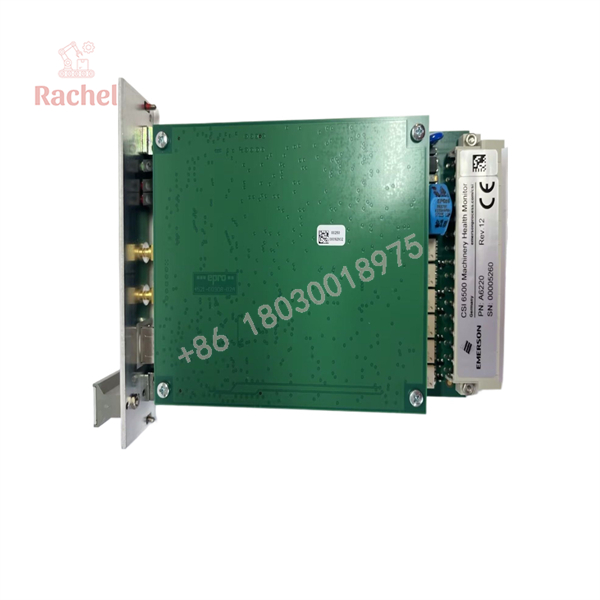
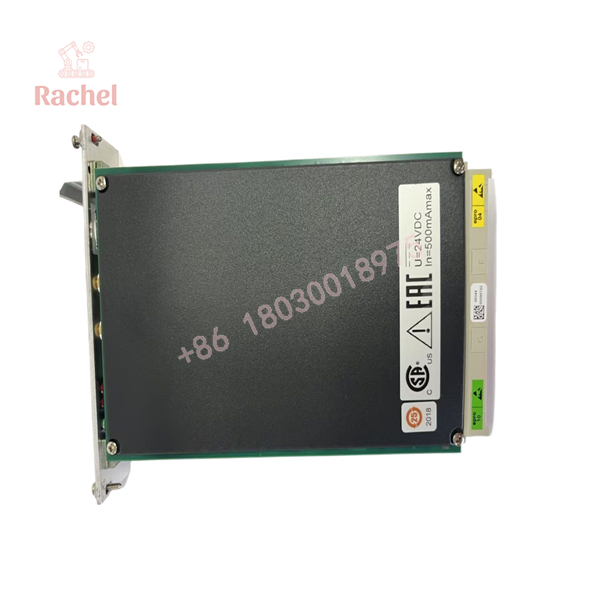
The A6220 occupies one slot in an AMS 6500 rack while providing two independent measurement channels for shaft eccentricity. Its input architecture is based on differential eddy-current displacement sensors, with galvanic isolation from the system power supply.
For large sleeve-bearing machines, eccentricity monitoring provides a different measurement objective from normal running-speed vibration monitoring. It is particularly relevant during slow rotation, turning gear operation, startup, and other conditions where rotor bow or eccentricity must be detected before normal operating speed is reached.
Technical Specifications
| Specification | A6220 |
|---|---|
| Monitoring Function | Shaft eccentricity |
| Number of Inputs | 2 independent channels |
| Input Type | Eddy-current, differential |
| Compatible Sensors | 6422 / 6423 / 6424 / 6425 |
| Input Resistance | >100 kΩ |
| Input Voltage Range | -1 to 23 VDC |
| Input Frequency Range | 0.017–70 Hz |
| Equivalent Speed Range | 102–4200 RPM |
| Measurement Range | Continuously adjustable |
| Smallest Measurement Range | 0–400 mV peak |
| Largest Measurement Range | 0–8000 mV peak |
| Sensor Supply | -26.7 VDC nominal |
| Sensor Supply Current | 20 mA nominal / 35 mA maximum |
| Current Outputs | 0/4–20 mA per channel |
| Voltage Outputs | 0–10 VDC per channel |
| DC Shaft-Position Output | 0–10 VDC proportional to shaft position/gap |
| Power Consumption | Maximum 6 W; 250 mA at 24 VDC |
| Operating Temperature | 0–65°C |
| Storage Temperature | -30–85°C |
| Relative Humidity | 5–95%, non-condensing |
| Rack Occupancy | 1 slot |
| Module Format | 3U, 100 × 160 mm PCB/Eurocard |
| Module Width | 30.0 mm / 6 TE |
| Net Weight | Approximately 320 g |
These values are taken from Emerson’s A6220 protection-card documentation. The sensor supply, measurement range, output characteristics, environmental limits, and mechanical dimensions should be treated as module-level specifications rather than generic AMS 6500 values.
Measurement and Output Architecture
The A6220 is designed around two independent displacement-sensor channels. Emerson specifies galvanic separation between the sensor circuits and system power supply, while the sensor supply itself is separately buffered and protected against open and short circuits.
Measurement
The module supports:
- Peak-to-peak measurement
- Minimum/maximum measurement
- Continuous gap measurement
- Hot configuration
- Configurable measurement range
- Configurable engineering units
- Configurable sensor sensitivity
The documented hot-configuration settling time is approximately 60 seconds. This should not be confused with an instantaneous configuration change while assuming that all measurement values immediately represent steady-state operation.
Analog Outputs
The rear-panel interface provides several useful signal paths:
- 0/4–20 mA proportional output for each channel
- 0–10 VDC proportional output for each channel
- Raw buffered AC/DC sensor output
- 0–10 VDC output proportional to shaft position/gap
The current outputs are specified for loads below 500 Ω and have an accuracy of ±1% of full scale. The voltage outputs are specified for loads above 10 kΩ.
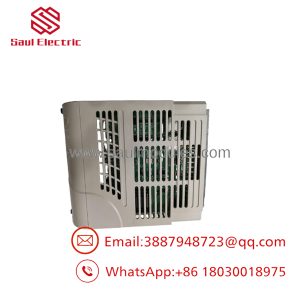
A6220
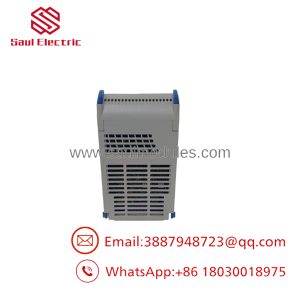
A6220
Alarm and Diagnostic Functions
A6220 provides independent Alert and Danger alarm functions for each channel.
Key configuration points include:
- Alert and Danger setpoints adjustable from 5–100% of full scale
- 1% full-scale resolution
- 0–5 second alarm delay per channel
- Up to 0–36 seconds when used with the A6740 relay module
- Selectable normally-open or normally-closed alarm logic
- Alarm hysteresis from 0–20% of full scale
- Remote trip bypass
- Remote limit multiplication from 1.00–4.99
The module also performs self-checking of the power supply, sensor, cable, module hardware, overload condition, internal temperature, and system watchdog. A green channel-status LED indicates the channel’s OK state.
Field Application & “Trench” Experience
Practical Scenario: Steam Turbine Turning-Gear Monitoring
Consider a large steam turbine that remains on turning gear during cooldown. The maintenance team has replaced a failed A6220 but reports that the replacement card appears healthy while the eccentricity reading remains incorrect.
The first place to investigate is not the AMS 6500 processor. Check the displacement sensor type, probe wiring, driver arrangement, sensor gap, and configured sensitivity. The A6220 expects the specified eddy-current displacement measurement architecture, and the input is not interchangeable with a generic accelerometer or velocity transducer.
For a rotor monitored during slow rotation, an incorrect probe gap can produce an apparently stable signal that is nevertheless outside the intended measurement geometry. Before changing alarm limits, verify the physical probe installation and sensor calibration.
Other Suitable Applications
1. Large steam turbines
Shaft eccentricity monitoring can be used during startup, shutdown, and turning-gear operation to identify excessive rotor bow before normal operating speed.
2. Gas turbines and compressors
The A6220 can form part of an AMS 6500 protection configuration where shaft displacement measurements are required alongside other machinery-health measurements.
3. Hydro turbomachinery
Large sleeve-bearing machines can use dedicated eccentricity measurements as part of a broader machinery protection scheme.
Emerson specifically lists steam, gas, compressor, and hydro turbomachinery applications for the A6220.
Installation and Integration Notes
The A6220 is a 1-slot, 3U AMS 6500 plug-in module. It is not a standalone vibration transmitter.
Before installation, verify:
- The existing rack is an appropriate AMS 6500 configuration.
- The replacement module is specifically an A6220 rather than an A6110, A6140, or another vibration-monitoring card.
- The installed field sensors correspond to the documented 6422/6423/6424/6425 sensor family.
- Sensor polarity, driver wiring, and probe gap match the existing engineering drawings.
- Channel sensitivity and engineering units match the configuration being replaced.
- Alarm and Danger setpoints are documented before removing the existing card.
- The replacement is tested before returning the machinery protection loop to service.
Important: Do not substitute a shaft-relative vibration module simply because its physical dimensions and sensor technology appear similar. A6110 and A6220 have different measurement purposes and different documented operating ranges.
QA & Testing — Transparency SOP
For a replacement A6220, a useful receiving inspection should cover more than a visual check.
Electrical and Functional Checks
- Verify model marking:
- Inspect PCB, connectors, front panel, and mounting hardware
- Confirm channel status behavior
- Check sensor-input response using an appropriate test setup
- Verify configurable measurement range
- Verify 0/4–20 mA outputs
- Verify 0–10 V outputs
- Check DC gap/shaft-position output
- Test Alert and Danger behavior where the test equipment permits
- Confirm diagnostic/self-check behavior
- Record the tested serial number and configuration
New Surplus
For New Surplus inventory, “new” should mean unused or previously unused stock, but the condition of the outer packaging and storage history should still be checked. A stored industrial electronics module is not automatically equivalent to factory-fresh production inventory.
Refurbished
For refurbished stock, request evidence of electrical testing rather than relying solely on cosmetic inspection. Ideally, the supplier should identify what was tested, whether failed components were replaced, and whether the unit was functionally tested under representative conditions.
Procurement note: A clear photo of the actual A6220 nameplate is useful because it allows the model marking, revision information, and physical condition to be checked before shipment.
Veteran’s Tech Trap Guide
⚠️ Trap 1 — Confusing A6220 with A6110
Both modules belong to the AMS 6500 family and both use displacement-sensor technology, but their measurement objectives are different.
A6220 = shaft eccentricity.
A6110 = shaft relative vibration.
Do not approve a replacement based only on connector layout or physical appearance.
⚠️ Trap 2 — Treating the A6220 as a generic vibration input card
The A6220 uses eddy-current differential inputs and is designed around the specified displacement-sensor architecture. An accelerometer or generic vibration transmitter is not an equivalent input device.
⚠️ Trap 3 — Ignoring the low-speed measurement requirement
The A6220 documentation specifies an input frequency range of 0.017–70 Hz, corresponding to 102–4200 RPM. Its application description specifically discusses shaft movement associated with bowing/bent shafts below 600 RPM. If the project requires normal running-speed shaft-relative vibration protection, check the required measurement function before selecting the module.
PRO TIP: When replacing an A6220 in a turbine protection rack, copy the existing configuration parameters before removing the original module whenever the maintenance procedure permits. The hardware replacement and configuration verification should be treated as two separate tasks.
FAQ
What is the Emerson A6220 used for?
The A6220 is a dual-channel shaft eccentricity monitor for the AMS 6500 Machinery Health Monitor. It is designed to measure shaft eccentricity using compatible eddy-current displacement sensors.
How many channels does the A6220 provide?
The module has two independent input channels. Emerson specifies differential eddy-current inputs and compatibility with 6422, 6423, 6424, and 6425 displacement sensors.
Is A6220 the same as Emerson A6110?
No. A6220 is the shaft eccentricity monitor, while A6110 is the shaft relative vibration monitor. They should not be treated as direct functional equivalents.
What is the A6220 operating temperature?
The documented operating temperature is 0–65°C (32–149°F), with storage temperature from -30 to 85°C (-22 to 185°F) and relative humidity of 5–95%, non-condensing.
Is an A6220 New Surplus unit authentic?
New Surplus describes stock condition, not automatically the manufacturing provenance. For procurement, verify the actual Emerson model marking, serial/identification information where applicable, packaging condition, and supplier test documentation. A clear nameplate photograph should be requested before purchase.
What warranty should be expected when purchasing a replacement A6220?
Warranty terms depend on the supplier and stock condition. Before ordering, confirm the warranty period, whether the unit is New Surplus or Refurbished, what functional testing was performed, and the procedure for handling a DOA or failed-on-installation unit.

 Start Chat


