





Description
Core Product Summary
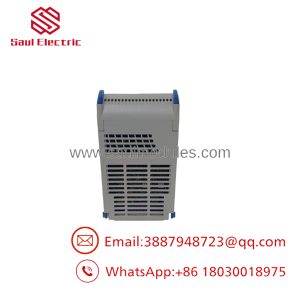
The Emerson HD22005-3 is a high-frequency switching charging module (rectifier) from the Emerson HD series, designed for the DC power systems — “DC screens” — used in transformer substations, power plants, hydropower plants, and other utility and industrial DC supply applications. The model designation encodes its rating: HD22005 indicates a nominal DC output of 220 V at a rated output current of 5 A, making it the smallest 220 V module in the HD charger family.
The module takes a three-phase, three-wire 380 V AC, 50 Hz input and converts it to a regulated 220 V DC output for battery charging and continuous load supply. Its power stage uses phase-shifted resonant soft-switching technology with three-phase power factor correction, and control is handled by a built-in CPU in a distributed control architecture. Practical features for DC panel operation include stepless output current limiting for precise battery charge control, input over-/under-voltage and phase-loss protection (with derated output on phase loss), fault code display for diagnostics, and live insertion/removal so modules can be exchanged online. The die-cast aluminum housing uses a combined natural/forced-air cooling design, and the module family carries CE safety and EMC certification and complies with the RoHS directive. In Emerson DC screen systems, these rectifiers operate under the supervision of the PSM-E series monitoring modules.
Key Technical Specifications
| Parameter | Value |
|---|---|
| Product type | High-frequency switching charging module (rectifier) for DC power systems |
| Series | Emerson HD series charging modules |
| AC input | Three-phase three-wire, rated 380 V, 50 Hz |
| Nominal DC output voltage | 220 V |
| Rated DC output current | 5 A |
| Power conversion technology | Phase-shifted resonant high-frequency soft-switching, with three-phase PFC |
| Control | Built-in CPU, distributed (centralized-distributed) control |
| Battery charging control | Stepless output current limiting |
| Protections | Input over-/under-voltage, phase-loss (derated output), fault code display |
| Cooling | Combined natural / forced-air cooling, die-cast aluminum housing |
| Maintenance | Live insertion and removal (online maintenance) |
| Certification | CE safety and EMC standards; RoHS compliance |
| Supervision | Operates under Emerson PSM-E series monitoring modules in automatic mode |
Detailed Product Overview
The HD22005-3 serves a specific role in electrical utility and industrial power infrastructure: the DC screen. A DC screen is the station battery system that provides reliable 220 V (or 110 V) DC power to protection relays, circuit breaker closing and tripping coils, indicating lamps, and emergency loads in a substation or plant. The charging modules are the heart of that system — they rectify the station’s AC supply to DC, float-charge the battery bank, and carry the continuous DC load. Because these loads are safety-critical, the charger design emphasizes stable output, protective supervision, and online maintainability rather than raw performance.
Within the Emerson HD range, the HD22005-3 is the low-current 220 V variant at 5 A rated output. In practice this rating suits smaller DC systems or systems where several modules run in parallel for redundancy: the HD family includes 10 A and 20 A modules (HD22010, HD22020) and 110 V equivalents (HD11010, HD11020), and DC screens are commonly dimensioned with N+1 module redundancy so that a single module failure does not reduce system capacity below demand.
The electrical architecture follows the standard two-stage approach for this class of equipment: a three-phase passive power-factor-correction front end conditions the 380 V AC input and balances current across the three phases, and a DC/DC converter stage using phase-shifted resonant soft-switching produces the isolated, regulated 220 V DC output. Soft-switching reduces switching losses and electromagnetic interference, which allows a compact die-cast aluminum housing with cooling designed to work with either natural convection or fan assistance.
Control and protection are handled locally by an internal CPU, while overall system coordination — output voltage setting, current limit point, and start/stop — is managed by the Emerson PSM-E series monitoring module in automatic operation. When the module feeds a battery bank on the closing bus, automatic control by the monitor is the normal configuration. Protection functions cover input over- and under-voltage and phase loss; on phase loss the module does not simply shut down but continues at reduced output, widening the range of supply conditions under which the DC system stays alive. Fault conditions are reported via fault codes on the module, which speeds up identification during maintenance.
The live-insertion design deserves emphasis for procurement and maintenance planning: modules can be pulled and replaced without de-energizing the DC bus, so a failed HD22005-3 can be swapped with the system in operation, provided the remaining modules carry the load.
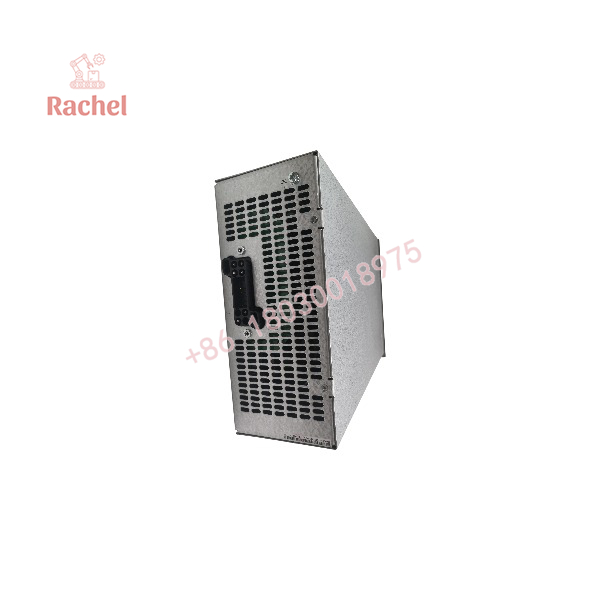
HD22005-3
System Compatibility & Integration Requirements
| Item / Dependency | Verified Compatibility or Requirement | Practical Note |
|---|---|---|
| AC supply | Three-phase three-wire, rated 380 V, 50 Hz | Verify site station service voltage; wide input tolerance and phase-loss derating are built in. |
| DC bus | 220 V nominal DC system | The module family also includes 110 V variants (HD110xx); match the module to the system voltage. |
| Monitoring module | Supervised by Emerson PSM-E series monitor (PSM-E20/E11/E02/E01) | In automatic mode, output voltage, current limit, and on/off are controlled by the monitor. |
| System integration | Used in Emerson DC screen systems with KZD110/220-A module shelves | Follow the shelf and cabinet documentation when adding or replacing modules. |
| Maintenance | Live insertion/removal supported | Module replacement can be done online; confirm remaining modules cover the load. |
| Installation environment | Front-to-rear cooling airflow path | Keep module front and rear ventilation clear in the cabinet layout. |
Engineering Selection Highlights
- 220 V / 5 A rating — the entry current class of the 220 V HD range; size the module count against continuous DC load plus battery recharge current, and plan N+1 redundancy where availability is critical.
- Three-phase 380 V AC, three-wire input — matches standard station service supplies in the target market; confirm the site’s AC supply voltage and phase configuration before ordering.
- Stepless current limiting — allows the charging current to be set precisely to the battery manufacturer’s limit, protecting the battery bank during recharge after a discharge.
- Phase-loss derated operation — the module continues supplying a reduced output on input phase loss, extending the survivability of the DC system during AC supply faults.
- Supervision by PSM-E monitoring modules — in automatic mode the monitor sets voltage, current limit, and switching; ensure the DC screen’s monitoring module is compatible and correctly configured.
- Live insertion/removal — supports online module replacement; keep the front and rear cooling air paths clear when arranging modules in the cabinet.
- CE / EMC certification and RoHS compliance — supports installation requirements where documented safety and EMC conformity is required.
FAQ
What is the Emerson HD22005-3?
It is a high-frequency switching charging module (rectifier) that converts a three-phase 380 V AC input into a regulated 220 V DC, 5 A output for DC screen systems in substations, power plants, and similar DC power applications.
What do the numbers in HD22005 mean?
The “220” refers to the 220 V nominal DC output and the “05” to the 5 A rated output current.
Where is this module used?
It is used in the DC power supply systems (“DC screens”) of transformer substations, hydropower plants, and power plants, where it float-charges the battery bank and supplies continuous DC loads such as protection and control circuits.
What input does it need?
A three-phase, three-wire 380 V AC supply at 50 Hz.
What protection functions does it have?
Input over- and under-voltage protection, phase-loss protection with derated output, and fault code display; the module also limits output current steplessly for controlled battery charging.
Can it be replaced while the system is running?
Yes. The module supports live insertion and removal, so it can be exchanged online without de-energizing the DC bus, provided the remaining modules cover the load.
How is the module controlled?
An internal CPU handles module-level control; in a complete DC screen, a PSM-E series monitoring module supervises the rectifiers, setting output voltage, current limit, and start/stop in automatic mode.
Verification & Troubleshooting Notes
- Module reports a fault code: note the displayed code first — fault codes are provided specifically to distinguish input, output, and internal faults before any replacement decision.
- Output voltage or current incorrect: if the system uses a PSM-E monitor, check the monitor’s settings before suspecting the module; in automatic mode the module’s setpoints come from the monitor, not from local adjustment.
- Reduced output capability: check the AC supply for phase loss — the module deliberately derates rather than shutting down, so partial output can indicate an input problem rather than a failed module.
- Overheating or fan noise: confirm the front and rear cooling air paths are unobstructed; these modules depend on cabinet airflow layout for thermal design.
- Battery charging at excessive current: verify the stepless current limit point against the battery specification; the charge limit must be set by the monitoring module within the battery’s rating.
- All work on DC screen equipment involves stored battery energy and live DC buses; module replacement and inspection should be performed by qualified electrical personnel following the system documentation and applicable electrical safety procedures.

 Start Chat


