





Description
Product Introduction & Engineering Value
The GE DS3800DMEC1B1B is a legacy DS3800-series microcomputer/control board associated with the Mark IV Speedtronic turbine-control platform. Unlike a conventional PLC I/O card, this type of board participates in the processor and control circuitry of an older turbine-control architecture.
For maintenance engineers, exact identification is critical. DS3800 boards can share similar physical construction while serving completely different functions. The complete DS3800DMEC1B1B designation, board revision, cabinet position, and associated system documentation should all be checked before replacement.
Technical Specifications
- Manufacturer: General Electric
- Part Number: DS3800DMEC1B1B
- Product Family: DS3800
- Control Platform: Speedtronic Mark IV
- Board Designation: DMEC
- Board Type: Microcomputer/control board
- Primary Role: Microcomputer-based control processing
- Application: GE turbine control systems
- Hardware Generation: Legacy Speedtronic
- Revision Identification: C1B1B
- Installation Context: Mark IV control cabinet
- Replacement Method: Exact part-number matching recommended
Specification caution: Detailed electrical specifications for this exact revision are not sufficiently documented in broadly available public references to safely state values for processor type, memory capacity, operating voltage, connector pinout, or I/O characteristics. Those parameters should be taken from the applicable GE Mark IV documentation and the actual board revision.
Field Application & the “Trench” Experience
A Mark IV turbine has been running for decades. During a scheduled shutdown, a control-board fault is isolated to a board identified as DS3800DMEC1B1B. The plant has a visually similar DS3800 board on the shelf, and someone suggests installing it to get the system back online.
That is exactly the moment to stop.
A similar board is not automatically a substitute. The technician compares the full part number, board markings, configuration hardware, connectors, and cabinet documentation. The spare is then checked against the removed board before installation. With legacy turbine controls, correct identification is often more valuable than speed during the first five minutes of a repair.
Specific application scenarios
- Mark IV turbine controller maintenance — replacement of a failed microcomputer/control board during a planned outage.
- Legacy turbine control fault isolation — investigating processor-side control abnormalities before considering larger system-level intervention.
- Mark IV critical-spare inventory — maintaining an exact DMEC board revision for plants operating long-lived Speedtronic equipment.
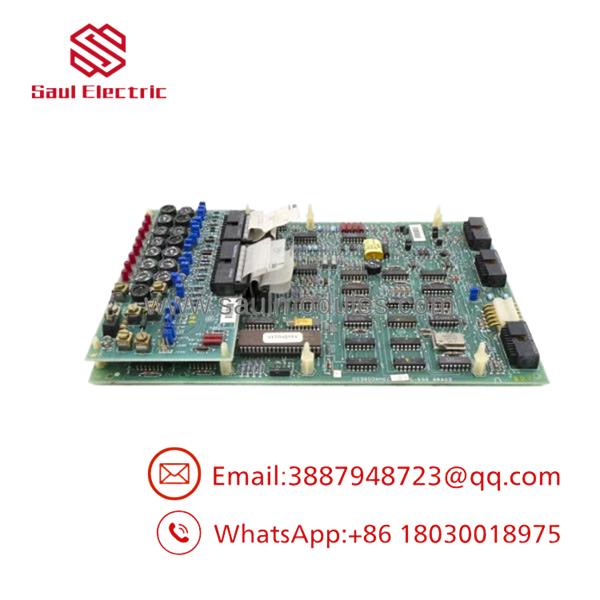
DS3800DMEC1B1B
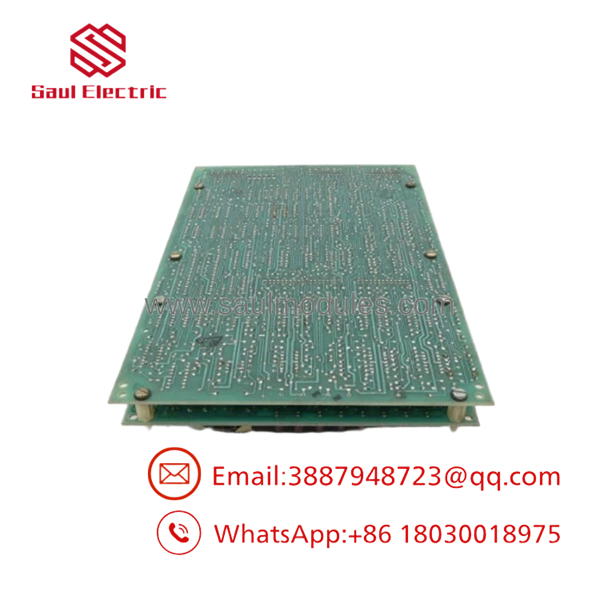
DS3800DMEC1B1B
Transparency SOP: QA & Testing
For this type of legacy control board, quality assurance should be documented rather than summarized with a single “tested” label.
- Identity check: Verify
DS3800DMEC1B1B, revision markings, and board identification. - Physical inspection: Check the PCB, connectors, solder joints, traces, component bodies, and mounting hardware.
- Configuration review: Photograph and document configurable hardware before any refurbishment activity.
- Component assessment: Inspect capacitors, semiconductors, integrated circuits, resistors, and other age-sensitive components.
- Electrical testing: Perform applicable continuity and power-rail tests using an approved procedure.
- Functional testing: Where a suitable Mark IV test fixture exists, verify the board under controlled operating conditions.
- Final QC: Record board identity, condition, test results, refurbishment actions, and warranty status.
A generic bench power-up does not prove system compatibility. The acceptance criteria should be based on GE documentation or an approved engineering test procedure.
The Veteran’s Tech Trap Guide
⚠️ Trap #1 — Assuming DS3800 boards are interchangeable
They are not. The DS3800 family contains numerous boards with different functions. Matching only the family prefix can result in a completely unsuitable replacement.
PRO TIP: Use the complete DS3800DMEC1B1B number when creating inventory records and purchase orders.
⚠️ Trap #2 — Ignoring revision information
The C1B1B portion should not be discarded as cosmetic information. For legacy equipment, revision and modification markings can be important when establishing compatibility.
⚠️ Trap #3 — Failing to document the original board
Before removal, photograph the board and record connector locations, configuration components, and all identification markings. This is cheap insurance.
⚠️ Trap #4 — Treating a 30-year-old control board like a modern PLC module
Age-related component degradation can occur even when a board has never been installed. Capacitors, solder joints, connectors, and other components deserve inspection before a supposedly “unused” board goes into critical service.
Dynamic FAQ
What is the GE ?
The is a GE -series microcomputer/control board associated with the Speedtronic Mark IV turbine-control platform.
What system uses the ?
It is associated with GE’s Mark IV Speedtronic turbine-control architecture, a legacy generation of GE turbine control hardware.
Is this a PLC I/O module?
No. It is better classified as a microcomputer/control board within the Mark IV architecture rather than as a conventional discrete or analog PLC I/O module.
Can another DMEC board be used as a replacement?
Do not assume that it can. Verify the complete part number, revision, board configuration, cabinet location, and system documentation before substitution.
What should I check before purchasing one?
Confirm the complete identification, revision markings, physical board condition, availability of functional testing, and the intended Mark IV application. For an installed critical system, photographs of the existing board are strongly recommended.
Is New Surplus different from Refurbished?
Yes. New Surplus generally describes unused inventory that is outside the manufacturer’s current production/distribution channel. Refurbished describes previously used or returned hardware that has undergone inspection and may have been repaired and tested.
How should an old New Surplus board be evaluated?
“Unused” does not necessarily mean “electrically equivalent to new production.” Long-term storage can affect capacitors, solder joints, connectors, and other components. A proper inspection and, where possible, controlled functional test are appropriate before deployment.
What warranty should accompany the board?
The supplier should state the warranty period and conditions in writing. Warranty coverage should identify whether it applies to New Surplus, Refurbished, or Repaired stock. A supplier warranty should not be described as a GE factory warranty unless the supplier can substantiate that status.

 Start Chat


