





Description
Product Introduction
The GE DS3800HSCC1D1D serves as a high-speed serial communication card for legacy General Electric Speedtronic Mark IV turbine management architectures. Slotted into the main processor card cage, this module orchestrates deterministic serial data exchange between the central processor cores, peripheral I/O racks, and remote operator interface terminals (CRT displays/PRM stations).
In our field experience, the DS3800HSCC1D1D is vital for preventing data bottlenecks across the control network. By offloading intensive packet formatting, error checking, and serial bus handshake protocols from the primary processing units, it ensures that critical real-time turbine parameters are transmitted to SCADA and operator displays without lagging or consuming main CPU cycles.
Key Technical Specifications
| Parameter | Value |
| Manufacturer | General Electric (GE) |
| Part Number | DS3800HSCC1D1D |
| Control System Series | Speedtronic Mark IV |
| Functional Role | High-Speed Serial Communication Card |
| Revision Level | 1D1D (Artwork & Hardware Revision Group) |
| Backplane Connection | Multi-pin gold-finger edge connector |
| Communication Channels | Dedicated serial RS-232 / RS-422 / current loop channels |
| Onboard Diagnostics | Card-edge LED status indicators for TX/RX link verification |
| Operating Temperature | 0°C to 60°C (32°F to 140°F) |
| Form Factor | Full-height plug-in PCB for Mark IV card cages |
Application Scenarios & The “Trench” Experience
Picture a critical situation at an industrial power station: the gas turbine is running smoothly, but suddenly all live temperature and pressure trends on the main control room screen freeze. The alarm summary stops updating, showing a communications offline fault. The turbine is still running, but the control room operator is flying blind. You head into the local equipment room and find a dead transceiver chip on an old serial card—the link between the Mark IV rack and the operator station has completely dropped.
- Legacy Power Generation – GE Frame 6 and Frame 7 Gas Turbines – Handles serial link communications between the control rack and the plant HMI or operator display terminal.
- Refinery Cogeneration Facilities – Steam & Gas Turbines – Transmits high-speed alarm and process data to external distributed control systems (DCS).
- Cross-Country Gas Pipelines – Compressor Station Turbines – Manages remote telemetry and serial command inputs from SCADA master stations.
During a forced outage at a remote pipeline compressor unit, a failed serial communication card severed communication with the master station, triggering an automatic safety lockout. We dispatched a fully tested DS3800HSCC1D1D board from surplus stock via express courier. The site engineer set the hardware jumpers, slotted the card into the rack, verified the TX/RX activity LEDs, and restored full remote control within 12 hours.
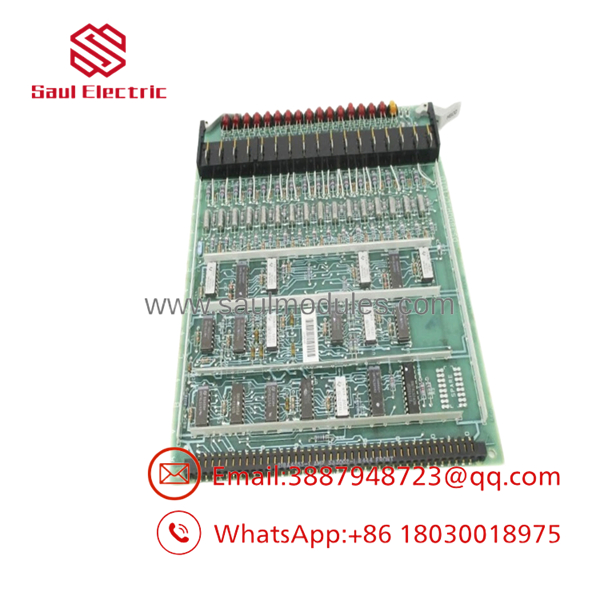
DS3800HSCC1D1D
Transparency SOP: Quality Assurance & Testing
We don’t just ship boxes; we test them on actual GE Mark IV racks.
- Inbound Visual Inspection: Microscopic audit checking for trace corrosion, solder fractures, thermal stress discoloration, and edge-connector plating condition.
- Gold-Finger Polish & Check: Backplane edge contacts are thoroughly cleaned, polished, and micro-measured for uniform thickness and low contact resistance.
- Serial Loopback Bench Test: Transmit and receive lines are put through active loopback tests across all communication ports to verify baud-rate stability and zero packet loss.
- Live Card Cage Thermal Soak: The board is run in a Mark IV test rack under elevated operating temperatures to ensure communication chips do not drift under heat.
- Anti-Static Sealing: Cleaned and sealed in static-shielding bags with moisture desiccant prior to placement in custom shock-absorbing foam packaging.
The Veteran’s Tech Trap Guide
- ⚠️ Match Your Hardware Jumpers and Dip Switches: The DS3800HSCC1D1D uses onboard jumpers and micro-switches to set node addresses, baud rates, and protocol selection (e.g., RS-232 vs. RS-422). Document and copy every jumper and switch setting from your old board before sliding the replacement in. A single incorrect switch position will cause a total communication lockout.
- ❗ Never Hot-Swap Mark IV Cards: The Speedtronic Mark IV card cage backplane does NOT support hot-swapping. Inserting or pulling this module while power is applied can arc the gold edge contacts and destroy sensitive UART and driver chips on the board.
- ⚠️ Check External Opto-Isolators & Cable Shields: If a lightning strike or ground fault damaged your previous communication card, test the serial cable shield grounding before plugging in the new card. High voltage riding on the serial shield will instantly blow out fresh RS-232/RS-422 driver ICs.
- ❗ Clean the Rack Edge Connectors: Card cage slots that have sat in service for decades accumulate fine dust and film. Clean the slot connectors with electrical contact cleaner and a card-cleaning pad before seating the new card.
Frequently Asked Questions
- Q: Is the GE DS3800HSCC1D1D hot-swappable?
- A: No. Always power down the Mark IV card cage rack before removing or installing this module to prevent backplane arcing and circuit damage.
- Q: What is the primary function of the DS3800HSCC1D1D card?
- A: It acts as a dedicated serial controller board, managing high-speed data communications between the Mark IV central processor, external HMI terminals, and plant DCS systems.
- Q: What does the “1D1D” suffix indicate?
- A: “1D” identifies the base artwork layout group, while the full “1D1D” suffix designates the specific engineering hardware and component revision level from GE.
- Q: Do I need to re-flash firmware when replacing this module?
- A: No. The DS3800HSCC1D1D relies on hardwired circuit logic and jumper configurations. As long as you match the hardware jumper and DIP switch settings from your original board, it is plug-and-play.
- Q: What warranty is provided with this surplus board?
- A: We back all New Surplus and Refurbished GE Mark IV inventory with a comprehensive 12-month replacement warranty.
- Q: Why choose surplus Mark IV hardware over a system migration?
- A: A complete control system upgrade costs hundreds of thousands of dollars and requires weeks of scheduled downtime. Sourcing tested surplus hardware lets you maintain your existing, reliable turbomachinery controls with zero logic reprogramming or cabinet rewiring.

 Start Chat


