





Description
Product Introduction
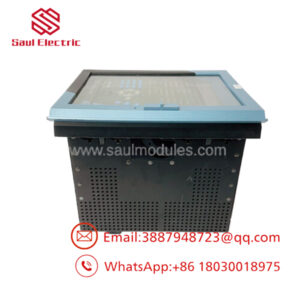
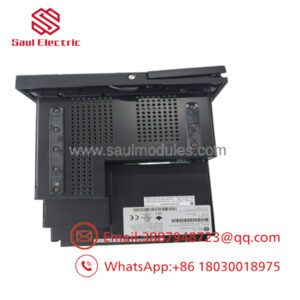
The GE DS3800NTCF1C1B operates as a specialized Thermocouple Signal Conditioning Board (NTCF) within the legacy GE Speedtronic Mark IV turbine control system. Occupying a slot in the central control frame, it receives low-level millivolt signals directly from field thermocouples placed throughout the turbine’s exhaust frame, bearing assemblies, and compressor stages.
Designed to deliver rapid temperature protection, the NTCF1C1B filters high-frequency electrical noise, amplifies microvolt signals, and incorporates cold-junction compensation circuitry. This ensures that core processing modules receive precise, noise-free temperature telemetry required for critical over-temperature tripping and thermal stress management during startup ramps.
Key Technical Specifications
| Parameter | Specification |
| Manufacturer | General Electric (GE) |
| Part Number | DS3800NTCF1C1B |
| System Compatibility | Speedtronic Mark IV Control Systems |
| Board Acronym | NTCF (Thermocouple Interface Board) |
| Revision Code | 1C1B |
| Input Signals | Low-millivolt thermocouple inputs (Type J, K, E, T options) |
| Cold Junction | Integrates with reference junction circuits / terminal blocks |
| Signal Amplification | Onboard precision instrumentation operational amplifiers |
| Backplane Interfacing | Gold-plated card-edge finger connectors |
| Operating Temperature | -30°C to +65°C (-22°F to +149°F) |
Application Scenarios & The “Trench” Experience
During a hot-day peak operation on a frame 7 gas turbine, the control room receives erratic high-temperature spike alarms across exhaust thermocouples 7 and 8. The field sensors check out fine, but the system threatens an automatic trip due to perceived thermal imbalance across the combustion exhaust duct. The issue traces back to a drifted op-amp on the aging NTCF board. Swapping in a bench-tested DS3800NTCF1C1B board stabilizes the temperature readings immediately, avoiding an unnecessary trip during peak power rates.
- Gas Turbine Exhaust Monitoring – Thermal Profile Tracking – Pre-conditions millivolt signals from exhaust thermocouples to monitor combustion health and trigger trips.
- Steam Turbine Casing Protection – Differential Temperature Sensing – Monitors top/bottom casing temperature differentials to manage thermal expansion during warm starts.
- Bearing Temperature Protection – Rotating Equipment Protection – Tracks thrust and journal bearing thermocouple readings to prevent metal wipe damage.
Transparency SOP: Quality Assurance & Testing
We don’t just ship boxes; we test them on actual GE Mark IV test racks.
- Inbound Visual Inspection: Microscopic trace audit checking for thermal discoloration, cold solder joints, cracked IC packages, or damaged edge contacts.
- Gold Finger Inspection: Cleaning and restoring rear card-edge contacts to ensure zero contact resistance across the backplane bus.
- Power Rail Bench Check: Applying clean DC voltage rails on a test bench to verify local power conditioning and op-amp power rails.
- Millivolt Signal Injection: Injecting calibrated DC millivolt signals across all thermocouple channels to verify A/D amplification linearity and gain stability.
- Anti-Static Packaging: Sealed in static-shielding ESD bags with fresh desiccant packages prior to protective foam boxing.
The Veteran’s Tech Trap Guide (Crucial Value-Add)
- ⚠️ NEVER SWAP UNDER POWER: The DS3800NTCF1C1B interfaces directly with sensitive analog input lines and backplane power rails. Removing or inserting this board while energized can arc edge contacts and destroy sensitive front-end amplifiers. De-energize the rack first.
- ❗ Photograph Onboard Jumpers: To be honest, misconfigured jumper blocks cause most replacement headaches. Onboard jumpers set input ranges and thermocouple types. Take a clear photo of your old card’s jumpers and set the replacement board pin-for-pin.
- ⚠️ Inspect Cold Junction Blocks: If your replacement card still shows temperature offset errors, verify the external cold-junction reference sensors mounted on the terminal blocks. A failed CJ sensor will cause all channels on the NTCF card to read false temperatures.
- ❗ ESD Sensitive Instrumentation: Precision operational amplifiers on this card are highly vulnerable to static discharge. Always wear a wrist strap grounded to the enclosure frame before touching the card.
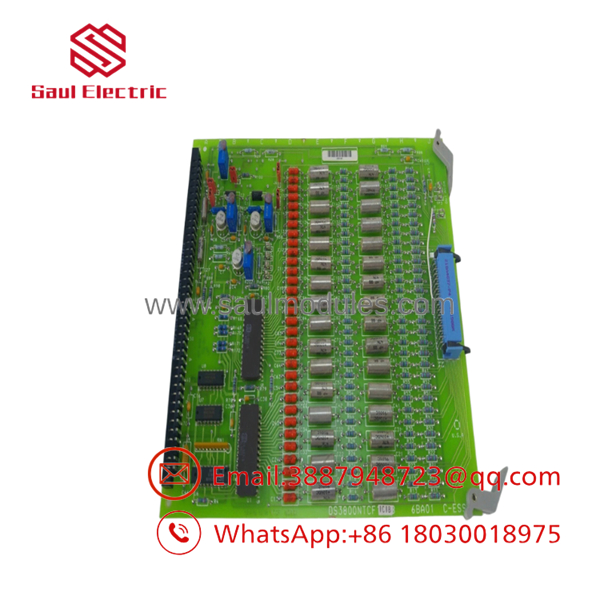
DS3800NTCF1C1B
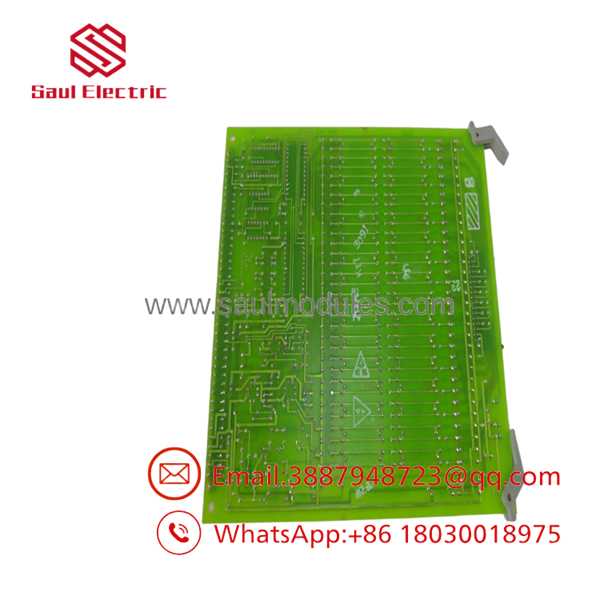
DS3800NTCF1C1B
Frequently Asked Questions (FAQ for Conversion)
Q: What is the main role of the DS3800NTCF1C1B board?
A: It amplifies, filters, and conditions low-level millivolt signals from field thermocouples so the Mark IV system can accurately monitor turbine temperatures.
Q: Does this card require any software flashing or laptop downloads?
A: No. The DS3800NTCF1C1B is a pure hardware signal conditioning card utilizing precision analog amplifiers and hardware jumpers. It contains no flash microcontrollers and requires zero software programming.
Q: Can I replace a 1C1A revision with this 1C1B revision?
A: Yes, in most cases. The 1C1B revision represents a minor hardware artwork and component update over earlier revisions while maintaining backward compatibility for Mark IV NTCF applications. Always match jumper settings to your original card.
Q: Why source surplus Mark IV boards instead of upgrading the system?
A: Full control system upgrades require massive capital expenditure, cabinet rewiring, and weeks of plant downtime. Swapping an NTCF board takes under 30 minutes and costs a fraction of a full migration.
Q: What warranty coverage is included with this replacement card?
A: Every unit comes backed by a full 12-month replacement warranty from the date of shipment, covering all thermocouple input channels, amplifier accuracy, and hardware integrity.

 Start Chat


