





Description
3. Product Introduction
The GE DS3800NVCD1B1B functions as a dedicated Valve Control/Driver Board (NVCD) within the legacy GE Speedtronic Mark IV turbine control architecture. Mounted directly into the central processing chassis, it provides precision analog positioning control for gas fuel valves, liquid fuel bypasses, or steam governor valves.
By accepting closed-loop feedback from LVDTs (Linear Variable Differential Transformers) and calculating error offsets against controller setpoints, the NVCD1B1B card regulates output current to electro-hydraulic servo valves. Its heavy-duty component design and noise-filtering stages ensure stable valve positioning across severe ambient vibration and thermal cycling.
4. Key Technical Specifications
| Parameter | Specification |
| Manufacturer | General Electric (GE) |
| Part Number | DS3800NVCD1B1B |
| System Lines | Speedtronic Mark IV Turbine Control |
| Board Acronym | NVCD (Valve Control / Driver Board) |
| Revision Level | 1B1B |
| Signal Processing | LVDT feedback processing, servo driver current regulation |
| Hardware Interfacing | Gold-plated dual card-edge backplane fingers |
| Calibration Controls | Multi-turn trimmer potentiometers & hardware shorting jumpers |
| Operating Temp | -30°C to +65°C (-22°F to +149°F) |
5. Application Scenarios & The “Trench” Experience
During a load ramp on a heavy-duty gas turbine, the primary gas control valve begins hunting back and forth, creating fuel flow oscillations and exhaust temperature spikes. Troubleshooting indicates that the LVDT feedback amplifier on the original NVCD card has drifted out of tolerance. Technicians power down the rack segment, slide in a bench-verified DS3800NVCD1B1B replacement card, calibrate zero and span settings to match site LVDT parameters, and restart the unit—restoring rock-solid valve control.
- Gas Turbine Fuel Control – Servo Valve Actuation – Regulates main fuel gas control valve (GCV) and speed ratio valve (SRV) positions.
- Steam Turbine Governor Control – Steam Chest Valve Drives – Drives hydraulic actuators managing steam admission and extraction valves.
- Auxiliary Hydraulic Systems – Closed-Loop Position Tracking – Processes LVDT/RVDT position telemetry to maintain accurate actuator alignment.
6. Transparency SOP: Quality Assurance & Testing
We don’t just ship boxes; we test them on actual GE Mark IV test racks.
- Inbound Visual Inspection: High-magnification optical audit for trace oxidation, solder bridges, burnt resistors, or cracked trimmer potentiometers.
- Gold Finger Restoration: Micro-cleansing and inspection of all card-edge contacts to ensure zero resistance across backplane power and signal buses.
- Power Rail Bench Check: Applying clean regulated DC bench voltage to verify local voltage regulators and op-amp power distribution.
- Servo Driver Loop Simulation: Injecting simulated LVDT feedback signals on a test rig to verify current output driving capability and amplifier linearity.
- Anti-Static Packaging: Sealed inside thick static-shielding ESD bags with fresh desiccant packages before protective foam encapsulation.
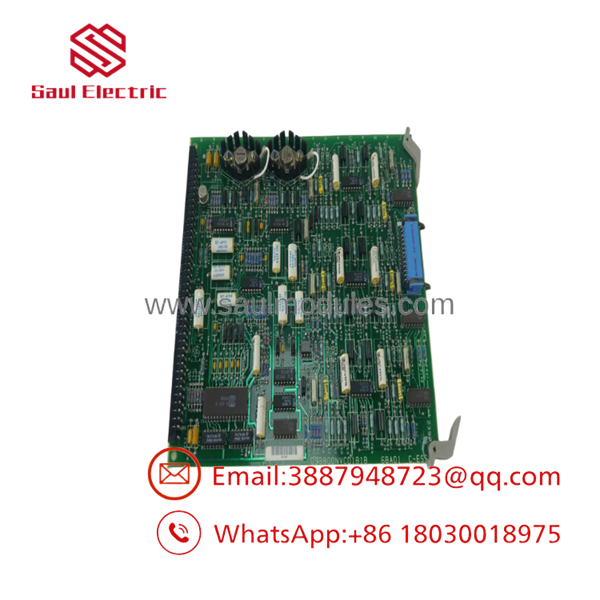
DS3800NVCD1B1B
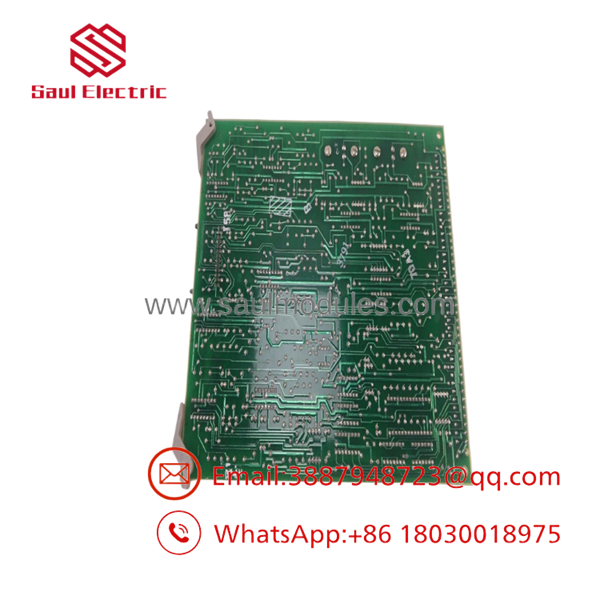
DS3800NVCD1B1B
7. The Veteran’s Tech Trap Guide (Crucial Value-Add)
- ⚠️ DO NOT HOT-SWAP UNDER POWER: The NVCD board connects directly to backplane power rails and sensitive analog servo outputs. Removing or inserting this board while the rack is live can arc backplane contacts and damage onboard op-amps.
- ❗ Match Hardware Jumpers Exactly: To be honest, misaligned jumpers cause most post-replacement valve fault alarms. Take a crisp, high-resolution photo of all jumper shorting blocks on your old card and set the replacement board pin-for-pin.
- ⚠️ Re-Verify LVDT Zero & Span Calibration: Even with matching jumper settings, replacement component tolerances differ slightly. Always verify and fine-tune zero and span trimmer potentiometers (or calibrate via Mark IV panel diagnostics) before firing the turbine.
- ❗ ESD Protection Required: Precision operational amplifiers and feedback ICs on this board are sensitive to static shock. Always wear a grounded wrist strap when handling the module.
8. Frequently Asked Questions (FAQ for Conversion)
Q: What is the main purpose of the DS3800NVCD1B1B board?
A: It processes LVDT position feedback and drives servo currents to position hydraulic fuel and steam control valves in Mark IV turbine systems.
Q: Does this card require software downloads or laptop flashing?
A: No. The DS3800NVCD1B1B is an analog/hardwired control card. Calibration is performed via physical hardware jumpers, trimmer potentiometers, and Mark IV system calibration routines.
Q: Can I use a 1B1B revision to replace an earlier 1A1A revision?
A: Yes, in most cases. Suffix 1B1B represents an updated hardware artwork and component baseline that maintains backward compatibility for Mark IV NVCD applications. Always match jumper settings to your original card.
Q: Why source surplus Mark IV boards instead of upgrading the system?
A: Full control system retrofits require extensive capital expenditure, cabinet rewiring, and weeks of plant downtime. Replacing a single driver board takes less than an hour and costs a fraction of a full migration project.
Q: What warranty comes with this replacement board?
A: Every unit comes backed by a full 12-month replacement warranty from the date of shipment, covering signal amplifier accuracy, servo driver outputs, and component integrity.



 Start Chat


