





Description
Product Introduction & Engineering Value
When process downtime costs thousands of dollars per minute, relying on a single controller rack is an unnecessary gamble. The GE PACSystems RX3i IC695CRU320 is engineered specifically for mission-critical, zero-downtime applications where seamless, bumpless failover between primary and backup CPUs is mandatory.
Built on a high-performance 1 GHz Intel Celeron architecture with 10 MB of user logic memory, the CRU320 works in lockstep with a paired secondary rack over dedicated fiber-optic Redundancy Memory Xchange (RMX) modules. It mirrors user memory, register tables, and system state data every scan cycle, ensuring that if a primary rack suffers a hardware fault or power loss, the backup processor takes over control in less than one logic scan without tripping field actuators or perturbing analog loops.
Technical Specifications
- Processor Engine: 1.0 GHz Intel Celeron CPU
- User Memory: 10 MB Battery-Backed User Logic and Data Storage
- Redundancy Type: Active Hot-Standby (Bumpless failover)
- Failover Transfer Time: Less than 1 scan cycle (typically 3 to 10 ms depending on sync payload)
- Serial Interfaces: 1 RS-232 (COM1, 9-pin D-sub), 1 RS-485 (COM2, 15-pin D-sub)
- Backplane Power Consumption: 1.0 A @ 3.3 VDC / 1.2 A @ 5 VDC
- Boolean Instruction Speed: 0.072 µs
- Memory Backup: External Lithium Battery Assembly (IC698ACC701 / IC693ACC301)
- Diagnostics: Front panel LEDs (
CPU OK,RUN,OUTPUTS ENABLED,I/O FORCE,BATTERY,SYS FLT)
Field Application & The “Trench” Experience
The Trench Story: A offshore oil production platform experienced a complete power blackout on Main Rack A when an auxiliary transformer breaker tripped. The primary IC695CRU320 CPU went dark instantly. Because the system was configured in a dual-hot-standby topology linked via fiber to Rack B, the secondary IC695CRU320 detected the loss of heartbeat and assumed primary control in 4 milliseconds. The platform’s emergency ESD systems and gas compression loops never saw a hitch, preventing a full facility shutdown and an estimated $180,000 flaring penalty.
- Offshore Oil & Gas Production: Maintaining continuous safety instrumented systems (SIS) and fire/gas monitoring across remote drilling rigs.
- Municipal Water Treatment Networks: Protecting high-volume pump stations and chemical disinfection loops from single-point rack power failures.
- Continuous Glass & Metals Processing: Ensuring uninterrupted furnace cooling loops and glass-pull speed regulation during utility transfers.

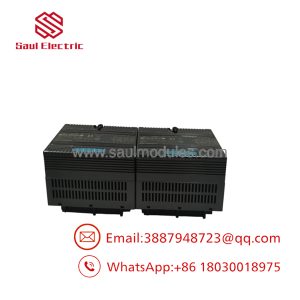
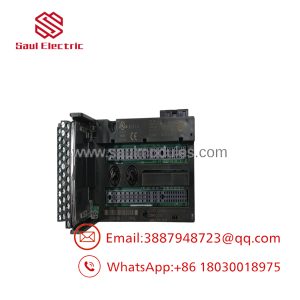
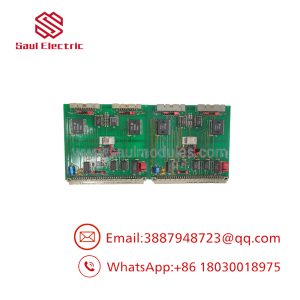
- IC695CRU320

- IC695CRU320
Transparency SOP: QA & Testing
- Mechanical & Port Inspection: Complete visual check of gold card-edge PCI pins, housing latching tabs, and front serial interface ports for pin retention and cleanliness.
- Dual-Rack Power-Up Self Test: Installation into an RX3i universal chassis (IC695CHS012) alongside an IC695RMX128 fiber sync module to verify boot code and baseline system handshake.
- RAM & Lockstep Memory Sync Diagnostic: Exercising the full 10 MB RAM space while streaming dynamic bit registers across the high-speed fiber link to verify zero-error data mirroring.
- Simulated Forced-Failover Stress Test: Driving a multi-loop project and physically interrupting power to the primary unit to measure bumpless failover timing under full output load.
- Thermal Burn-In: Running continuous 24-hour cycle tests inside an environmental chamber under maximum CPU scan loads.
The Veteran’s Tech Trap Guide
⚠️ Matched Hardware & Firmware Revisions: In an RX3i high-availability redundant pair, both IC695CRU320 modules, as well as their associated RMX sync modules and ETM Ethernet cards, must run identical hardware revisions and firmware versions. A mismatch in firmware will cause the secondary CPU to refuse synchronization, leaving your plant running on a single non-redundant rack!
⚠️ Logic Equalization & Lockstep Memory: Do not download program changes to a primary CRU320 without performing a formal “Logic Equalization” step in PAC Machine Edition. If the checksums between the primary and backup logic programs differ, the system will disarm redundancy mode and trigger a configuration fault flag.
PRO TIP: Redundant systems require remote I/O drops (such as Genius I/O or PROFINET Scanner drops like IC695PNS001) connected to both racks simultaneously. Standard local I/O cards seated directly in the CRU320’s primary chassis cannot be controlled by the secondary CPU if the primary chassis loses power!
Dynamic FAQ
Q: What additional hardware is required to set up a hot-standby system with the ? A: A complete redundant CPU node requires two identical RX3i racks, each equipped with an CPU, an IC695RMX128 (or RMX116) Redundancy Memory Xchange module linked via fiber cable, redundant power supplies, and shared Ethernet or PROFINET remote I/O networks.
Q: Can I use the as a standard standalone CPU without redundancy? A: Yes. The can operate as a single non-redundant CPU in an RX3i rack if desired, but its primary engineering purpose (and value) is its hardware support for hot-standby mirrored execution.
Q: How does the CRU320 differ from a standard CPU310 or CPE310? A: The CRU320 contains specialized internal memory controllers and firmware algorithms specifically tailored to communicate with RMX sync cards for sub-scan memory mirroring. Standard CPU310 or CPE310 modules lack this high-speed memory-sharing interface.
Q: What guarantee and testing comes with your surplus inventory? A: Every surplus we ship undergoes full dual-rack synchronization testing, forced-failover verification, memory address testing, and complete physical inspection before being sealed in static-shielding ESD packaging and backed by our full replacement warranty.


 Start Chat


