





Description
Product Introduction & Engineering Value
When upgrading legacy Series 90-70 installations to modern PACSystems control, maintaining high execution speed without rewriting complete software architectures is a major priority. The GE Fanuc IC698CPE010 processor packs a 300 MHz Intel Celeron engine and 10 MB of battery-backed user memory into a single-slot RX7i module, delivering lightning-fast Boolean logic execution and 32-bit floating-point processing.
Occupying Slot 1 of the RX7i chassis, this controller features an embedded 10/100 Mbps Ethernet port alongside three onboard serial channels (RS-232, RS-485 opto-isolated, and RS-485 non-isolated). Because it uses the single-tag control engine architecture shared across the PACSystems family, it allows seamless programming via Proficy Machine Edition while maintaining full backward software compatibility with legacy IC697 I/O cards.
Technical Specifications
- Microprocessor: 300 MHz Intel Celeron
- User Memory: 10 Megabytes battery-backed RAM + 10 Megabytes Flash storage
- Backplane Architecture: High-speed VME64 (Backward compatible with Series 90-70 VME modules)
- Backplane Current Consumption: 4.2 Amps nominal @ +5V DC; 0.2 Amps @ +12V DC
- Embedded Ethernet Port: 1x RJ45 10/100 Mbps auto-negotiating (supports SRTP, Modbus TCP, Ethernet Global Data / EGD)
- Onboard Serial Ports: 3 Ports (Port 1: RS-232, Port 2: RS-485 opto-isolated, Port 3: RS-485 non-isolated)
- Max I/O Capacity: 32,000 Discrete inputs/outputs; 32,000 Analog inputs/outputs
- Real-Time Clock Accuracy: ±2 seconds per day at 25°C
- Front Panel Controls: Run/Stop switch, Memory Protect key switch, Reset push-button
- Status Indicators: 8 Front LEDs (OK, RUN, STAT, FAULT, CONFIG, ETHERNET, TRANS, RECV)
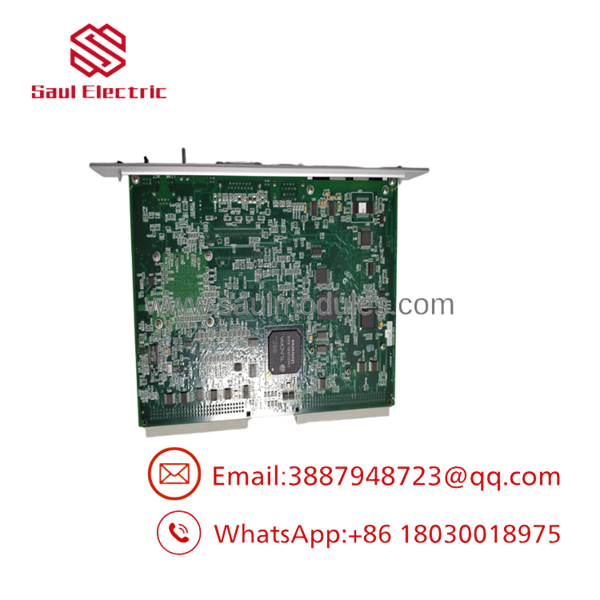
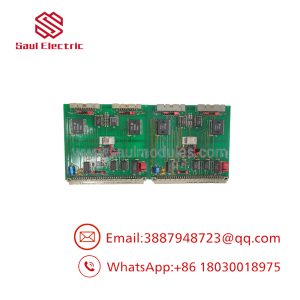
- IC698CPE010
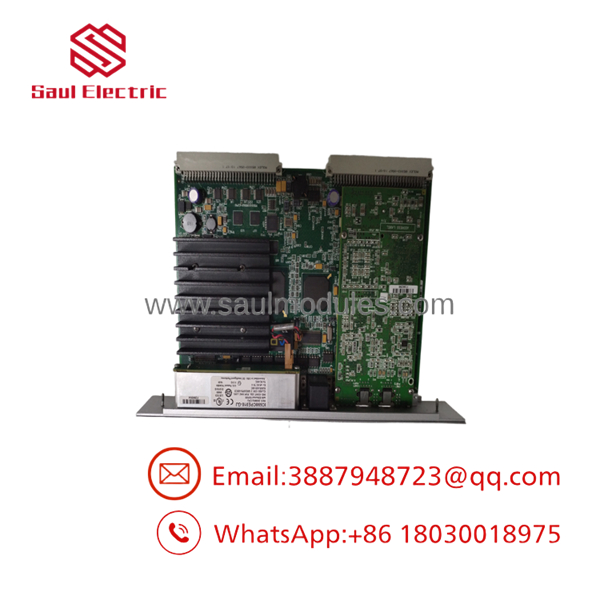
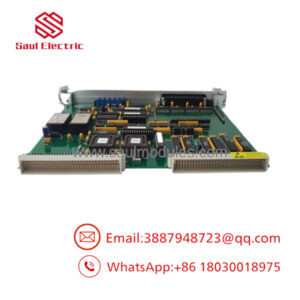
- IC698CPE010
Field Application & The “Trench” Experience
During an unplanned stoppage at a regional paper converting plant, an aging RX7i CPU module suffered memory board failure caused by an internal power supply transient. The line ran high-speed web tension regulation requiring tight sub-millisecond PID loop updates and real-time Ethernet Global Data (EGD) sharing with downstream drive panels.
The facility’s controls engineer dropped an IC698CPE010 replacement into Slot 1 of the main 17-slot chassis. After downloading the project backup through Proficy Machine Edition over the embedded Ethernet port, the 300 MHz processor cleared all backplane bus faults and restored precise tension control in under 30 minutes, preventing an extended line shutdown.
Target Application Scenarios:
- Continuous Web Handling & Converting: Executing high-speed registration algorithms and multi-axis tension calculations.
- Large Water Treatment Infrastructure: Managing multi-station EGD networks and 30,000+ mixed I/O points over distributed Ethernet topologies.
- Legacy 90-70 System Modernization: Upgrading central processing power in existing Series 90-70 racks without replacing existing IC697 I/O cards.
Transparency SOP: QA & Testing
Every IC698CPE010 CPU module arriving in our inventory passes through a stringent four-stage technical qualification process:
- Connector & Board Optical Diagnostic: VME64 backplane pin blocks, front RJ45 jacks, DB connectors, and surface-mount components are evaluated under magnification for mechanical stress or pin wear.
- Backplane Current Draw Test: Mounted in Slot 1 of an active RX7i test chassis to verify power draw remains stable across the +5V and +12V DC bus rails.
- Multi-Protocol Communications Check: Continuous ping and data packet transfers are run across the embedded Ethernet port (SRTP and EGD protocols) alongside loopback polling on all 3 serial ports.
- 24-Hour Memory Stress Cycle: The 10 MB RAM bank undergoes full memory fill-and-flush cycles under elevated thermal conditions to ensure rock-solid battery retention and data integrity.
The Veteran’s Tech Trap Guide
⚠️ SLOT 1 MANDATE: The IC698CPE010 must strictly be installed in Slot 1 (the leftmost position) of an RX7i baseplate (such as an IC698CHS117 or CHS109). Attempting to boot the CPU in any other slot will result in backplane initialization failure.
⚠️ HEAVY 5V CURRENT DRAW: This processor draws 4.2 Amps from the +5V DC backplane rail alone. When installing this CPU into a rack loaded with heavy VME cards, ensure your power supply (e.g., IC698PWR014) has adequate headroom to prevent unexpected brownout resets during heavy process scans.
PRO TIP: Port 2 on the CPU is opto-isolated RS-485, whereas Port 3 is non-isolated. Always use Port 2 for long-distance serial connections or links between different control cabinets to avoid ground potential differences that can damage the serial driver ICs.
Dynamic FAQ
Q: Can I program the using legacy Logicmaster 90-70 or VersaPro software? A: No. PACSystems RX7i controllers, including the , require Proficy Machine Edition (PME) version 5.0 or higher for hardware configuration and logic development.
Q: Does this CPU support hot-swapping while the rack is energized? A: Absolutely not. Inserting or removing the CPU while backplane power is active can cause severe electrical damage to the controller and adjacent VME cards. Always power down the chassis first.
Q: How is the 10 MB user memory preserved when main cabinet power is switched off? A: User memory is maintained by an external lithium battery pack connected to the front panel. Ensure the battery is replaced regularly (recommended every 2 years) to prevent logic loss during extended outages.
Q: What condition is your inventory in, and what warranty is included? A: We offer both New Surplus and fully bench-tested refurbished modules. Every unit is backed by our comprehensive 2-year full replacement warranty.
Q: What is the primary difference between the CPE010 and the higher-end CPE020 CPU? A: The features a 300 MHz Celeron processor with 10 MB of RAM, whereas the IC698CPE020 features a faster 700 MHz Pentium III processor with 64 MB of user memory for larger control applications.

 Start Chat


