





Description
Key Technical Specifications
| Parameter | Value |
|---|---|
| Manufacturer | GE Industrial Systems / GE Energy |
| Model Number | IS200EXAMG1BAA |
| Product Type | Exciter Attenuation Module (EXAM) |
| Platform | EX2100 / EX2100e Excitation Control |
| Primary Function | Exciter voltage attenuation and ground detection |
| Associated Module | Exciter Ground Detector Module (EGDM) |
| Signal Function | Injects low-frequency AC reference into field winding |
| Connectors | J1 (3-pin), J2 (9-pin Ground Detector), E1, E2, TB1 |
| Jumpers | JP1, JP2, JP3 configuration jumpers |
| PCB Coating | Standard industrial coating |
| Operating Temperature | 0 °C to +60 °C |
| Installation Location | High Voltage Interface (HVI) assembly |
| Revision | BAA (Group 1 hardware revision) |
Product Introduction
The GE IS200EXAMG1BAA is an Exciter Attenuation Module (EXAM) used in GE EX2100 and EX2100e excitation control systems for synchronous generators. The module attenuates high-voltage field signals, injects a low-frequency reference into the generator field winding, and works with the Exciter Ground Detector Module (EGDM) to detect field ground faults before they develop into generator damage.
This module is commonly installed in gas turbine, steam turbine, and hydroelectric generator excitation cabinets. Rather than acting as a controller, it serves as a precision signal-conditioning interface between the exciter field circuit and the protection electronics. Before replacement, verify the board revision, jumper configuration, and EGDM compatibility with the installed excitation cabinet.
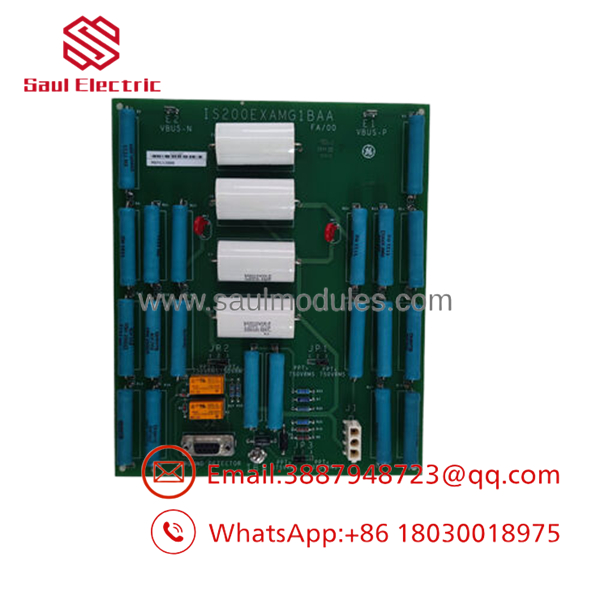
- IS200EXAMG1BAA
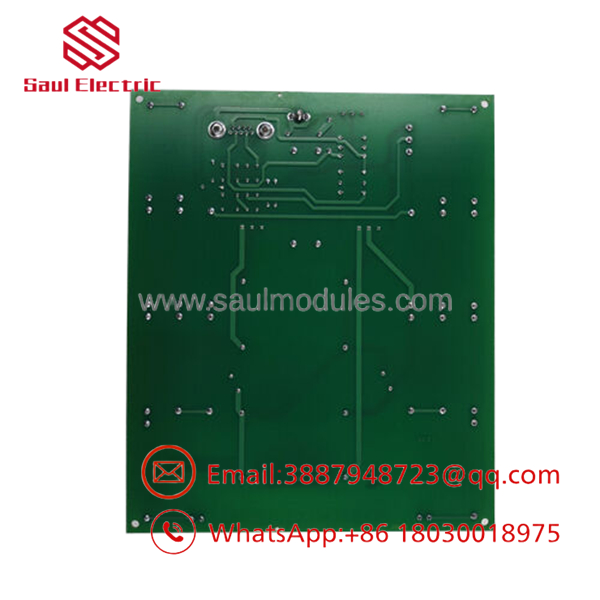
- IS200EXAMG1BAA
Troubleshooting Quick Reference
| Symptom | Possible Cause | Relevance to this Part | Quick Check Method | Recommendation |
|---|---|---|---|---|
| Generator field ground alarm | Actual field insulation fault | ❌ Low | Measure insulation resistance of the field winding with approved procedures | Verify generator insulation before replacing EXAM |
| Ground detector offline | EGDM communication problem | ❌ Low | Inspect EGDM status and associated wiring | Verify EGDM operation first |
| Incorrect field voltage measurement | Attenuation circuit failure | ✅ High | Measure attenuated output against expected values | Replace EXAM after confirming field voltage is normal |
| Continuous ground alarm after maintenance | Incorrect jumper settings | ✅ High | Verify JP1, JP2, and JP3 positions against documentation | Restore correct jumper configuration |
| No field reference signal | Loose E1/E2 connection | ✅ Medium | Inspect field bus terminals and cable connections | Reseat and tighten all connections |
| Relay fails to operate | Relay or control circuit fault | ✅ Medium | Verify relay coil voltage and contact operation | Confirm relay function before replacing the board |
| Burn marks or MOV damage | High-energy transient | ✅ High | Perform a detailed visual inspection of MOVs and PCB | Replace the board and investigate the transient source |
Technical Note: In generator excitation systems, field insulation deterioration, incorrect jumper settings, damaged wiring, or EGDM faults are much more common than EXAM board failures. Confirm these conditions before replacing the module.
Frequently Asked Questions (FAQ)
Q1. What is the IS200EXAMG1BAA used for?
The IS200EXAMG1BAA is an Exciter Attenuation Module that scales high-voltage exciter signals to safe levels and works with the Exciter Ground Detector Module (EGDM) to detect field ground faults in GE EX2100 and EX2100e excitation systems.
Q2. Does this module control the generator excitation?
No.
The module is a signal-conditioning and protection interface. Generator excitation control is performed by other control boards within the EX2100 platform.
Q3. Can I replace the module without changing configuration?
Usually yes, but you should document the JP1, JP2, and JP3 jumper positions before removing the original board. These jumpers match the module to the installed transformer and field circuit configuration.
Q4. Is the BAA revision backward compatible?
Yes.
The revision is generally backward compatible with the earlier revisions identified by GE for this hardware family, but compatibility should always be confirmed against the excitation system documentation and installed hardware revision.
Q5. Why is New Surplus inventory less expensive than factory inventory?
Most New Surplus boards originate from canceled turbine projects, OEM spare inventories, or unused maintenance stock. They have not been installed in operating equipment but are no longer part of current factory production.
Q6. What should I verify before ordering?
Verify:
- Exact model number ()
- Hardware revision
- EX2100 or EX2100e platform
- Jumper configuration
- EGDM compatibility
- Cabinet installation location
- Connector condition
Matching these items before installation helps prevent unnecessary commissioning delays.
Q7. What warranty is typically available?
Most industrial automation suppliers provide a 12-month warranty on verified New Surplus or professionally tested modules. Request functional test documentation, inspection photographs, and serial-number verification before shipment.
Quality Inspection & Testing SOP
1. Inbound Inspection & Traceability
- Verify GE labels, serial numbers, revision code, and manufacturing markings.
- Inspect the PCB for corrosion, cracked solder joints, component damage, UV discoloration, and evidence of previous repair.
- Inspect J1, J2, E1, E2, and TB1 connectors for mechanical damage.
- Record serial numbers for complete traceability.
2. Live Functional Testing
- Install the module in an in-house EX2100 excitation test cabinet.
- Verify connector integrity and attenuation circuit operation.
- Confirm interface communication with the EGDM.
- Verify relay operation and low-frequency reference signal generation.
- Perform continuous operation for more than 24 hours while monitoring thermal stability.
- Generate a documented functional test report.
- Test photos and videos are available upon request.
3. Electrical Parameter Testing
- Perform insulation resistance testing using a 500 V Megger where appropriate.
- Verify protective ground continuity.
- Measure attenuation circuit voltages using a calibrated Fluke 115 digital multimeter.
- Inspect MOV protection devices for proper operation.
4. Firmware & Configuration Verification
- Verify hardware revision.
- Record jumper positions (JP1, JP2, JP3).
- Photograph identification labels before shipment.
- Document configuration settings included in the test report.
5. Final QC & Packaging
- Final QC inspection and approval.
- Package the board in an ESD-safe bag.
- Protect with anti-static foam, bubble wrap, and a heavy-duty corrugated carton.
- Apply a dated QC Passed label.
Technical Pitfalls & Survival Guide
❗ Record Every Jumper Before Removal
I’ve seen technicians spend an entire shift troubleshooting a healthy excitation system because JP1 and JP2 were returned to the wrong positions.
Take clear photos before removing the original board.
❗ Don’t Blame the EXAM for Every Ground Alarm
Most field ground alarms originate from deteriorating generator field insulation, contaminated slip rings, or damaged field wiring—not from the attenuation module itself.
Verify insulation resistance before replacing hardware.
❗ Inspect the EGDM First
The EXAM and Exciter Ground Detector Module (EGDM) operate together.
If the EGDM is offline or incorrectly configured, replacing the EXAM board will not clear the fault.
❗ Check the High-Voltage Connections
Loose connections at E1 or E2 can produce unstable attenuation signals that appear to be module failures.
Inspect and torque all field bus connections according to the equipment maintenance manual.
❗ Electrostatic Discharge (ESD)
Always wear a grounded wrist strap.
I once watched a replacement EXAM board pass every bench test but develop intermittent ground detection faults after installation because it was handled without ESD protection during a winter outage.
Keep these checks in mind and you’ll eliminate most excitation system commissioning problems, reduce unnecessary board replacements, and minimize generator downtime.

 Start Chat


