





Description
Product Introduction & Engineering Value
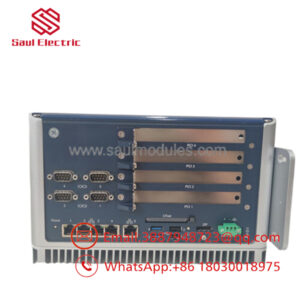
The GE IS200HSLAH3A is a Mark VI HSLA-series interface board associated with high-speed communication functions. It is part of GE’s IS200 family of control-system boards and is intended for use within the Mark VI control architecture.
For a replacement, the complete IS200HSLAH3A number matters. Do not select a board based only on the HSLA designation. Rack location, associated boards, cabling, firmware, and system configuration should all be checked before commissioning.
Technical Specifications
| Parameter | Specification |
|---|---|
| Manufacturer | General Electric (GE) |
| Control Platform | Mark VI |
| Part Number | IS200HSLAH3A |
| Board Family | HSLA |
| Product Type | High-speed link/interface PCB |
| Board Revision | 3A |
| Primary Function | High-speed system interface/communications |
| Application | Turbine and industrial control |
| Processor | Board-specific; verify GE documentation |
| Memory | Board-specific |
| Communication Interface | High-speed Mark VI system interface |
| I/O Function | Not a conventional analog/digital I/O terminal board |
| Power Requirements | Mark VI system-dependent |
| Connector Configuration | Verify against installed board |
| Firmware | System-dependent |
| Lifecycle | Legacy / secondary-market spare |
Engineering note
The HSLA designation should not be interpreted as a generic Ethernet, serial, or fieldbus interface. The actual communication role is determined by the Mark VI architecture and the associated hardware.
Field Application & the “Trench” Experience
A Mark VI turbine-control cabinet starts showing intermittent communication faults. The control engineer initially suspects the network because several downstream values disappear and then return.
The network checks clean.
The technician then isolates the problem to the control-system interface hardware and identifies an IS200HSLAH3A. At that point, replacing the PCB is only half the job. The engineer must verify the associated cable connections, rack position, companion boards, configuration, and system diagnostics.
With legacy Mark VI equipment, an intermittent link problem is often easier to diagnose when the hardware path is documented before a replacement is installed.
Niche application scenarios
- GE Mark VI turbine control: high-speed controller-to-system communications.
- Generator control cabinet: maintaining communication between control-system hardware.
- Legacy turbine modernization: replacing failed HSLA interface hardware while retaining the existing Mark VI architecture.
- Critical spare inventory: maintaining a tested HSLA board for emergency controller maintenance.
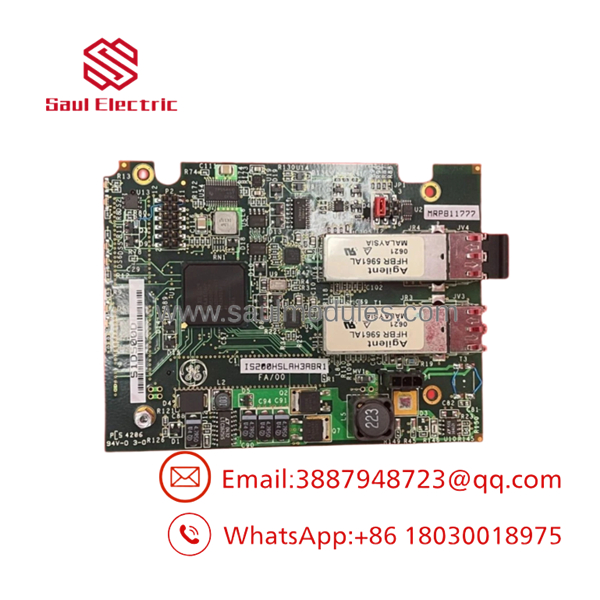
IS200HSLAH3A
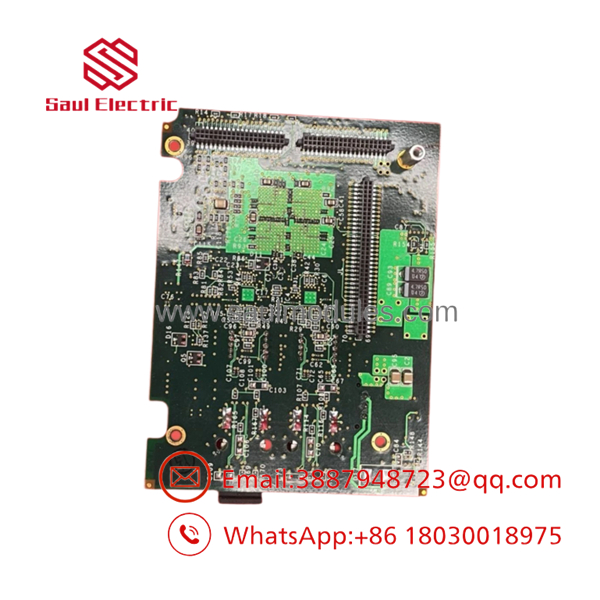
IS200HSLAH3A
Transparency SOP: QA & Testing
For New Surplus or Refurbished IS200HSLAH3A, use this procedure:
- Part-number verification — Confirm
IS200HSLAH3A. - Revision check — Verify
3A. - PCB inspection — Examine components, traces, connectors, and solder joints.
- Connector inspection — Compare all interfaces against the installed board.
- Rack verification — Confirm the intended Mark VI rack and slot.
- Cable inspection — Check associated communication cables and terminations.
- Controlled power test — Power the board in an appropriate Mark VI test environment.
- Link verification — Confirm expected high-speed communication behavior.
- Diagnostic testing — Check Mark VI system diagnostics for communication faults.
- Extended test — Run the board under representative operating conditions where practical.
A successful power-up does not prove communication functionality.
The Veteran’s Tech Trap Guide
⚠️ Trap #1 — Calling it an ordinary network card
The belongs to the Mark VI control architecture. Do not substitute a generic communication adapter because the symptoms appear to be “network related.”
PRO TIP: Diagnose the complete communication path—board, cabling, companion hardware, configuration, and controller diagnostics.
⚠️ Trap #2 — Ignoring the complete revision
Use , not merely “HSLA board,” when sourcing the replacement.
⚠️ Trap #3 — Replacing hardware before checking cabling
Intermittent communication faults can originate in connectors or cables. Verify the physical link before condemning the PCB.
⚠️ Trap #4 — Forgetting the rack/slot
Record the original rack and slot position. Mark VI system configuration and hardware location need to remain consistent.
Dynamic FAQ
What is GE ?
It is a GE Mark VI HSLA-series high-speed interface/communication board used within GE turbine and industrial control systems.
What does HSLA stand for?
HSLA is the board-family designation used by GE for this Mark VI interface hardware. The exact communication role should be verified against the applicable Mark VI system documentation.
Is an analog I/O board?
No. It is associated with high-speed system interface/communication functions, rather than serving as a conventional analog terminal board.
Can another IS200HSLA board replace it?
Do not assume interchangeability. Verify the complete part number, revision, rack location, associated hardware, cabling, and Mark VI configuration.
What should I request when buying New Surplus?
Ask for photographs of the actual board showing , revision markings, connectors, and PCB condition. Also request confirmation that it is unused and ask for documented testing.
How should a refurbished board be tested?
A meaningful test should include PCB inspection, controlled power-up, communication/link verification, system diagnostics, and preferably an extended test in a compatible Mark VI environment.
What is the difference between New Surplus and Refurbished?
New Surplus should mean unused inventory that entered the secondary market. Refurbished means previously used hardware that has undergone inspection and/or repair. Ask the supplier to state the condition in writing.
What warranty should I request?
For turbine-control applications, request a written functional warranty with defined coverage and return conditions. A supplier warranty is not equivalent to a GE OEM warranty.

 Start Chat


