





Description
Product Introduction & Engineering Value
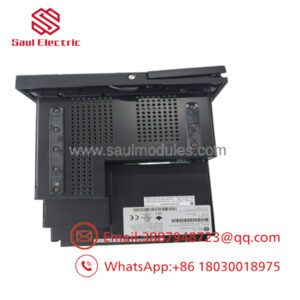
The GE IS200TRLYH1BFD is a TRLY relay interface/output board used in the GE Mark VI turbine control platform. It provides relay-based interfaces between Mark VI control electronics and external field devices. That makes it particularly relevant to applications where discrete control commands must be electrically isolated or switched through relay contacts.
The full board number matters. With legacy Mark VI hardware, a similar-looking relay board can have different contact arrangements, coil characteristics, terminal assignments, or revision details. Verify the complete IS200TRLYH1BFD identifier against the installed assembly before ordering.
Technical Specifications
| Parameter | Specification |
|---|---|
| Manufacturer | General Electric |
| Part Number | IS200TRLYH1BFD |
| Control Platform | Mark VI |
| Functional Acronym | TRLY |
| Board Family | IS200 |
| Board Type | Relay Output / Interface Board |
| Primary Function | Relay switching and field-device interface |
| Hardware Revision | H1BFD |
| Application | GE turbine control |
| Installation | Mark VI control cabinet |
| Signal Category | Discrete / relay interface |
| Field Interface | Configuration-dependent |
Engineering caution
Do not assume relay coil voltage, contact rating, number of relay channels, or terminal assignment without confirming the applicable GE documentation for the exact TRLY configuration. Those parameters are installation-specific and should not be inferred from the IS200 family designation alone.
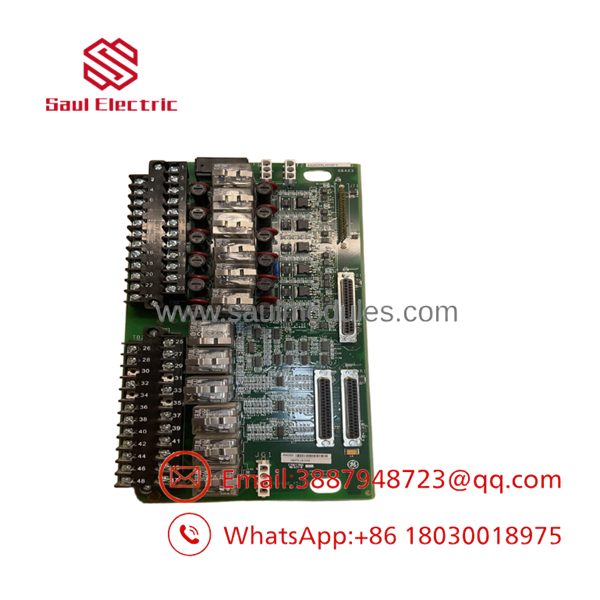
IS200TRLYH1BFD
Field Application & the “Trench” Experience
Relay boards tend to create misleading troubleshooting symptoms. A controller can issue the correct command while the field device never changes state. The technician then has to determine whether the problem is in the control logic, output interface, relay itself, wiring, or the field device.
With an IS200TRLYH1BFD replacement, the first useful check is often to compare the commanded state with the actual relay state and downstream voltage/contact condition. If the control logic is correct but the field circuit does not respond, the TRLY board becomes a reasonable suspect—but only after the external circuit has been checked.
Specific application scenarios
- Turbine auxiliary-system discrete commands requiring relay-based field interfaces.
- Valve, solenoid, and contactor control circuits associated with turbine auxiliaries.
- Mark VI outage troubleshooting, where a failed relay output can prevent a field actuator or interlock circuit from operating correctly.
Transparency SOP: QA & Testing
For New Surplus IS200TRLYH1BFD inventory, I would use the following acceptance sequence:
- Verify the exact part number — Confirm
IS200TRLYH1BFDfrom the physical board. - Check revision markings — Record the complete H1BFD designation.
- Inspect the relay section — Look for damaged relay bodies, cracked housings, contamination, overheating, or discoloration.
- Inspect connectors and terminals — Verify that pins, terminal points, and connector housings are undamaged.
- Check the PCB — Look for corrosion, damaged components, cracked solder joints, and evidence of prior installation.
- Functional test — Where suitable Mark VI test equipment is available, verify the applicable relay output functions and contact behavior.
A visual inspection is useful. It is not a substitute for an electrical test.
The Veteran’s Tech Trap Guide
⚠️ Trap #1 — Assuming a dead field device means a bad TRLY
Check the complete output circuit first. A blown fuse, loose terminal, failed solenoid, damaged contactor, or broken field wire can produce exactly the same symptom.
⚠️ Trap #2 — Forgetting that relay contacts have a real electrical rating
Do not replace a relay interface and reconnect an unknown load without confirming the applicable contact specifications. Inductive loads such as solenoids and contactors can be particularly demanding.
PRO TIP: Before removing the old board, record the relay channel, terminal numbers, field-device tag, and normal energized/de-energized state. This information is valuable during commissioning.
⚠️ Trap #3 — Assuming all TRLY boards are interchangeable
The TRLY acronym identifies the board function, but the complete GE part number determines the specific hardware configuration. Match the entire designation.
Dynamic FAQ
What is GE ?
The is a GE Mark VI TRLY relay output/interface board used to provide relay-based switching and field-device interface functions.
Is an analog output board?
No. It is associated with relay/discrete output functions, rather than being a conventional analog output module.
What should I check before ordering a replacement?
Verify the complete part number, revision, installed board photographs, connector arrangement, terminal assignments, and the electrical characteristics of the connected field loads.
Can another IS200TRLY board replace ?
Not automatically. Relay boards can differ in electrical and terminal configurations even when they share the TRLY designation. Confirm interchangeability against the applicable GE documentation.
How should New Surplus inventory be evaluated?
Confirm the actual board’s part number and revision, inspect the relay components and connectors, and request available functional-test records. Actual-unit photographs are preferable to catalog images.
What warranty should I request?
Warranty coverage varies by supplier and inventory condition. For a critical turbine-control spare, request written confirmation of the warranty period, testing status, condition classification, and return provisions before purchase.

 Start Chat


