





Description
Key Technical Specifications
| Parameter | Value / Specification |
| Control Framework | GE Mark VIe Speedtronic Architecture |
| Functional Acronym | WETA (Wind Turbine Application Board Assembly) |
| Assembly Number | IS215WETAH1BB (Includes base layer and factory sub-cards) |
| Base Board Layer | IS200WETAH1AGC |
| Target Platforms | GE 1.5MW, 1.6MW, and 2.5MW DFIG Wind Turbine series |
| Integrated Regulators | Over 100 individual voltage regulation nodes along three board boundaries |
| Safety Fusing | 7 dedicated overcurrent circuit protection fuses |
| Isolation Transformers | 4 onboard magnetic transformers for localized galvanic isolation |
| Diagnostic Diagnostics | Hardware-level limit checking and software-configurable fault logging |
| Interface Connections | Over 45 high-density multi-position terminal strip and plug connectors |
| Environmental Protection | Full heavy-duty industrial conformal coating against humidity and dust |
Product Introduction
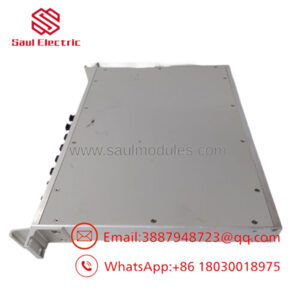
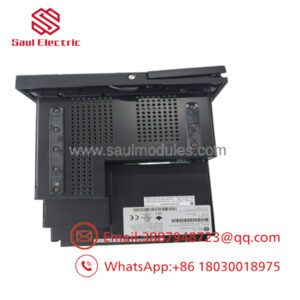
The GE IS215WETAH1BB is a specialized Wind Turbine Application Board (WETA) assembly built for the GE Mark VIe platform. Designed to reside within the wind turbine’s nacelle or “Top Box” control hub, this module acts as the localized automation manager for utility-scale wind generation units, including the GE 1.5MW and 2.5MW fleets. The base circuit board layer is designated as the IS200WETAH1AGC, which is populated with dense voltage conditioning and communication elements required to withstand high-vibration nacelle placements.
The WETA module focuses on executing real-time pitch control sequences, yaw alignment routines, and structural monitoring loops. It contains over 100 on-board voltage regulators running in parallel rows near the PCB boundaries to maintain steady, noise-free local power distribution. This layout prevents voltage sags from disrupting sensor inputs during sudden load variations or high-vibration conditions.
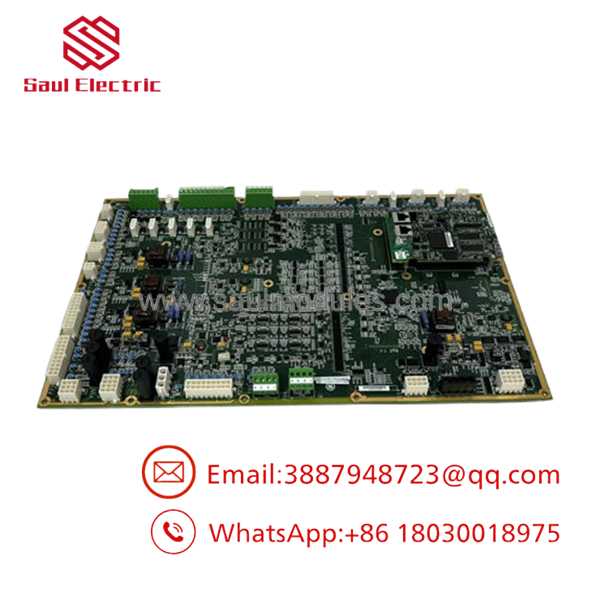
- IS215WETAH1BB IS200WETAH1AGC
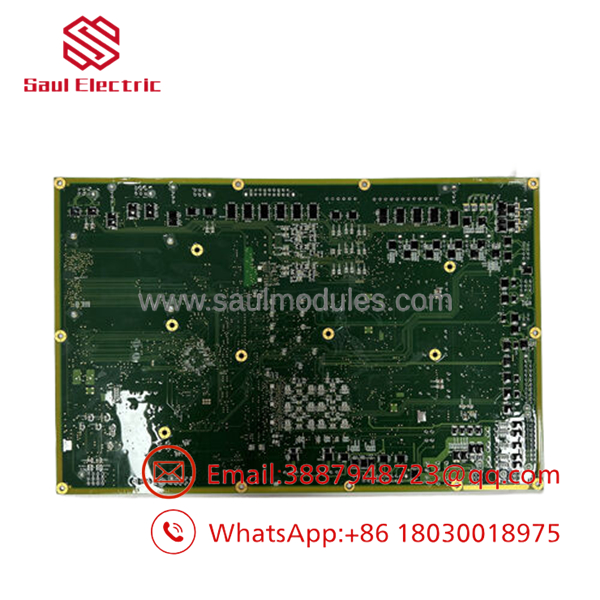
- IS215WETAH1BB IS200WETAH1AGC
Installation & Configuration Guide
Stage 1: Pre-Installation Preparation (Estimated Time: 20 minutes)
- ⚠️ Safety First: The WETA module directly influences critical aerodynamic pitch and yaw safety boundaries. Never replace this assembly while the rotor lock is disengaged or hydraulic systems are active. Put the wind turbine into a safe maintenance mode, drop the main mechanical brake, and execute a full lock out/tag out (LOTO) of the nacelle auxiliary control breaker panel.
- Tools Required: Grounded ESD wrist strap, metric socket alignment tools, small needle-nose pliers, digital multimeter (DMM), terminal screwdriver.
- Data Backup: Connect your engineering laptop to the turbine data network using the ToolboxST software interface. Pull a full parameters update and hardware definition map of the current active control application.
Stage 2: Removing the Old Module (Estimated Time: 15 minutes)
- Fasten your ESD grounding wrist strap to a bare metal chassis structural support inside the Top Box enclosure.
- Carefully document and tag each of the 45+ low-voltage plugs and signal ribbons connected along the board’s edge fields.
- Use needle-nose pliers or a terminal tool to disengage the lock brackets on the vertical pin header connectors.
- Unscrew the mounting bolts securing the heavy-duty chassis plate backing assembly to the internal mounting frame.
- Extract the entire card assembly straight back from its standoffs, ensuring no components drag against the cabinet lining. Place the removed card inside an anti-static shield wrap.
Stage 3: Installing the New Module (Estimated Time: 20 minutes)
- Unpack the new IS215WETAH1BB assembly inside a static-safe work zone.
- Configuration Clone: Compare the old board and the replacement card side by side. Carefully examine all 7 onboard fuse ratings and verify that any configuration jumper blocks match the target settings.
- Position the assembly onto the mounting pins inside the cabinet, starting the perimeter securing bolts by hand before tightening to standard torque specs.
- Reattach the labeled field wires, terminal blocks, and communication links to their corresponding plugs.
Stage 4: Power-On & Testing (Estimated Time: 20 minutes)
- Measure the resistance across the main DC power input pins on the terminal board with your DMM to ensure no dead shorts exist.
- Re-energize the nacelle control power breakers.
- Monitor the boot-up sequence of the WETA assembly. Check that the onboard diagnostic indicators verify a clean power handshake and that no static hardware fault codes appear.
- Open ToolboxST to establish a communication channel with the module. Flash the local firmware to match the master baseline version if prompted, then load the localized operational configuration file.
- Conduct low-speed pitch and yaw testing sweeps in manual test mode before returning the turbine to automated remote operations.
Frequently Asked Questions (FAQ)
What is the relationship between part numbers IS215WETAH1BB and IS200WETAH1AGC?
The IS200WETAH1AGC refers specifically to the physical, unpopulated multi-layer base circuit board layer. The represents the complete, factory-certified multi-card assembly product code. When you purchase an , it arrives as a complete module containing the underlying IS200 base layer along with its secondary factory-mounted auxiliary interface boards and structural mounting plate.
Can this board be used for standard gas or steam turbine applications?
While the overarching Mark VIe architecture utilizes a shared component design across multiple industries, the WETA (Wind Turbine Application) board series is configured for the high-density analog routing, voltage regulation networks, and unique sensor configurations found in wind power installations. It cannot serve as a drop-in substitute for standard gas or steam turbine control modules without violating system layout maps.
Why does this module contain over 100 built-in voltage regulators?
Nacelle-mounted automation systems are subject to significant electrical noise caused by high-power generator lines, lightning exposure, and switching transients from nearby frequency inverters. By integrating over 100 small, isolated voltage regulators directly into the PCB layout, GE ensures that every signal track receives stable, independent power filtering, preventing localized noise from corrupting critical sensor streams.
What should I check if a “Fuse Blown” alarm displays in ToolboxST after installation?
The WETA assembly features 7 independent onboard physical circuit fuses to protect its internal logic paths from field-side short circuits. If this alarm triggers, isolate the control power and use a digital multimeter to test each of the 7 surface-mounted fuses. If a fuse is blown, inspect the field wiring for pinched cables or a faulty sensor before putting a new board into service.
Are these replacement boards brand new from current GE production lines?
Because legacy Mark VIe wind turbine platforms have transitioned through subsequent design cycles, these modules are typically supplied from New Original / New Surplus stock. These parts are un-deployed, factory-original spares sourced from wind farm project overstocks, canceled turbine builds, or warehouse liquidations, providing an exact drop-in replacement without long production lead times.

 Start Chat


