





Description
Product Introduction
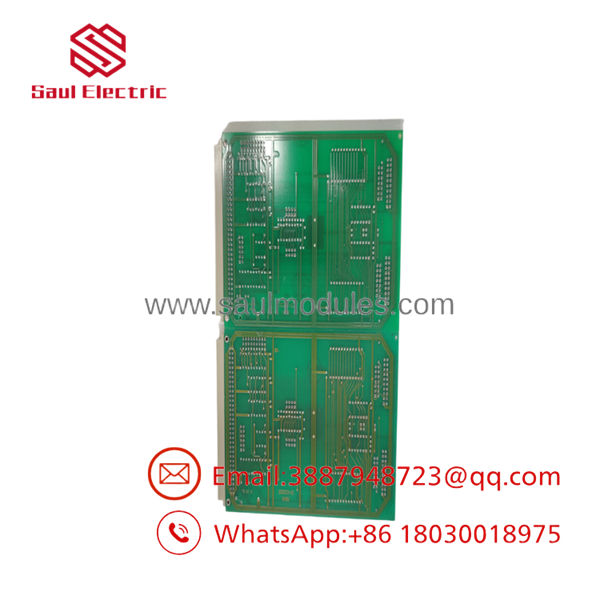
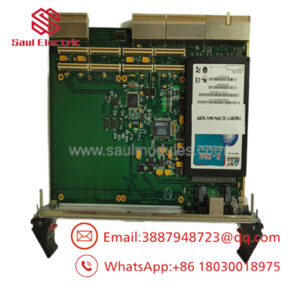
The GESPAC GESSIO-1E is a digital interface board developed for legacy GESPAC modular automation systems. It serves as the interface between the controller and external digital devices such as switches, relays, contactors, and auxiliary equipment, allowing discrete signals to be exchanged reliably within industrial control applications.
To be honest, documentation for the GESSIO-1E is limited because the product has been out of production for many years. In existing installations, however, the board is commonly found alongside other GESPAC modules such as the GESADA analog interface board. Verify the wiring assignments and controller configuration before replacement, as different OEM systems often customized I/O allocation even when using the same hardware.
Key Technical Specifications
| Parameter | Value |
|---|---|
| Manufacturer | GESPAC |
| Model | GESSIO-1E |
| Product Type | Digital I/O Interface Board |
| System Family | GESPAC Modular Control Platform |
| Function | Digital Signal Interface |
| Installation | Modular Backplane PCB |
| Application | Industrial Machine & Process Control |
| Signal Type | Discrete Digital I/O |
| Hardware Format | Printed Circuit Board |
| Product Status | Legacy / Discontinued |
Note: GESPAC did not publicly release a comprehensive hardware datasheet for the GESSIO-1E. Exact channel counts, voltage ratings, and connector pin assignments should be verified from the original machine documentation or OEM electrical drawings before installation.
Application Scenarios & The “Trench” Experience
Here’s a situation many maintenance engineers have encountered.
A legacy production line suddenly reports several unrelated input alarms. Limit switches test correctly. Field wiring passes insulation tests. The PLC CPU remains healthy. After several hours of troubleshooting, the actual fault is traced to an aging interface board with oxidized edge connectors that intermittently interrupt digital signals.
Typical applications include:
- Industrial Manufacturing — Interface between digital field devices and legacy GESPAC controllers.
- Machine Automation — Processing limit switches, pushbuttons, and relay feedback.
- Material Handling Systems — Monitoring conveyors, interlocks, and safety contacts.
- Test Equipment — Digital signal acquisition and equipment control.
- Legacy Automation Platforms — Replacement support for existing GESPAC-based installations.
Field Replacement Example
During maintenance on a packaging system, operators experienced random emergency-stop indications despite normal field wiring. Engineers reseated the GESSIO-1E, but intermittent faults remained. A tested replacement board was installed, connector contacts were cleaned, and every input was verified through the controller diagnostics. Production resumed without replacing any field devices.
Transparency SOP: Quality Assurance & Testing
We don’t just ship boards; we evaluate them on compatible GESPAC hardware whenever practical.
- Inbound Inspection
- Verify the complete catalog number and PCB revision.
- Inspect edge connectors, ICs, solder joints, and passive components.
- Check for corrosion, overheating, and evidence of previous repair.
- Live Functional Testing
- Install in a compatible GESPAC rack.
- Verify board initialization.
- Confirm digital input and output functionality where supported by the test system.
- Electrical Parameter Checks
- Verify power rails.
- Check connector continuity.
- Confirm stable signal transmission across the interface circuitry.
- Hardware Verification
- Record PCB revision.
- Verify compatibility with the customer’s control system.
- Document inspection results.
- Final QC & Anti-static Packaging
- Complete functional inspection.
- ESD-safe packaging.
- Shock-resistant industrial packing.
- Full serial-number traceability.
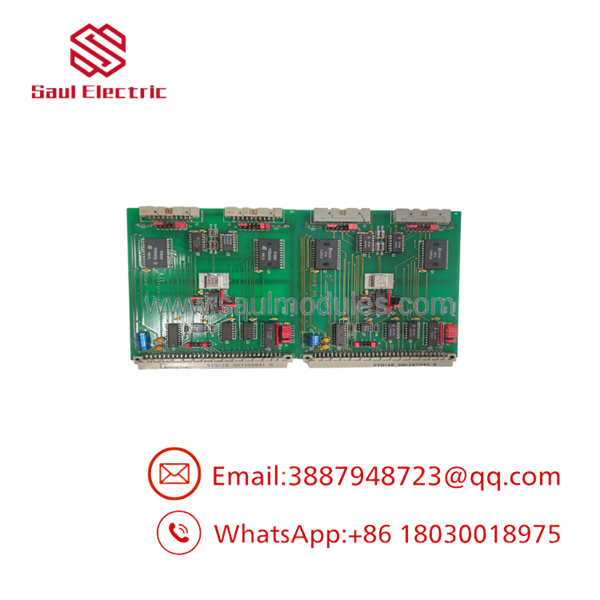
- GESSIO-1E
The Veteran’s Tech Trap Guide
⚠️ Don’t replace the board before checking the power supply.
Many legacy GESPAC systems depend on multiple regulated DC rails. A missing supply voltage can make the appear defective when the actual problem is elsewhere in the rack.
❗ Clean the edge connectors first.
After decades in service, oxidation on the PCB fingers and backplane connectors is one of the most common causes of intermittent digital I/O faults.
⚠️ Verify the OEM wiring drawings.
Different machine builders often assigned different field signals to the same connector. Never assume two identical boards use identical wiring.
❗ Observe ESD precautions.
Older CMOS interface components are vulnerable to electrostatic discharge. Handle the board with a grounded wrist strap and store it in anti-static packaging whenever it is removed from the rack.
Frequently Asked Questions (FAQ)
Q1. What is the primary function of the ?
The is a digital interface board that exchanges discrete input and output signals between field devices and a GESPAC-based industrial control system.
Q2. Is the still manufactured?
No. The module has been discontinued for many years. Replacement units are generally available only through industrial surplus inventories or professionally refurbished stock.
Q3. Can it be replaced without changing the application software?
In most installations, yes. If the replacement board has the same hardware revision and the original wiring is preserved, software changes are typically unnecessary. Always verify the complete I/O operation before returning the machine to production.
Q4. Why is detailed technical documentation difficult to find?
Many GESPAC products were supplied as OEM components, and comprehensive documentation was often included only with the machine builder’s service manuals rather than being published as standalone product datasheets.
Q5. What usually causes failures?
Typical failure modes include connector oxidation, aging electrolytic capacitors, thermal cycling, electrical overstress, and damage caused during maintenance. Complete PCB failures are less common than connector-related issues.
Q6. Is the interchangeable with other GESPAC interface boards?
Not necessarily. GESPAC produced several interface boards with different electrical functions. Verify the complete model number, connector arrangement, and machine documentation before substituting another board.
Q7. What warranty is typically provided?
Most industrial automation suppliers provide a 12-month warranty on functionally tested new surplus or professionally refurbished boards. Before commissioning, verify the complete model number, backplane compatibility, field wiring assignments, and power supply voltages to minimize startup issues.

 Start Chat


