





Description
Core Product Summary
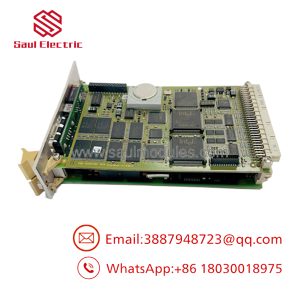
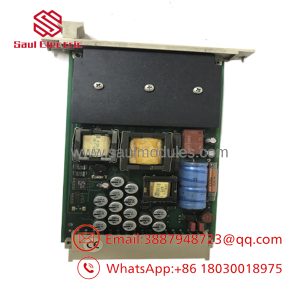
The HIMA F8627 is an Ethernet communication module designed for communication within HIMA programmable electronic safety systems. It supports Ethernet-based data exchange between compatible HIMA H51q systems and provides an interface for safety-related communication over an Ethernet network.
The module uses a 32-bit Motorola MPC860T processor and supports 10BaseT or 100BaseTX Ethernet through an RJ45 connection. An RJ12 interface provides a connection to a high-speed serial redundancy module. The hardware occupies three height units and four width units in the applicable rack arrangement and operates from a 5 V supply. System software, module configuration, network topology, and redundancy arrangements must be considered when selecting the F8627 for an existing installation.
Key Technical Specifications
| Parameter | Specification |
|---|---|
| Manufacturer | HIMA |
| Model | F8627 |
| Product type | Ethernet communication module |
| Processor | 32-bit Motorola MPC860T |
| Ethernet interface | 10BaseT or 100BaseTX |
| Ethernet connector | RJ45 |
| Redundancy interface | High-speed serial interface, RJ12 |
| Supply voltage | 5 V |
| Current consumption | 1 A |
| Rack space | 3 height units (HU), 4 width units (WU) |
| Communication function | Safety-related Ethernet communication between compatible HIMA systems |
| Supported system context | HIMA H51q PES; applicability depends on the installed system configuration |
| Engineering environment | ELOP II |
Engineering Selection Highlights
- System architecture: The F8627 is a communication module rather than a conventional field I/O card. Selection should be based on the communication requirements of the existing HIMA safety system.
- Ethernet interface: Support for 10BaseT and 100BaseTX provides two Ethernet transmission-rate options. The network must support the configured operating mode.
- Safety-related communication: The module supports communication between HIMA programmable electronic safety systems. Network configuration and data-exchange definitions must be consistent with the safety application.
- Redundancy interface: The RJ12 high-speed serial connection supports communication with the associated redundancy module. Confirm the required cable and module arrangement before installation.
- Power requirements: The specified 5 V supply and 1 A current consumption must be considered when checking the intended rack and power arrangement.
- Physical installation: The 3 HU × 4 WU form factor is relevant when confirming the available space and correct mounting position.
- Software configuration: The engineering project and communication configuration must match the installed hardware and applicable HIMA system software.
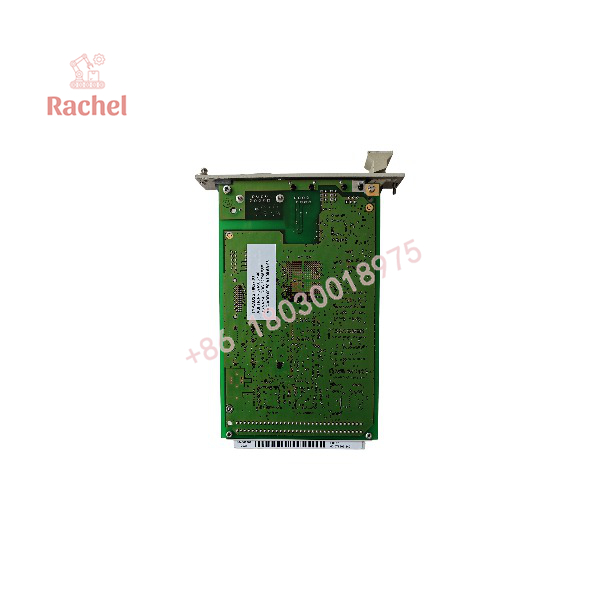
F8627
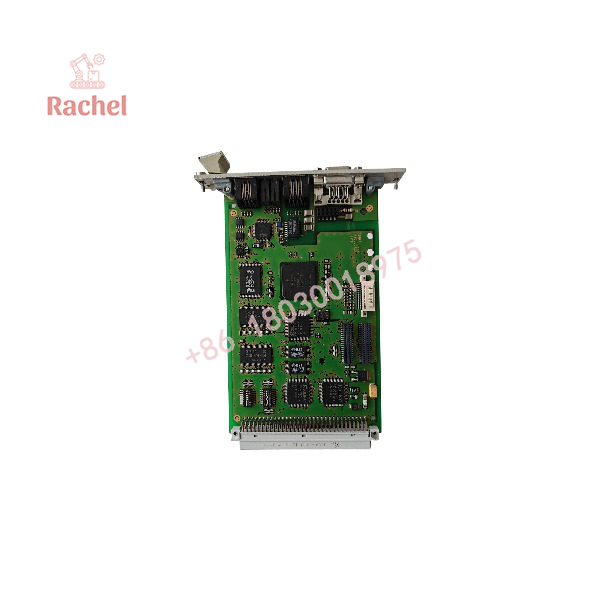
F8627
System Compatibility & Integration Requirements
| Item | Compatibility or requirement | Practical note |
|---|---|---|
| HIMA safety system | H51q programmable electronic safety systems | Confirm the installed system configuration and hardware revision. |
| Controller communication | Safety-related Ethernet communication between compatible HIMA systems | The communication architecture must be configured for the intended data exchange. |
| Ethernet network | 10BaseT or 100BaseTX under IEEE 802.3 | Confirm transmission rate, network topology, and communication timing. |
| Ethernet connector | RJ45 | Use the connection and cabling arrangement specified for the installation. |
| Redundancy connection | RJ12 high-speed serial interface | The associated redundancy hardware and cable arrangement must be compatible. |
| Supply | 5 V | Confirm that the designated rack supplies the required voltage and current. |
| Engineering software | ELOP II | Confirm that the project configuration supports the installed system and module. |
Important model distinction: HIMA F8627 and F8627X are separate model designations. Documentation for F8627X describes additional Ethernet communication functions and software requirements. Those details should not automatically be applied to F8627.
Dimensions, Mounting & Connection Notes
The F8627 is designed for installation in the applicable HIMA modular system rack.
- Rack allocation: 3 height units and 4 width units.
- Power connection: The module operates from a 5 V supply provided by its intended system arrangement.
- Ethernet connection: RJ45 for 10BaseT or 100BaseTX.
- Redundancy connection: RJ12 high-speed serial interface for the associated redundancy module.
Before replacing or installing the module, confirm its assigned slot, hardware configuration, network connection, and redundancy arrangement against the system documentation. Network wiring and configuration should be checked before returning a safety-related system to service.
Detailed Product Overview
Ethernet communication within a safety system
The HIMA F8627 is intended to provide communication capabilities for compatible HIMA programmable electronic safety systems. In a distributed safety architecture, controllers may need to exchange defined data with other safety-system nodes. The communication module provides the Ethernet interface required for that exchange.
The F8627 supports 10BaseT and 100BaseTX Ethernet. These interfaces operate at nominal transmission rates of 10 Mbps and 100 Mbps, respectively. Actual system communication behavior depends on the network configuration, traffic conditions, and the requirements of the safety application.
Processor and module architecture
The module uses a 32-bit Motorola MPC860T processor with an integrated communication controller. This processor handles communication-related functions within the module. The F8627 is therefore distinct from a digital input, digital output, or analog signal module: its primary purpose is communication rather than direct field-signal interfacing.
Its specified supply requirement is 5 V, with a current consumption of 1 A. These electrical requirements should be considered when assessing the intended rack and power arrangement.
Redundancy and network configuration
The F8627 includes an RJ12 high-speed serial interface for connection to associated redundancy hardware. Where redundant communication is required, the system must use the appropriate module arrangement, interconnection, and configuration.
Network topology is also an important selection and commissioning consideration. Ethernet segments used for safety-related communication must comply with the applicable system requirements. Network delays, inappropriate interconnections, and incorrect module configuration can affect communication behavior and may lead to a safety-system shutdown.
Engineering and maintenance considerations
When replacing an F8627, engineers should compare the complete model designation, rack arrangement, switch settings, Ethernet configuration, and redundancy wiring with the existing installation. The applicable ELOP II project and system documentation should guide configuration and commissioning.
The F8627X designation should be checked separately because its documented functions and software dependencies may differ from those of the F8627. Matching the product name alone is insufficient to establish interchangeability.
Applications & System Role
The HIMA F8627 serves as a communication component in compatible HIMA programmable electronic safety systems. Its primary role is to enable Ethernet-based information exchange between safety-system nodes rather than directly acquiring field signals or driving output devices.
Its principal engineering functions include:
- Safety-system communication: Supports safety-related data exchange between compatible HIMA programmable electronic systems.
- Ethernet integration: Provides a connection to an Ethernet network using 10BaseT or 100BaseTX.
- Redundant communication arrangements: Provides an interface for the associated high-speed serial redundancy hardware.
- System data exchange: Allows configured data to be exchanged between participating systems according to the project configuration.
The module is relevant when maintaining or restoring an existing HIMA communication architecture. Selection should be based on the installed system family, network configuration, redundancy requirements, and the exact hardware designation.
Frequently Asked Questions
What is the HIMA F8627?
The HIMA F8627 is an Ethernet communication module used in compatible HIMA programmable electronic safety systems. It supports Ethernet-based communication between participating systems.
Which processor does the HIMA F8627 use?
The module uses a 32-bit Motorola MPC860T processor with an integrated communication controller.
What Ethernet interfaces does the F8627 support?
The F8627 supports 10BaseT or 100BaseTX Ethernet and uses an RJ45 connector.
What power supply does the F8627 require?
The specified operating supply is 5 V, with a current consumption of 1 A.
Does the HIMA F8627 support redundant communication?
The module provides an RJ12 high-speed serial interface for associated redundancy hardware. The required redundancy configuration depends on the system architecture and applicable installation documentation.
Is the HIMA F8627 a digital input/output module?
No. Its primary function is Ethernet communication. It should not be selected as a substitute for a field I/O module.
Is the F8627 interchangeable with the F8627X?
Interchangeability should not be assumed. The two designations have different documentation, and compatibility must be established for the exact system configuration and hardware version.
What should be checked before ordering a replacement F8627?
Confirm the complete part number, installed system family, rack allocation, interface requirements, redundancy arrangement, and engineering configuration. Comparing the existing module’s identification label with the replacement specification helps reduce the risk of selecting an incompatible component.

 Start Chat


