





Description
Core Product Summary
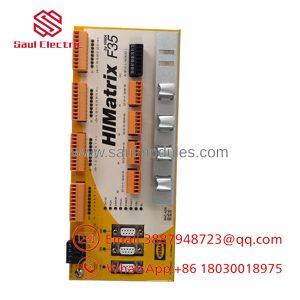
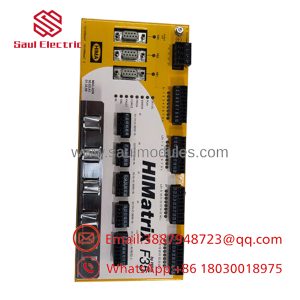
The HIMA F8650 is a safety-related central module (CPU) from HIMA Paul Hildebrandt GmbH, used as the central processing unit in the PES H51q programmable electronic safety systems in the -MS, -HS, and -HRS configurations. It executes the safety-related user program and coordinates the I/O and communication modules installed in the H51q system racks.
The F8650 is built on two clock-synchronized Intel 386EX 32-bit microprocessors running at 25 MHz, which process in parallel and are compared so that a fault in either channel leads to a controlled shutdown. Each microprocessor has 1 MByte of Flash-EPROM for the operating system, 512 kByte of Flash-EPROM for the user program, and 256 kByte of SRAM for data. The module provides two electrically isolated RS-485 serial interfaces, a four-digit diagnostic matrix display with selectable information, and a safety-related watchdog with a 24 V DC output loadable up to 500 mA and short-circuit proof. It requires 8 TE of rack space and draws 5 V DC at 2000 mA. The module covers safety requirements classes AK 1–6, which corresponds to applications up to SIL 3 per IEC 61508 within the H51q system context.
Key Technical Specifications
| Parameter | Value |
|---|---|
| Product type | Central module (safety-related CPU) |
| System | PES H51q-MS, H51q-HS, H51q-HRS |
| Safety classification | Requirements class AK 1–6 (system context: up to SIL 3 per IEC 61508) |
| Microprocessors | 2 × Intel 386EX, 32-bit, clock-synchronized |
| Clock frequency | 25 MHz |
| Operating system memory (per microprocessor) | Flash-EPROM, 1 MByte |
| User program memory (per microprocessor) | Flash-EPROM, 512 kByte |
| Data memory (per microprocessor) | SRAM, 256 kByte |
| Interfaces | 2 × RS-485 serial interfaces with electrical isolation |
| Diagnostic display | 4-digit matrix display with selectable information |
| Watchdog | Safety-related, 24 V DC output, loadable up to 500 mA, short-circuit proof |
| Construction | 2 European-standard PCBs plus 1 PCB for the diagnostic display |
| Space requirement | 8 TE |
| Operating data | 5 V DC, 2000 mA |
| Mounting | Central rack of the H51q system (19-inch subrack) |
Detailed Product Overview
Within a PES H51q controller, the F8650 is the module where the safety logic actually runs. Its defining design feature is the dual-processor architecture: two Intel 386EX microprocessors operate clock-synchronized on the same program, with their results compared so that a divergent or failed channel is detected rather than passed through to the outputs. This is the mechanism behind the module’s AK 1–6 classification, which allows the H51q system to be used for safety-related applications up to SIL 3 per IEC 61508 — a level typical of emergency shutdown, burner management, and fire and gas duties in process plants.
The memory configuration matters when planning a project. Each microprocessor carries its own 1 MByte Flash-EPROM for the operating system, 512 kByte of Flash-EPROM for the user program, and 256 kByte of SRAM for process data. Because both processors run the same program from their own memory, the user program size is limited by the 512 kByte user memory per processor, not by their sum. The operating system is loaded in Flash-EPROM, so the module’s firmware version is fixed at the point of delivery and determines which features and communication options are available.
Diagnostics are an explicit part of the module design. The four-digit matrix display on the front can be stepped through selectable diagnostic information, allowing a technician to read module and system states locally without a connected engineering PC. On a fault, the safety-related watchdog with the 24 V output switches off; the watchdog output can be loaded up to 500 mA and is short-circuit proof, so it can drive an external monitoring circuit or relay directly.
The two electrically isolated RS-485 interfaces connect the F8650 to the serial world of the H51q system: the PADT (programming and diagnostics terminal) for loading and testing programs, and communication with other stations on the serial bus. For Ethernet-based communication — including ELOP II TCP, safeethernet, and Modbus TCP — the H51q family uses the F 8627X communication module, which the central module reaches over the backplane bus.
For integration planning, two figures matter: the F8650 requires 8 TE of rack space and draws 2000 mA at 5 V DC — a substantial share of a central rack’s 5 V budget supplied by the F 7126 or F 7130A power supply modules. Both values must be counted when configuring or expanding an H51q central rack. Where a project needs more user memory, the F 8650X version of this module offers 1 MByte each for user program and data; HIMA documentation notes that upgrading from an F 8650 to an F 8650X requires a change to the rack’s fan concept, so such a change must be planned as a hardware modification and not treated as a drop-in module swap.
System Compatibility & Integration Requirements
| Item / Dependency | Verified Compatibility or Requirement | Practical Note |
|---|---|---|
| Controller family | PES H51q-MS, H51q-HS, H51q-HRS | Central module (CPU) of the H51q system |
| Rack format | Central rack of the H51q system, 19-inch subrack | 8 TE space requirement |
| Power supply | 5 V DC, 2000 mA, from the rack power supply modules (F 7126 / F 7130A generation) | Include in the 5 V budget; two central modules in redundant racks draw double |
| Serial interfaces | 2 × RS-485, electrically isolated | PADT connection and serial bus communication |
| Ethernet communication | Via F 8627X communication module over the backplane bus | ELOP II TCP, safeethernet, Modbus TCP |
| Watchdog output | 24 V DC, up to 500 mA, short-circuit proof | For external fault monitoring circuits |
| Diagnostic access | 4-digit matrix display on the module | Local readout of selectable diagnostic information |
| Engineering tool | ELOP II for H41q/H51q systems, IEC 61131-3 programming | Program load and testing via the serial interface |
| System certification context | H51q systems TÜV certified, applicable up to SIL 3 per IEC 61508; module classified AK 1–6 | Module-level class within a system-level certification |
| Related variant | F 8650X (1 MByte user program / 1 MByte SRAM) | Upgrade requires a documented fan concept change |
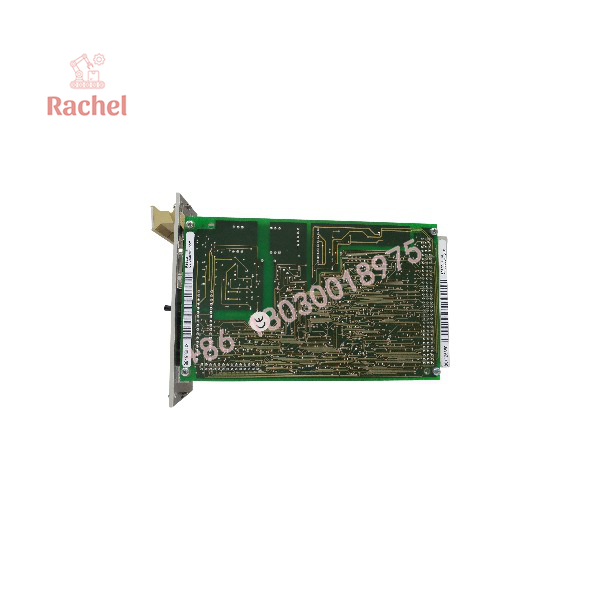
F8650
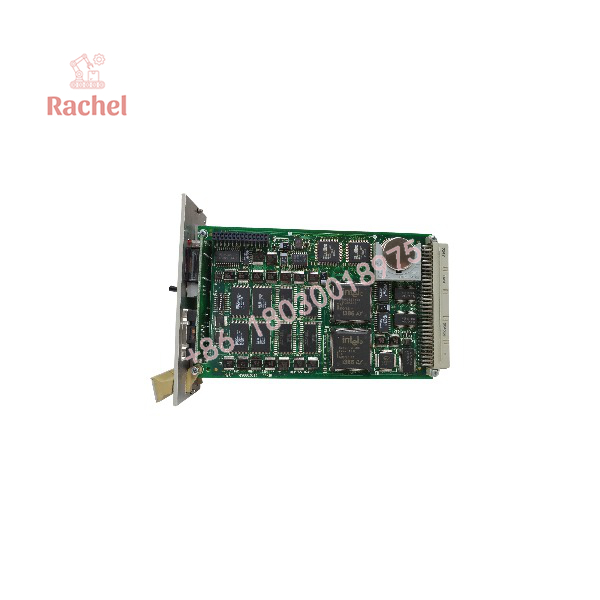
F8650
Engineering Selection Highlights
- System fit: The F8650 is the central module for PES H51q-MS, -HS, and -HRS; it is not a module for other HIMA platforms, so it is selected specifically for H51q-based installations.
- Safety scope: Requirements class AK 1–6 (up to SIL 3 per IEC 61508 in the H51q system context) — verify the required safety level of the application against the system documentation before selection.
- Program size limit: 512 kByte user program Flash-EPROM per microprocessor; applications approaching this limit need the memory-extended F 8650X variant instead.
- Power budget: 2000 mA at 5 V DC per module; in redundant H51q-HS/HRS racks with two central modules this doubles the central-processing share of the 5 V budget.
- Rack space: 8 TE per module — plan slot allocation together with the power supply, monitoring, coupling, and communication modules in the central rack.
- Communication architecture: Serial engineering access is via the two isolated RS-485 interfaces; Ethernet connectivity (ELOP II TCP, safeethernet, Modbus TCP) requires the F 8627X communication module over the backplane bus.
- Variant dependency: Moving from F 8650 to F 8650X involves a documented fan concept change in the rack; treat it as a planned hardware modification, not a simple CPU replacement.
FAQ
What is the HIMA F8650?
The F8650 is a safety-related central module (CPU) used in HIMA PES H51q-MS, H51q-HS, and H51q-HRS safety controllers, where it executes the safety-related user program.
How does the F8650 achieve its safety function?
It uses two clock-synchronized Intel 386EX microprocessors that process the same program in parallel, so a fault in either channel results in a controlled shutdown via the safety-related watchdog rather than an undetected wrong output.
How much memory does the F8650 have?
Each microprocessor has 1 MByte Flash-EPROM for the operating system, 512 kByte Flash-EPROM for the user program, and 256 kByte of SRAM for data.
Which safety level does the F8650 cover?
The module is classified for requirements classes AK 1–6; within the H51q system it is applicable in safety-related applications up to SIL 3 per IEC 61508.
Which interfaces does the F8650 provide?
Two electrically isolated RS-485 serial interfaces for engineering access and serial communication, plus a 24 V watchdog output loadable up to 500 mA.
How do I connect the F8650 to an Ethernet network?
Ethernet-based communication (ELOP II TCP, safeethernet, Modbus TCP) runs through the F 8627X communication module, which the central module reaches via the backplane bus.
How much space and power does the F8650 need?
It requires 8 TE of rack space and draws 2000 mA at 5 V DC, which must be included in the central rack’s power budget.
What is the difference between the F8650 and the F8650X?
The F8650X offers larger user memory (1 MByte user program and 1 MByte data SRAM per microprocessor instead of 512 kByte and 256 kByte); upgrading from F 8650 to F 8650X requires a change to the rack’s fan concept per HIMA documentation.
Verification & Troubleshooting Notes
- Module shows a fault on the diagnostic display: Step through the four-digit matrix display to read the selectable diagnostic information; the displayed code identifies the fault area before any further action is taken. HIMA’s operating-system documentation contains the error code lists.
- System shuts down unexpectedly: The controlled shutdown on fault is the intended reaction of the dual-processor comparison; identify which channel or peripheral triggered it using the diagnostic display rather than repeatedly restarting the system.
- Communication with PADT fails: Verify the RS-485 connection to the serial interface and confirm the module’s bus station settings; only station numbers 1–31 can be set for the serial interface in this module generation.
- Ethernet communication absent: The F8650 has no Ethernet ports of its own; check that the F 8627X communication module is installed and that communication runs over the backplane bus.
- Rack power problems affecting the CPU: The F8650 draws 2000 mA at 5 V DC; verify the 5 V supply and power supply module loading in the central rack before suspecting the central module itself.
- Planning an upgrade to the F8650X: Note that HIMA documentation requires the fan concept to be changed when replacing an F 8650 with an F 8650X; omitting this step is a known integration pitfall.
- All diagnostic and maintenance work on the safety system should follow the applicable HIMA system documentation and the plant’s safety procedures; do not bypass the watchdog or comparison functions.

 Start Chat


