





Description
Product Introduction
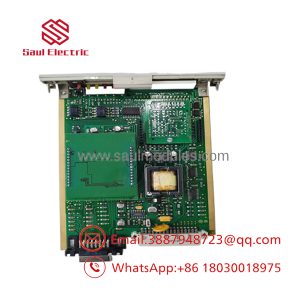
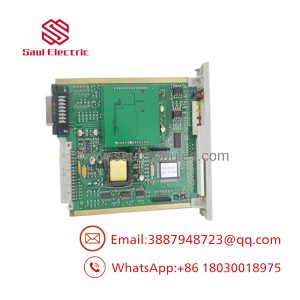
The Honeywell 51196655-100 is a core processor board designed for Honeywell TDC 3000 control systems, specifically serving within Process Manager (PM) and Advanced Process Manager (APM) node architectures. It executes high-speed PID control loops, processes analog/digital I/O scanning cycles, and maintains continuous real-time data synchronization across the Universal Control Network (UCN).
Engineered for continuous heavy-duty industrial process control, the 51196655-100 ensures high loop availability and deterministic execution of control strategies in large-scale plants. Its multi-layer PCB design incorporates error-correcting memory and hardware diagnostics to isolate internal faults before they impact process safety or stability.
Key Technical Specifications
| Parameter | Value |
| System Compatibility | Honeywell TDC 3000, PM, APM, High-Performance APM (HPM) |
| Board Function | Main Processor / Memory Communication Card |
| Network Interface | Universal Control Network (UCN) / Local Control Network (LCN) |
| Mounting Form Factor | Standard TDC 3000 19-inch File / Card Cage Slot |
| Power Supply | Supplied via TDC 3000 backplane DC bus (+5V, +12V, -12V) |
| Operating Temperature | 0°C to +60°C (32°F to 140°F) |
Application Scenarios & The “Trench” Experience
During a main distillation column operation at a petroleum refinery, a secondary processor card in an aging APM node began throwing parity memory errors due to thermal breakdown. The 51196655-100 module was swapped into the redundant processor slot, seamlessly taking over the active control loop execution without interrupting valve positions or tripping the column’s pressure interlocks.
- Oil Refineries & Petrochemical Plants – Manages continuous process control loops for cracking units and distillation columns.
- Power Generation Facilities – Handles boiler control logic and turbine auxiliary signal monitoring.
- Pulp & Paper Mills – Maintains precise speed and tension control data across multi-stage machine sections.
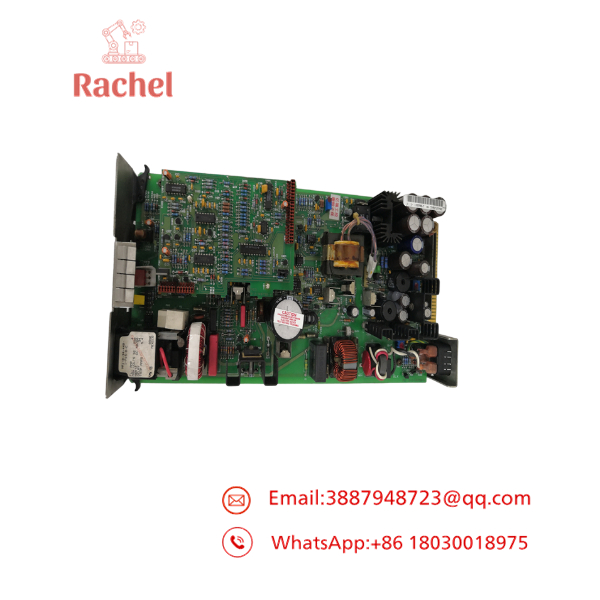
51196655-100
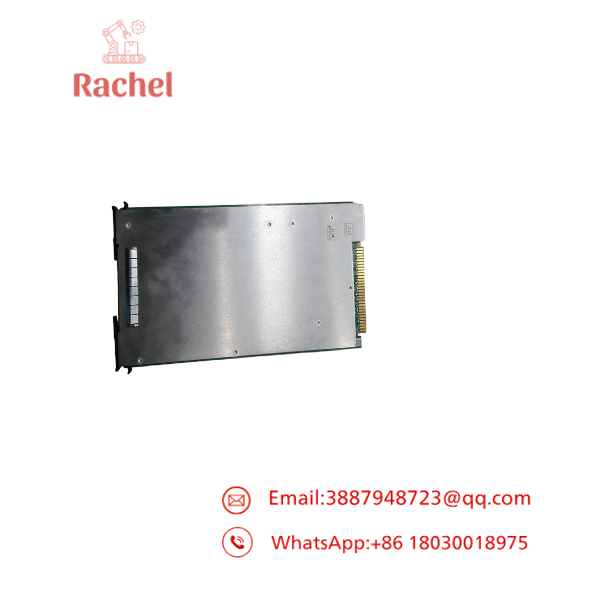
51196655-100
Transparency SOP: Quality Assurance & Testing
- Visual & Structural Inspection: Edge connectors, surface-mount ICs, and capacitor banks are inspected under magnification for heat degradation or trace damage.
- Backplane POST & Memory Sweep: The module is seated in a TDC 3000 test file to verify Power-On Self-Test (POST) routines, bus communication, and memory parity integrity.
- Control Loop Load Simulation: The card is loaded with benchmark APM configuration files to verify deterministic CPU cycle timing under heavy loop execution.
- ESD & Heavy Packaging: Cleared boards are cleaned, sealed in static-shielding bags, and encased in high-density foam shipping containers.
The Veteran’s Tech Trap Guide
- ⚠️ Verify jumper and switch settings. Before seating a replacement 51196655-100 into the file, mirror all hardware jumper configurations and DIP switch addresses from the original card. Mismatched settings can cause node addressing conflicts on the UCN.
- ❗ Observe ESD grounding protocols. Never handle the board without an anti-static wrist strap connected to cabinet earth ground. TDC 3000 edge connectors and memory chips are sensitive to static discharge.
- ⚠️ Confirm redundant partner status. If replacing the card in a redundant APM node pair, ensure the partner card is fully synchronized (“OK” LED lit) before pulling the faulty board.
Frequently Asked Questions
- Q: Is the 51196655-100 hot-swappable?
A: In a fully redundant APM/HPM configuration, the secondary processor card can be replaced online. However, always follow Honeywell site safety and backup procedures before pulling cards from a live rack.
- Q: What is the primary difference between 51196655-100 and older revision boards?
A: The -100 revision features updated onboard memory chips and refined bus driver circuitry for improved thermal tolerance and lower parity error rates.
- Q: Are these genuine Honeywell OEM boards?
A: Yes, 100%. We only supply original OEM Honeywell TDC 3000 hardware, fully bench-tested and certified prior to dispatch.

 Start Chat


