





Description
Product Introduction & Engineering Value
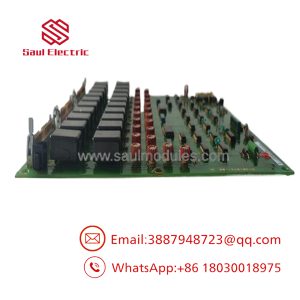
The Honeywell CC-PAIH51 is a 16-channel, high-level analog input module with HART communication for Honeywell Experion Series C control systems. It acquires 4–20 mA signals from two-wire or self-powered transmitters, converting field measurements into digital process data for controller use. Its 16-bit A/D converter and 50 ms input scan rate support process monitoring where signal accuracy and timely updates matter.
HART capability adds access to compatible smart-instrument configuration and diagnostic information without treating the module as a conventional voltage-input device. Before ordering a replacement, verify the installed I/O termination assembly, redundancy arrangement, and system configuration.
Technical Specifications
| Parameter | Specification |
|---|---|
| Manufacturer | Honeywell |
| Model | CC-PAIH51 |
| Module function | High-Level Analog Input with HART |
| System family | Experion PKS Series C I/O |
| Input channels | 16, single-ended |
| Input signal | 4–20 mA DC |
| Supported transmitters | Two-wire or self-powered current transmitters |
| Input resistance | 200 Ω |
| A/D converter resolution | 16 bits |
| Input scan rate | 50 ms |
| Accuracy at 23.5°C ± 2°C | ±0.075% of full scale |
| Accuracy from 0°C to 60°C | ±0.15% of full scale |
| Common-mode rejection | 70 dB, DC to 60 Hz, with 500 Ω source imbalance |
| Normal-mode rejection | 19 dB at 60 Hz |
| Normal-mode filter | Single-pole RC; −3 dB at 6.5 Hz |
| Maximum normal-mode input | ±30 V |
| Channel-to-channel crosstalk | −60 dB, DC to 60 Hz |
| Compatible IOTA options | CC-TAIX51 nonredundant; CC-TAIX61 redundant |
Source: Honeywell’s Experion Series-C I/O Specification, document EP03-490-520. Confirm the applicable hardware revision before installation.
Important signal limitation: The CC-PAIH51 supports 4–20 mA current inputs. It does not support direct voltage or differential inputs. Do not assume that another Honeywell analog input module has the same electrical characteristics.
Field Applications & Practical Engineering Experience
Consider a representative refinery maintenance scenario. A control-system technician identifies intermittent readings from several pressure transmitters monitoring a catalytic cracking unit. The maintenance team suspects an analog input channel fault and prepares a replacement module. Before changing hardware, the team compares transmitter loop currents with controller readings, checks field wiring and termination connections, and verifies the module’s diagnostic status. If the module is confirmed defective, a compatible CC-PAIH51 can restore the affected signal acquisition after approved replacement and commissioning procedures.
This is an illustrative scenario, not a documented customer case. The actual fault must be established through testing rather than assumed from the symptom.
Other applications include:
- Boiler feedwater monitoring: Acquiring 4–20 mA signals from pressure and flow transmitters used in feedwater control.
- Chemical reactor instrumentation: Collecting temperature-transmitter, pressure-transmitter, and level-transmitter signals where the instruments provide compatible 4–20 mA outputs.
- Smart instrument maintenance: Accessing supported HART device information for configuration checks and troubleshooting in process measurement loops.
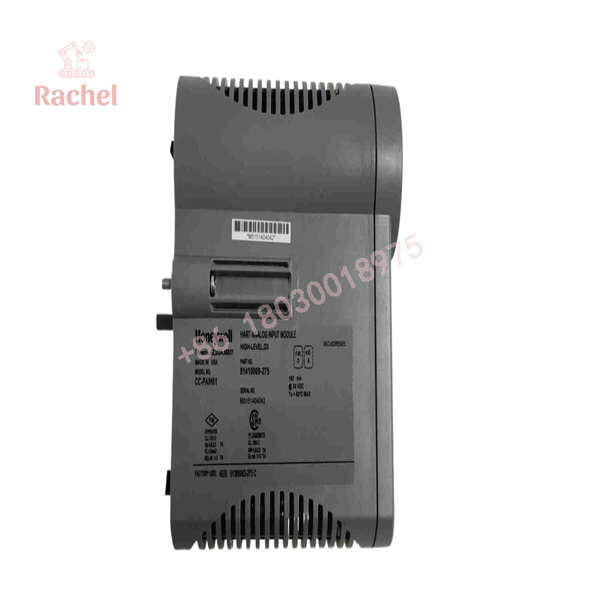
CC-PAIH51
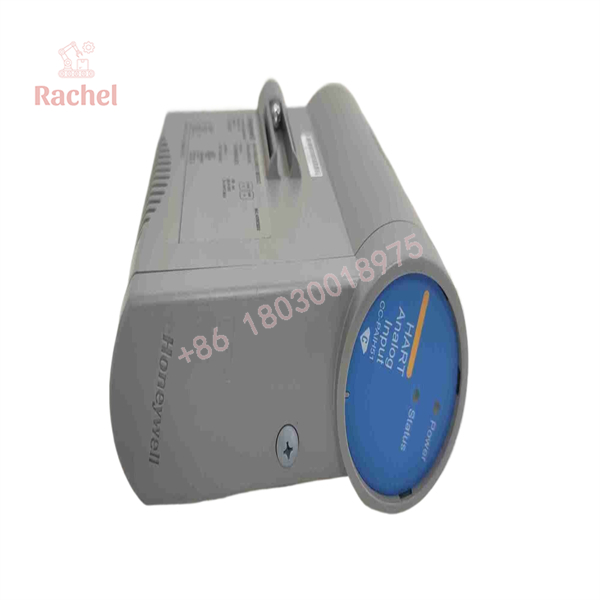
CC-PAIH51
Quality Assurance and Testing Procedure
A replacement module should be evaluated according to its declared condition and the evidence supplied by the seller. “New surplus” does not automatically mean factory-tested, and refurbished equipment should not be represented as new.
Step 1 — Identity and condition verification
Confirm the CC-PAIH51 model number, applicable part-number suffix, nameplate condition, connector integrity, and any signs of unauthorized repair or physical damage.
Step 2 — Electrical and functional testing
Where suitable test facilities are available, inspect power and interface connections, module diagnostics, and representative 4–20 mA input behavior. Verify HART communication using compatible instrumentation.
Step 3 — Documentation and release
Record the test scope, observed results, serial or traceability information where available, and any limitations. Confirm the quoted warranty and return terms in writing.
These are recommended inspection procedures, not a claim that a particular unit has passed testing. Request a unit-specific test report before purchase if documented functional verification is a requirement.
The Veteran’s Tech Trap Guide
Trap 1: Ordering by model number alone
The CC-PAIH51 must be checked against the installed termination assembly and system design. Honeywell lists the CC-TAIX51 for nonredundant use and the CC-TAIX61 for redundant use. Do not assume that a termination assembly or redundant configuration is interchangeable without verification.
Trap 2: Ignoring the signal type
This module is designed for 4–20 mA inputs through a 200 Ω input resistance. A 0–10 V transmitter or a differential-input application is not a direct substitute. Check the transmitter output, loop wiring, and approved interface design before connecting the replacement.
Trap 3: Treating hardware replacement as the whole repair
A replacement does not automatically resolve configuration errors, loop-power problems, grounding faults, or HART communication issues. Preserve required configuration records, follow the site’s approved shutdown and replacement procedure, and verify channel values and alarms during recommissioning. Do not remove or reseat energized hardware unless the installed system explicitly permits it.
PRO TIP: Before removing the original module, record channel assignments, relevant diagnostic messages, termination details, and the affected loop readings. That information helps distinguish a genuine module failure from a field wiring or configuration problem.
Frequently Asked Questions
Q1. What does the Honeywell CC-PAIH51 do?
It acquires up to 16 single-ended 4–20 mA analog signals and supports HART communication with compatible smart field instruments in Honeywell Experion Series C I/O systems.
Q2. Is the CC-PAIH51 compatible with the CC-TAIX51 and CC-TAIX61?
Honeywell identifies the CC-TAIX51 as a nonredundant termination assembly and the CC-TAIX61 as a redundant option for this module. Confirm the existing system architecture and approved configuration before ordering.
Q3. Can the CC-PAIH51 accept 0–10 V or differential signals?
No. Its specified input range is 4–20 mA, and it does not support direct voltage or differential inputs. Select a module designed for the required signal type if the application uses voltage or differential measurement.
Q4. What should buyers verify when purchasing new-surplus stock?
Request clear photographs of the actual unit, its nameplate and part-number suffix, a written condition declaration, available traceability records, and the seller’s return and warranty terms. New-surplus status describes inventory condition; it is not, by itself, proof of authenticity or functional performance.
Q5. Is the CC-PAIH51 available with a warranty?
Warranty coverage depends on the seller and the specific unit. Obtain written confirmation of the warranty duration, coverage, exclusions, and return procedure before placing the order. Do not assume that an independent supplier’s warranty is equivalent to Honeywell’s manufacturer warranty.
Q6. What information is needed to source the correct replacement?
Provide the full model number, any additional part number shown on the nameplate, the installed termination assembly model, the redundancy arrangement, and the required condition (new surplus or refurbished). For critical applications, also confirm the control-system release and the approved replacement requirements with the site’s system integrator.

 Start Chat


