





Description
Product Introduction & Engineering Value
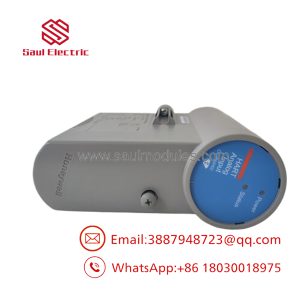
Mixed-signal instrumentation often requires more than a conventional 4–20 mA input. The Honeywell CC-PAIX02 accepts specified voltage and current signals, with 12 single-ended channels and four differential channels. Its 16-bit conversion, 50 ms scan rate, and selectable input ranges support process measurements from compatible transmitters and sensing devices in Experion PKS Series C installations.
For replacement projects, the critical checks are the required input mode, termination assembly, grounding arrangement, and channel configuration. The CC-PAIX02 does not provide HART communication, so applications requiring HART diagnostics need a separately verified solution.
Technical Specifications
| Parameter | Specification |
|---|---|
| Manufacturer | Honeywell |
| Model | CC-PAIX02 |
| System family | Experion PKS Series C |
| Module function | High-level analog input |
| Input configuration | 12 single-ended and 4 differential channels |
| Supported signal types | Voltage and current |
| Voltage ranges | 0–5 V, 1–5 V, 0.4–2 V |
| Current range | 4–20 mA through 250 Ω |
| A/D converter resolution | 16 bits |
| Input scan rate | 50 ms |
| Common-mode rejection ratio | 70 dB, DC–60 Hz, with 500 Ω source imbalance |
| Common-mode voltage | −6 V to +5 V peak, DC–60 Hz |
| Normal-mode rejection ratio | 19 dB at 60 Hz |
| Normal-mode filter | Single-pole RC, −3 dB at 6.5 Hz |
| Voltage input impedance | Greater than 10 MΩ when powered |
| Maximum differential input | ±30 V, without damage under the specified conditions |
| Channel-to-channel crosstalk | −60 dB, DC–60 Hz |
| Accuracy at 23.5°C ± 2°C | ±0.075% of full scale |
| Accuracy from 0°C to 60°C | ±0.15% of full scale |
| HART communication | Not supported |
Source: Honeywell Experion Series-C I/O Specification, EP03-490-520, Section 5.3. See the technical specification reference.
Termination assembly compatibility: Published documentation lists CC-TAIX01 and CC-TAIX11, CC-GAIX21 and CC-GAIX11, and CC-TAID01 and CC-TAID11 for applicable configurations. The correct choice depends on the channel arrangement, grounding or isolation requirements, and redundancy design. Verify the exact hardware combination against the applicable Honeywell documentation before ordering.
Field Applications and Practical Engineering Scenarios
Consider a representative maintenance situation in a chemical processing plant. An engineer is replacing an analog input module connected to pressure transmitters and a differential voltage measurement circuit. The replacement must accommodate both signal types without forcing unnecessary changes to the field wiring.
The CC-PAIX02 may be suitable when the required signals fall within its documented ranges and the existing IOTA supports the intended configuration. Before installation, the engineer verifies each channel’s input mode, checks the current-input resistor arrangement, reviews grounding requirements, and compares live measurements against the controller’s reported values.
This is an illustrative scenario, not a documented customer case.
Other application scenarios include:
- Pump suction and discharge monitoring: Acquiring voltage or current signals from compatible pressure transmitters.
- Heat exchanger differential-pressure measurement: Reading suitable differential signals used to monitor pressure drop and fouling.
- Chemical dosing instrumentation: Collecting analog measurements from compatible flow, pressure, and level instruments.
These applications depend on the transmitter output, signal range, wiring arrangement, and system configuration.
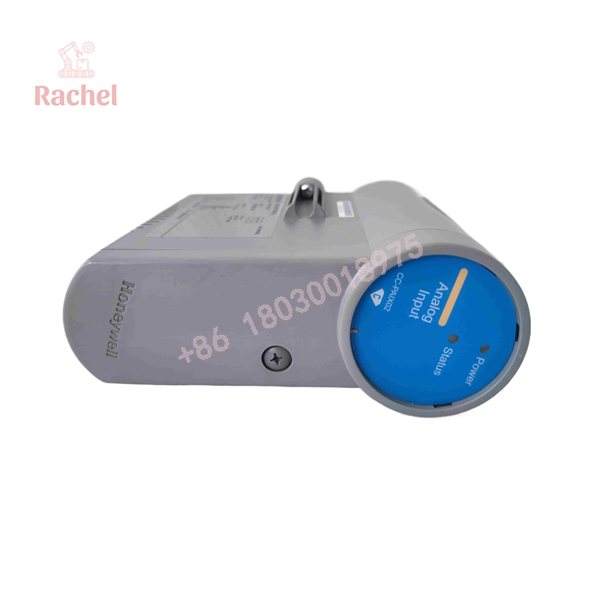
CC-PAIX02
Quality Assurance and Testing
A supplier’s inspection process should distinguish physical condition from verified functional performance.
1. Identity inspection
Confirm the CC-PAIX02 label, part number, connector condition, and housing integrity. Record visible damage and evidence of previous repair.
2. Functional verification
Where appropriate test facilities are available, check module diagnostics and representative voltage and current input readings. Verify single-ended and differential channels according to the declared test scope.
3. Documentation and release
Record the tested functions, results, unit identification, and any limitations. Confirm the product’s condition classification, warranty period, and return terms.
These steps are recommended QA practices, not a claim that a particular unit has passed testing.
For new-surplus inventory, request actual-unit photographs and available traceability records. For refurbished inventory, request the functional test report and a description of any repairs performed.
Replacement Pitfalls: What to Check Before Installation
Pitfall 1: Assuming all 16 channels are interchangeable
The documented arrangement is 12 single-ended channels and four differential channels. Do not assume that every channel supports every wiring mode. Confirm the intended channel assignment and IOTA configuration before reconnecting field wiring.
Pitfall 2: Overlooking the 250 Ω current-input path
The specified 4–20 mA range uses a 250 Ω input path. Confirm that the applicable termination arrangement provides the required current measurement configuration. An incorrect resistor arrangement can produce scaling errors or an unsuitable input circuit.
Pitfall 3: Treating the replacement as a plug-and-play repair
Input configuration, grounding, controller settings, and termination hardware all affect the final measurement. Follow the approved maintenance procedure, observe ESD precautions, and verify channel readings and alarms after commissioning. Do not assume the module supports energized replacement unless the installed system explicitly permits it.
PRO TIP: Before removing the original module, document the channel assignments, configured ranges, termination assembly model, and baseline readings. This makes post-replacement verification considerably more precise.
Frequently Asked Questions
Q1. What is the Honeywell CC-PAIX02 used for?
The CC-PAIX02 acquires specified analog voltage and current signals from transmitters and sensors in Honeywell Experion PKS Series C systems. It supports 12 single-ended and four differential channels.
Q2. Does the CC-PAIX02 support 4–20 mA and voltage inputs?
Yes. Its documented ranges include 0–5 V, 1–5 V, 0.4–2 V, and 4–20 mA through a 250 Ω input path. Confirm the correct wiring and configuration for each channel.
Q3. Can the CC-PAIX02 replace the CC-PAIN01?
Not as an automatic, drop-in substitute. The CC-PAIX02 supports specified voltage and current inputs, including differential measurements, while the CC-PAIN01 is a current-input module. Compare the signal requirements, IOTA, wiring, and controller configuration before approving a substitution.
Q4. Is the CC-PAIX02 HART-compatible?
The CC-PAIX02 is documented as a non-HART high-level analog input module. It can acquire supported analog signals from compatible instruments, but HART-specific diagnostics and configuration require a suitable HART-capable solution.
Q5. How do I verify new-surplus CC-PAIX02 inventory?
Request photographs of the actual unit and nameplate, available serial or traceability records, a written condition declaration, and any applicable functional test report. New-surplus status alone does not establish manufacturer provenance or successful functional testing.
Q6. What warranty applies to a refurbished CC-PAIX02?
The warranty depends on the seller and the specific unit. Obtain written confirmation of the coverage period, exclusions, return procedure, and responsibility for shipping defective equipment. Do not assume that a third-party warranty is equivalent to Honeywell’s manufacturer warranty.

 Start Chat


