





Description
Product Introduction
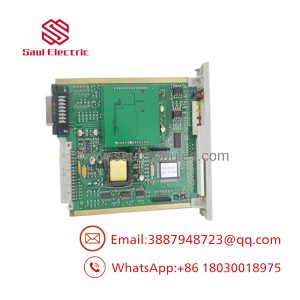
The Honeywell CC-PCNT01 is the C300 Process Controller used in the Experion PKS Distributed Control System. It executes continuous, batch, and sequential control strategies while communicating with Series C I/O modules through Honeywell’s deterministic control network. The controller is widely deployed in refinery, petrochemical, pharmaceutical, LNG, and power generation applications where process availability is a primary design objective.
In practical applications, the CC-PCNT01 is the computational core of a C300 control node. Unlike Series C I/O modules that simply acquire or output field signals, this controller performs PID execution, regulatory control, logic processing, alarm management, and communication with Experion servers and operator stations. One thing to watch out for is controller revision compatibility. Hardware replacement is straightforward, but firmware and Control Builder database compatibility should always be verified before commissioning.
Key Technical Specifications
| Parameter | Value |
|---|---|
| Manufacturer | Honeywell |
| Model | CC-PCNT01 |
| Product Family | Experion PKS Series C |
| Product Type | C300 Process Controller |
| Controller Platform | C300 |
| Programming Environment | Honeywell Control Builder |
| Supported I/O | Honeywell Series C I/O |
| Controller Redundancy | Supported |
| Communication | Fault Tolerant Ethernet (FTE) |
| Controller Functions | PID, Logic, Sequential Control, Batch Applications |
| Hot Standby | Supported with Redundant Controller Configuration |
| Installation | Series C Controller Chassis |
| Typical Industries | Oil & Gas, Chemical, LNG, Power, Pharmaceutical |
Engineering Note: Honeywell has released multiple hardware and firmware revisions for the C300 platform. Verify firmware compatibility with the installed Experion PKS release before replacing a controller.
Application Scenarios & The “Trench” Experience
It’s 2:15 AM during a refinery turnaround.
Operators suddenly lose communication with several process loops. Every field transmitter is healthy. Every Series C I/O module still has power.
The real problem isn’t in the field.
The active C300 controller has failed.
Replacing the controller restores communications within minutes, but only because engineering had a verified backup configuration and a compatible spare controller on the shelf.
Typical Applications
Oil & Gas — Refinery process control — Executes regulatory control for distillation columns, compressors, and reactors.
LNG Plants — Cryogenic process automation — Controls pressure, temperature, and flow loops with redundant architecture.
Chemical Manufacturing — Continuous production units — Performs complex PID and sequence control while managing large I/O counts.
Power Generation — Boiler and turbine auxiliary systems — Coordinates analog and digital control strategies.
Pharmaceutical Manufacturing — Batch process automation — Executes validated batch recipes with deterministic controller performance.
Field Replacement Example
A petrochemical complex experienced an unexpected controller watchdog fault during routine maintenance. Diagnostic logs confirmed the fault originated from the active CC-PCNT01 rather than the Series C I/O network. Engineers transferred control to the redundant controller, replaced the failed module, restored firmware from the validated backup, and synchronized redundancy before returning the controller to service. Production continued without shutting down the process unit because redundancy had been configured correctly before the failure occurred.
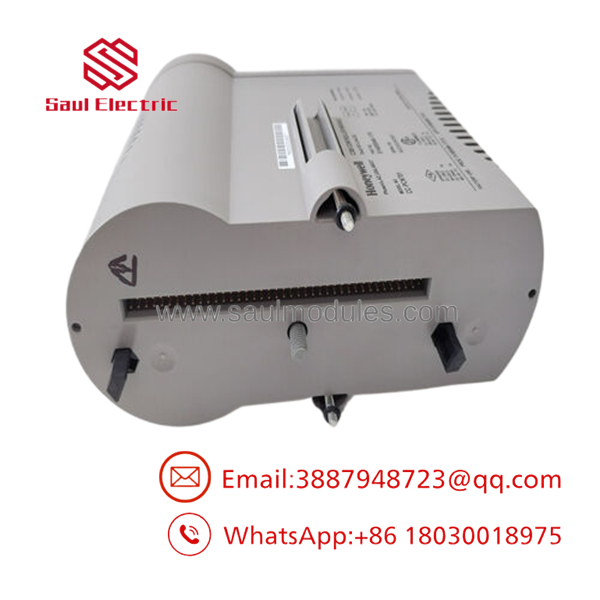
- CC-PCNT01
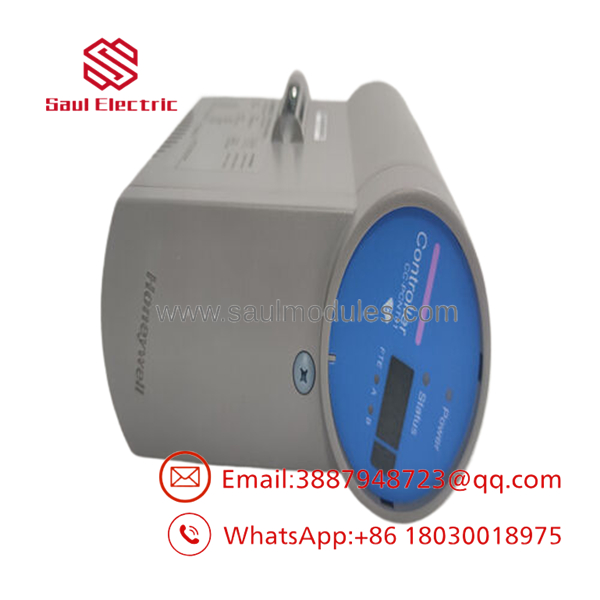
- CC-PCNT01
Transparency SOP: Quality Assurance & Testing
We don’t just ship boxes; we test them on actual Honeywell Series C hardware whenever practical.
- Inbound Inspection
- Verify Honeywell serial number and authenticity.
- Inspect PCB assemblies and backplane connectors.
- Check for corrosion, repaired traces, or component replacement.
- Confirm hardware revision.
- Live Rig Testing
- Install the controller in a Series C chassis.
- Verify successful boot sequence.
- Confirm communication with Experion engineering software.
- Test Series C I/O recognition.
- Verify redundancy synchronization where applicable.
- Electrical Parameter Checks
- Verify supply current.
- Perform burn-in testing.
- Confirm stable Ethernet communication.
- Monitor processor diagnostics.
- Firmware Verification
- Record firmware revision.
- Verify compatibility with supported Experion PKS releases.
- Confirm successful database loading.
- Final QC & Packaging
- Complete functional inspection.
- ESD-safe packaging.
- Shock-resistant shipping.
- Full traceability documentation.
The Veteran’s Tech Trap Guide
⚠️ Always verify the firmware before installing a replacement.
A hardware replacement may boot successfully but still refuse to load the existing Control Builder database if the firmware revision does not match the engineering environment.
⚠️ Never replace a redundant controller without checking synchronization.
Take a few minutes to confirm which controller is Active and which is Standby. Pulling the wrong controller during production can trigger an unnecessary process interruption.
❗ Back up the controller database first.
Don’t assume the latest engineering workstation contains the current application. Verify the online database before removing the controller.
⚠️ Inspect the controller chassis connectors.
In our field experience, intermittent communication faults are sometimes caused by contaminated backplane connectors rather than a defective CC-.
Frequently Asked Questions (FAQ)
Q1. What is the Honeywell CC-?
The is the used in the Experion PKS Series C architecture. It executes control strategies, communicates with Series C I/O modules, and exchanges data with Experion servers and operator stations.
Q2. Does the CC- support controller redundancy?
Yes. The platform supports redundant controller configurations. When properly configured, the standby controller continuously synchronizes with the active controller, allowing automatic switchover if the active unit fails.
Q3. Can the controller be replaced while the process is running?
It depends. In a properly configured redundant pair, the standby controller can typically be serviced while the active controller remains in operation. In a single-controller installation, replacement requires a planned shutdown because process execution stops when the controller is removed. Always follow Honeywell maintenance procedures.
Q4. Is the CC- compatible with every Experion PKS version?
Not necessarily. Honeywell has released multiple hardware and firmware revisions. Verify compatibility between the controller firmware, Control Builder engineering software, and the installed Experion PKS release before installation.
Q5. Why is this controller still widely used?
Thousands of Experion PKS installations remain operational worldwide. The controller continues to provide reliable process control, and many plants maintain spare controllers to minimize downtime rather than replacing an entire automation system.
Q6. What warranty is typically available?
Most industrial automation suppliers provide a 12-month functional warranty for New Surplus or professionally tested surplus controllers. Warranty terms depend on the supplier and the product condition.
Q7. What should I verify before installation?
Verify the , hardware revision, firmware version, Experion PKS software release, redundancy configuration, Control Builder database compatibility, FTE network configuration, and controller licensing. Before returning the controller to production, confirm successful synchronization (if redundant), communication with all assigned Series C I/O modules, and correct execution of the loaded control strategy.

 Start Chat


