





Description
Product Introduction & Engineering Value
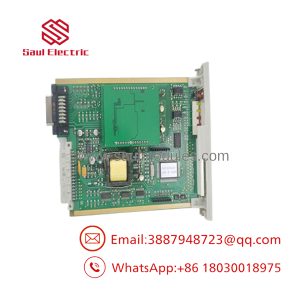
A fault in the control-network distribution layer can interrupt communication with multiple control-system nodes even when the controllers and I/O modules themselves remain operational. The Honeywell CC-PCF901 is a nine-port Control Firewall (CF9) module used in Experion PKS Series C architectures to distribute Fault Tolerant Ethernet (FTE) connections and restrict network traffic to supported control communications.
The module provides eight downlink connections for compatible in-cabinet devices and one uplink to the supervisory FTE network. Replacement planning should account for the CF9 termination assembly, network cabling, hardware revision, and existing topology. This is network infrastructure—not a process controller or a field I/O module.
Technical Specifications
| Parameter | Specification |
|---|---|
| Manufacturer | Honeywell |
| Model | CC-PCF901 |
| Common part number | 51405047-175; verify the complete number on the installed unit |
| Product family | Experion PKS Series C |
| Product type | Nine-port Control Firewall Module (CF9) |
| Primary function | FTE network distribution and control-traffic filtering |
| Port configuration | 8 downlinks + 1 supervisory uplink |
| Ethernet speed | 10/100 Mbps, according to supplier listings |
| Supply rating | 24 VDC, 0.112 A, as listed by suppliers |
| Mounting | Compatible CF9 Input/Output Termination Assembly (IOTA) |
| Typical connected nodes | C300 controllers, Series C FIMs, and applicable FTE Bridge modules |
| Network security function | Filters traffic not required by the supported control domain and prioritizes downlink traffic under specified congestion conditions |
Technical details are cross-checked against supplier documentation describing the CF9 architecture. Confirm electrical, environmental, and revision-specific ratings against the applicable Honeywell installation manual before engineering approval.
Important hardware distinction: Supplier references identify different CF9 termination assemblies, including CC-TCF901 and DC-TCF901 for applicable Series C and Series C Mark II configurations. Do not select an IOTA solely because it is described as a CF9 assembly; verify the precise hardware generation and installation requirements.
Field Applications and Practical Maintenance Scenarios
Imagine a process plant where several C300 controllers become unreachable from the supervisory network after a maintenance intervention. Initial checks show that the controllers still have power, but network communication remains unavailable. The instrumentation team inspects the CC-PCF901 status indicators, verifies the uplink and downlink cable assignments, and checks the connected FTE path before identifying the likely fault location.
If testing confirms a defective CF9 module, the team verifies the replacement part number and termination assembly, follows the approved hardware replacement procedure, and checks network connectivity before returning the affected equipment to service. This is an illustrative troubleshooting scenario, not a documented customer case.
Typical application scenarios include:
- C300 controller network distribution: Connecting compatible controllers to the in-cabinet FTE network.
- Series C FIM connectivity: Distributing network connections to field interface modules serving process I/O.
- Supervisory network integration: Providing the designated uplink between the CF9 control network and the supervisory FTE network.
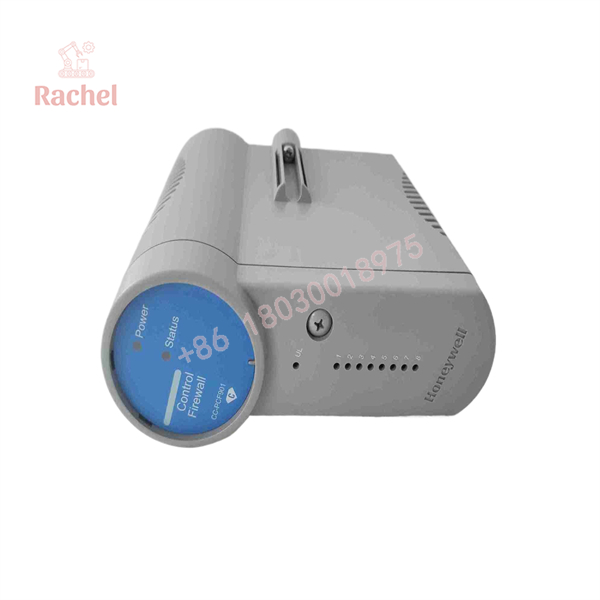
CC-PCF901
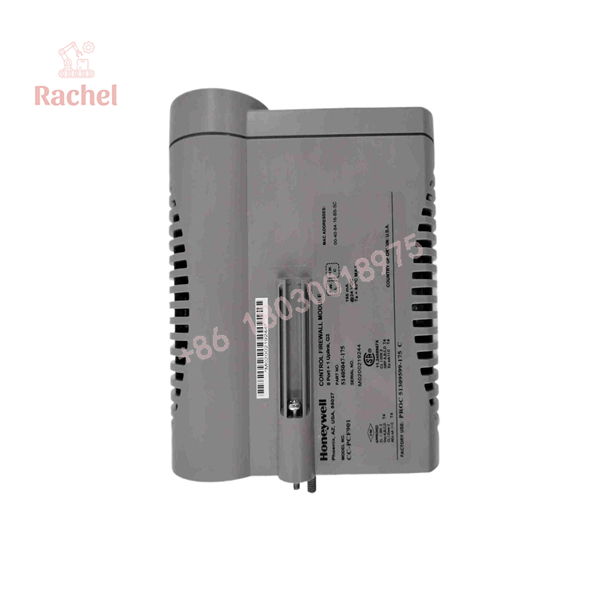
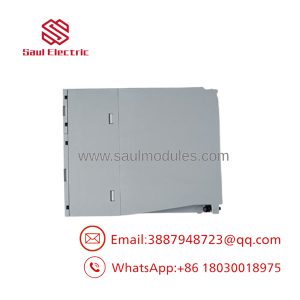
CC-PCF901
Quality Assurance and Testing
For a network infrastructure module, a meaningful inspection should cover identity, physical condition, and network functionality.
Step 1 — Verify the hardware
Inspect the CC-PCF901 label, complete part number, connector condition, and housing. Confirm that the supplied unit matches the required CF9 hardware generation and termination assembly.
Step 2 — Test network functionality
Where suitable test facilities are available, verify power and status indications, Ethernet link activity, and representative communication paths. Check the intended uplink and downlink functions against the applicable test procedure.
Step 3 — Record the results
Document the test scope, observed results, unit identification, and any limitations. Confirm the stock condition, warranty coverage, and return terms in writing.
These are recommended quality-control procedures, not a claim that a particular unit has passed testing. For refurbished stock, request a functional test report. For new-surplus stock, request actual-unit photographs and available traceability records.
Replacement Pitfalls: Three Checks Before Installation
Pitfall 1: Confusing CF9 hardware generations
Verify whether the installation uses the applicable Series C or Series C Mark II configuration. The termination assembly and fiber-interface arrangements may differ. Confirm the exact combination against the installed hardware documentation before placing an order.
Pitfall 2: Mixing up uplink and downlink connections
The eight downlinks serve compatible in-cabinet control-network nodes; the ninth port is the supervisory uplink. Label cables before removal and restore the documented port assignments. Incorrect reconnection can leave devices disconnected even if the replacement module is functioning correctly.
Pitfall 3: Treating a network fault as a module failure
A failed link may originate from damaged cabling, a disconnected uplink, an upstream switch, a termination issue, or another network component. Review status indications and available diagnostics before condemning the CC-PCF901. Follow site-approved change-control and commissioning procedures.
PRO TIP: Before starting a replacement, record the original port assignments, module status, affected nodes, and relevant network diagnostics. After installation, verify the intended communication paths rather than relying solely on the module’s status LEDs.
Frequently Asked Questions
Q1. What is the Honeywell CC-PCF901 used for?
The CC-PCF901 is a nine-port Control Firewall module for Honeywell Experion PKS Series C architectures. It distributes FTE connections to compatible control-system nodes and filters network traffic according to its supported control-network functions.
Q2. How many Ethernet ports does the CC-PCF901 have?
Its documented configuration comprises eight downlink ports and one uplink port. Supplier references list 10/100 Mbps Ethernet connectivity. Verify the interface and cabling requirements for the exact hardware revision.
Q3. Which termination assembly is compatible with the CC-PCF901?
The module mounts on a CF9 IOTA. References identify CC-TCF901 and DC-TCF901 in applicable configurations. Confirm the installed system generation and exact assembly requirements before ordering.
Q4. Can the CC-PCF901 be replaced without changing the network configuration?
Not automatically. The replacement should match the existing hardware configuration, and the original port assignments and network topology should be preserved. Follow the applicable Honeywell procedure and verify communication after installation.
Q5. How can I verify new-surplus authenticity?
Request photographs of the actual module and its labels, available traceability information, a written condition declaration, and any functional test records. New-surplus status does not by itself prove manufacturer provenance or successful network testing.
Q6. What warranty applies to a refurbished CC-PCF901?
Warranty terms depend on the supplier and the specific unit. Obtain written confirmation of the coverage period, exclusions, return procedure, and shipping responsibilities. Do not assume that a third-party warranty is equivalent to a Honeywell manufacturer warranty.

 Start Chat


