





Description
Product Introduction & Engineering Value
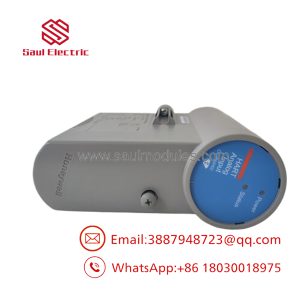
The Honeywell CC-PDOD51 provides 32 sink-type digital outputs for discrete control in Honeywell Experion PKS systems. Each channel switches loads operating within a specified 15–30 VDC range, with a maximum channel current of 100 mA. Its open-drain architecture and field-isolation provisions make correct wiring and field-power configuration essential during installation.
For maintenance teams supporting an existing Series C installation, this module can serve as a replacement for a failed output card. Before ordering, verify the installed IOTA, terminal wiring, output logic, and controller configuration rather than relying on the model number alone.
Technical Specifications
| Parameter | Specification |
|---|---|
| Manufacturer | Honeywell |
| Model Number | CC-PDOD51 |
| I/O Function | Digital output |
| Number of Channels | 32 |
| Output Type | Sink, open drain |
| Load Voltage | 15–30 VDC |
| Maximum Load Current | 0.1 A per channel |
| On-State Voltage | 0 VDC at maximum specified load current |
| Off-State Leakage Current | 100 µA maximum |
| Switching Time | 10 ms maximum |
| System-to-Field Isolation | 1,000 VAC RMS, under specified isolation conditions |
| Nonredundant IOTA | CC-TDOD51 |
| Electronics Protection | Conformal coating |
| System Family | Honeywell Experion PKS Series C |
Source: Honeywell Series C I/O specifications and technical product references. Confirm the applicable hardware revision and installation documentation before commissioning.
Output architecture and operating behavior
The CC-PDOD51 is a sink-type output module, not a source-type module. Its field circuit must be designed around that distinction.
- Field power: The I/O architecture supports system-supplied or externally supplied field power, depending on the IOTA wiring configuration.
- Isolation: With the specified external field-power arrangement, system-to-field galvanic isolation is rated at 1,000 VAC RMS.
- Output fault handling: Electronic overcurrent protection and configurable per-channel FAILOPT behavior are documented features. Depending on configuration, an output can hold its last value or transition to a configured safe value.
- Redundancy: Redundant Series C output arrangements require the appropriate hardware and IOTA. Do not assume that a module fitted to a nonredundant IOTA can be converted to a redundant configuration without checking the system design.
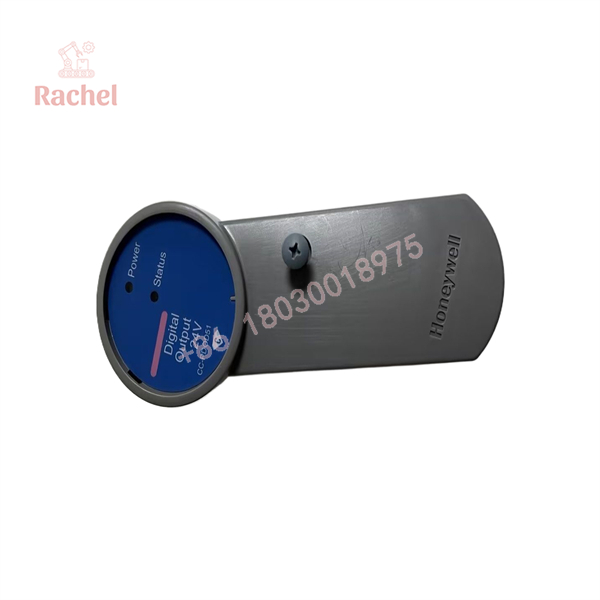
CC-PDOD51
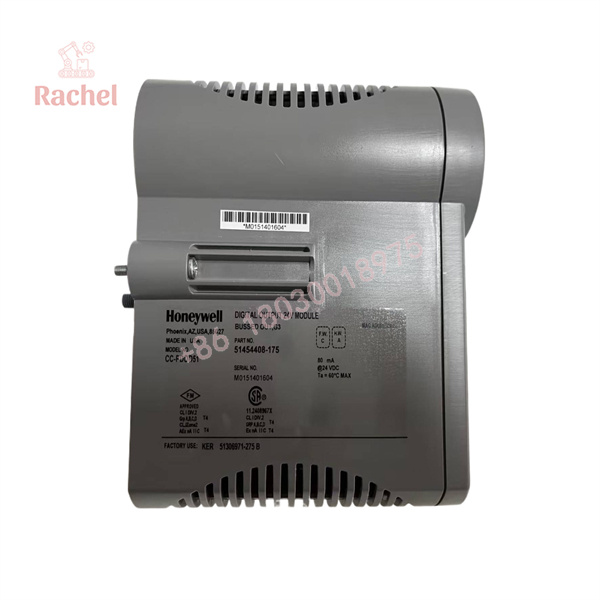
CC-PDOD51
Field Applications: An Engineering Case Study
Illustrative scenario — not a verified customer installation.
Replacing a failed output card in a process control cabinet
Consider a refinery unit in which a Series C digital output module controls several interposing relays associated with auxiliary equipment. During troubleshooting, technicians identify an output channel that no longer switches correctly. The immediate challenge is not simply finding another card; the replacement must match the installed I/O architecture, field wiring, and configured output behavior.
A disciplined replacement procedure would involve:
- Identifying the installed module and its IOTA assembly.
- Reviewing the channel assignments, field supply arrangement, and configured FAILOPT states.
- Checking the replacement’s part number, condition, and hardware compatibility.
- Installing the module under the site’s approved isolation and maintenance procedure.
- Testing affected channels against the approved cause-and-effect logic before returning the equipment to service.
The objective is to restore the intended control function without introducing a wiring mismatch or unexpected output state.
Specific application scenarios
- Refinery auxiliary equipment: Switching low-current DC relay interfaces used in pump and compressor auxiliary sequences.
- Boiler and burner support systems: Operating compatible discrete control interfaces where the approved design uses 24 VDC sink outputs.
- Chemical process skids: Controlling low-current solenoid or relay circuits through a Series C I/O installation, provided the actual load and circuit design meet the module’s electrical limits.
Engineering limit: The 100 mA maximum applies to each output channel. Verify the load’s steady-state and transient current requirements, particularly for inductive loads. Use a properly rated interposing relay or interface device where the load exceeds the module’s documented limits.
Quality Assurance and Testing: What Buyers Should Verify
For replacement hardware, the distinction between a genuine, unused surplus module and a refurbished unit matters. The seller’s condition description should be supported by inspection records and a clear warranty policy.
A practical incoming-inspection and acceptance checklist includes:
These are recommended acceptance checks, not a claim that any particular unit has passed them.
Procurement note: Request written confirmation of whether the offered unit is new surplus, refurbished, or previously installed. Ask the seller to specify warranty duration, return conditions, and the remedy for a unit that fails acceptance testing.
Replacement Pitfalls: Technical Checks That Matter
Pitfall 1: Confusing sink outputs with source outputs
CC-PDOD51 uses an open-drain sink output. A source-output module is electrically different, even if the two devices serve similar control functions. Confirm the load’s current path and wiring polarity before energizing the circuit.
Pitfall 2: Overlooking the IOTA and field-power configuration
The CC-TDOD51 is identified for nonredundant installation. Check the actual installed assembly and its wiring options, including whether field power comes from the system supply or an external source. Do not assume that the module alone determines isolation or redundancy behavior.
Pitfall 3: Ignoring load current and fail-state behavior
Each channel is rated for a maximum of 100 mA. Check relay-coil inrush, inductive-load suppression, and the configured FAILOPT response. A replacement that switches during a bench test may still behave incorrectly if the controller configuration or field circuit differs from the original installation.
Lifecycle consideration: A current third-party product reference identifies the CC-PDOD51 family as being in the phase-out stage and lists CC-PDOB01 as an alternative for new designs. Confirm the latest lifecycle status and migration requirements with Honeywell before specifying a long-term replacement strategy. Do not treat CC-PDOB01 as a drop-in substitute without verifying its output architecture and system compatibility.
Frequently Asked Questions
Q1. What does the Honeywell CC-PDOD51 do?
It provides 32 sink-type digital output channels for switching compatible DC field loads in Honeywell Experion PKS Series C I/O installations.
Q2. What voltage and current can each channel handle?
The documented load-voltage range is 15–30 VDC, with a maximum current of 100 mA per channel. Confirm the actual load requirements and circuit design before use.
Q3. Which IOTA is compatible with the CC-PDOD51?
CC-TDOD51 is identified for nonredundant installations. If your system uses a redundant arrangement, verify the required IOTA and system configuration against the applicable Honeywell documentation.
Q4. Is the CC-PDOD51 still suitable for new system designs?
It may be relevant when maintaining an existing compatible installation. However, third-party technical listings report a phase-out status and identify CC-PDOB01 as an alternative for new designs. Verify current manufacturer guidance before making a design decision.
Q5. How can I verify that a unit sold as new surplus is authentic?
Request photographs of the actual unit and its label, available traceability documentation, a written condition declaration, and the seller’s warranty terms. New surplus generally means unused inventory held outside the manufacturer’s normal current production channel; the description alone does not establish authenticity or factory-sealed status.
Q6. What warranty applies to the CC-PDOD51?
Warranty coverage depends on the supplier and the condition of the specific unit. Obtain the warranty period and written terms before purchase, including coverage for defective or incorrectly described hardware. Do not assume that a third-party surplus purchase carries the original manufacturer’s warranty.

 Start Chat


