





Description
Introduction and Engineering Value
When a controller must distinguish between an open valve limit switch, a motor-running contact, and a trip signal, the digital input path has to preserve the field device’s ON/OFF state and deliver it to the control strategy. The Honeywell CC-TDIL01 provides the terminal interface for compatible Series C 24 VDC digital input applications.
For maintenance teams, the first check is module compatibility. The CC-TDIL01 is not a universal terminal assembly for every Series C digital input function; high-voltage inputs and other I/O types use different hardware.
Technical Specifications
| Specification | Details |
|---|---|
| Model | CC-TDIL01 |
| Part number commonly listed by suppliers | 51308386-175 |
| Platform | Honeywell Experion PKS Series C |
| Assembly type | Digital input IOTA |
| Compatible module CC-PDIL01 | 24 VDC digital input |
| Compatible module CC-PDIS01 | Digital input Sequence of Events (SOE) |
| Input channel class | 32 channels |
| Nominal field signal | 24 VDC discrete input |
| IOTA size | 9 inches (228 mm nominal) |
| Redundancy option | CC-TDIL11, 12 inches (304 mm nominal) |
| Field wiring | Removable terminal connections within the Series C I/O architecture |
| Environmental limits | Verify against the applicable Series C platform specification and cabinet design |
The channel count, I/O compatibility, and nominal dimensions are documented in Honeywell’s Series C I/O specification. Detailed electrical thresholds and environmental ratings should be checked against the relevant module and platform documents rather than inferred from the terminal assembly model alone.
How the assembly fits into the control system
The IOTA holds the I/O module and provides the field-wiring connections. The I/O module contains the electronics responsible for processing the selected input function. Honeywell’s documentation distinguishes these two components, so the CC-TDIL01 should not be described as a standalone controller or as the complete digital input electronics module.
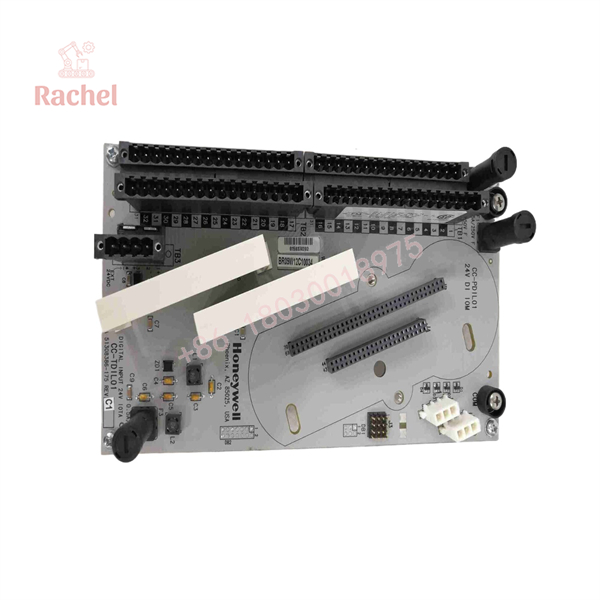
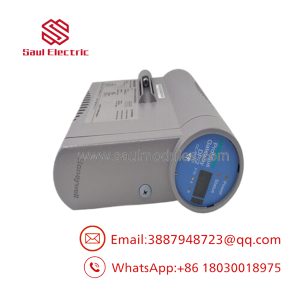
CC-TDIL01
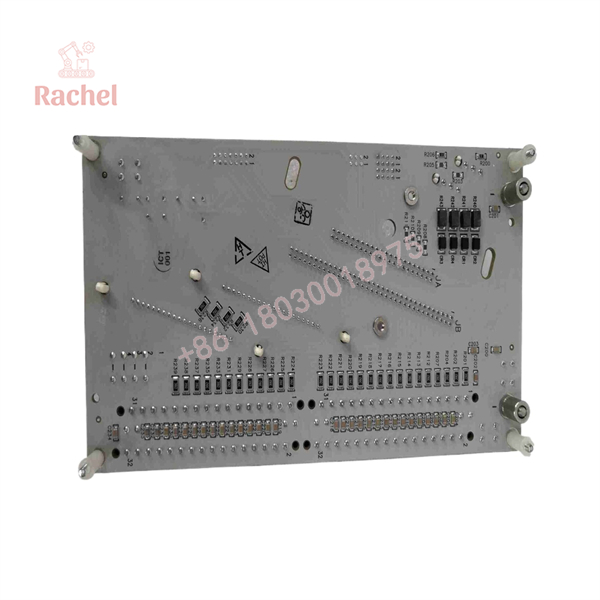
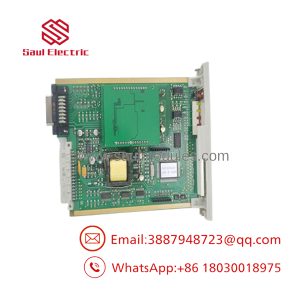
CC-TDIL01
Field Applications
The CC-TDIL01 is relevant to process and manufacturing systems that use compatible Series C digital input modules to monitor discrete field conditions.
- Motor status monitoring: Collects discrete status signals, such as running or stopped contacts, through the compatible input module.
- Valve position feedback: Interfaces with open/closed limit-switch signals used by control logic and operator displays.
- Equipment permissives and interlocks: Provides the terminal interface for field contacts used in control sequences and permissive checks.
- Sequence of Events applications: When paired with the compatible CC-PDIS01 module, supports a Series C SOE input arrangement. Confirm the system’s event configuration and timing requirements before commissioning.
- Maintenance and obsolescence support: Provides a model-specific replacement option for an existing nonredundant digital input installation after part identification.
Illustrative field scenario
During a planned shutdown, an engineer investigates a missing valve-position indication. The field limit switch changes state, but the corresponding control-system point remains unchanged. The team checks the switch, field cable, terminal connections, I/O module diagnostics, and configured channel before deciding whether the terminal assembly needs replacement.
If the CC-TDIL01 is identified as faulty, the replacement is checked against the installed module and terminal layout. After installation, the team verifies the field signal, control-system indication, and any associated alarm or interlock logic. This is an illustrative troubleshooting scenario, not a report of a specific unit’s field performance.
QA and Testing SOP
Use a controlled inspection process before installing or accepting a replacement CC-TDIL01.
- Verify the model and part number. Compare the physical label with the existing assembly and the approved bill of materials.
- Confirm module compatibility. Establish whether the application uses CC-PDIL01 or CC-PDIS01 and verify that the replacement matches the intended configuration.
- Check redundancy requirements. Confirm that the installation calls for the nonredundant CC-TDIL01 rather than the redundant CC-TDIL11.
- Inspect the hardware. Examine terminals, connectors, mounting points, housing, and labels for corrosion, physical damage, contamination, or evidence of unauthorized repair.
- Review field wiring. Check terminal assignments, signal polarity where applicable, field supply, and wiring condition against the correct installation documentation.
- Perform approved functional checks. After installation, verify channel response using an approved test procedure and confirm that the control strategy receives the expected signal state.
- Document acceptance. Record the model, unit condition, inspection results, test scope, and any deviations.
Purchasing note: New surplus, refurbished, and used units are distinct condition categories. Request a written condition declaration and unit-specific test records where available. A product listing or stock statement does not prove that an individual unit is authentic or has passed functional testing.
Veteran’s Tech Trap Guide
Trap 1: Ordering the wrong voltage class
CC-TDIL01 belongs to the low-voltage 24 VDC digital input family. Do not substitute a high-voltage input terminal assembly merely because both parts are labeled as digital input hardware. Honeywell lists separate IOTAs for high-voltage digital inputs.
Trap 2: Confusing CC-TDIL01 with CC-TDIL11
CC-TDIL01 is the 9-inch nonredundant assembly. CC-TDIL11 is the 12-inch redundant version. Verify the cabinet arrangement and redundancy design before approving the replacement.
Trap 3: Treating digital input and SOE functions as identical
Honeywell lists CC-TDIL01 for both CC-PDIL01 and CC-PDIS01, but the modules serve different input functions. If the installation uses SOE, confirm the module, channel configuration, and event requirements before replacing hardware.
Frequently Asked Questions
What is the Honeywell CC-TDIL01 used for?
It is a Series C digital input terminal assembly used with compatible Honeywell digital input modules to connect discrete field signals to the control system.
Which I/O modules are compatible with CC-TDIL01?
Honeywell lists the CC-PDIL01 24 VDC digital input module and the CC-PDIS01 Sequence of Events digital input module as compatible options. Confirm the installed module and system revision before ordering.
What is the difference between CC-TDIL01 and CC-TDIL11?
CC-TDIL01 is the nonredundant, 9-inch version. CC-TDIL11 is the redundant, 12-inch version. They are different configuration options, not automatic drop-in substitutes.
Is CC-TDIL01 a 32-channel digital input module?
The Series C specification classifies the associated digital input function as 32-channel. Strictly speaking, CC-TDIL01 is the IOTA or terminal assembly; the compatible I/O module provides the input-processing electronics.
How can I verify a replacement’s authenticity?
Check the physical label and part number, request traceable sourcing information where available, and obtain a written condition statement. For refurbished or used hardware, ask for test records describing what was actually checked.
What warranty is available?
Warranty terms depend on the supplier and the unit’s condition. Confirm the coverage period, return window, exclusions, and whether the warranty applies to functional failures after installation.

 Start Chat


