





Description
Product Introduction
The HP Keysight Agilent E1460A is a C-size, single-slot, register-based VXI matrix switch card engineered for complex automated test systems requiring high-density signal routing. Featuring a flexible 4-row by 64-column architecture, it allows any of its 4 input channels to connect to any combination of 64 output channels simultaneously.
Built using reliable non-inverting latching relays, the E1460A maintains switch positions even during power fluctuations while keeping thermal EMF noise to an absolute minimum. It serves as the physical switching backbone in high-count ATE applications, enabling seamless routing between instruments like DMMs, counters, and function generators to multi-pin devices under test (DUTs).
Key Technical Specifications
| Parameter | Specification / Value |
| Form Factor | VXIbus C-Size, Single-Slot (Register-Based) |
| Matrix Topology | 4 Rows x 64 Columns (2-Wire or 1-Wire configurations) |
| Total Crosspoints | 256 Relay Switches |
| Relay Type | Armature (Latching type for minimal power draw/heat) |
| Maximum Voltage | 42 V DC / AC peak (CAT I safety rated) |
| Maximum Current | 1 A per channel (2 A per module common) |
| Maximum Switching Power | 30 W / 62.5 VA per channel |
| Switch Speed | ~15 ms close/open response time |
| Bandwidth (-3dB) | 10 MHz typical (into 50 Ω load) |
| Connection Interface | High-density terminal blocks / Mass interconnect DIN |
Application Scenarios & The “Trench” Experience
When an automated switching card fails in a high-volume test rack, the result is usually a cascading wave of false continuity failures across hundreds of test pins. In our field experience, mechanical relay contact bounce, oxidation, or pitted contacts on heavily cycled crosspoints in an E1460A will introduce micro-ohm instability that drives automated calibration algorithms crazy.
- Cable Harness Continuity Testers – Multi-Pin Harness Screening – Routes DMM measurement paths across complex 200+ pin aircraft wiring assemblies.
- Automotive PCB Functional Test – Multi-Point Signal Routing – Dynamically bridges power rails, load resistors, and oscilloscope channels to ECU probe points.
- Semiconductor Burn-In Stations – Parallel Component Screening – Connects shared stimulus sources to large banks of devices under test during extended thermal cycles.
Field Replacement Case: An aerospace contractor suffered an unexpected line halt when their primary wire-harness test bench started intermittently failing insulation resistance checks on pin bank 3. The root cause was a degraded row relay inside an aging E1460A card that had logged over 500,000 operations. Swapping in a field-tested surplus E1460A module restored contact resistance to under 0.5 ohms, getting the harness line back on schedule before the shift ended.
Transparency SOP: Quality Assurance & Testing
We don’t just clear errors and ship bare cards; we test every single relay crosspoints under real-world load conditions:
- Inbound Physical Inspection: Inspect edge connectors, trace lands, and terminal blocks for burn marks, trace damage, or loose latching mechanisms.
- 256 Crosspoint Resistance Audit: Actuate all 256 individual matrix intersections and measure closed-contact resistance across every row-column pair using a 4-wire ohm meter.
- Open-Circuit Isolation Check: Verify high-voltage isolation (>10 MΩ) between open relay contacts and adjacent signal paths to prevent signal crosstalk.
- VXI Bus Handshake & Control Test: Mount the card in a C-size VXI chassis, execute full register read/write sequences, and verify dynamic relay latching under driver software control.
- Final Clean & ESD Protection: Apply protective anti-static packaging after documenting contact resistance logs for traceability.
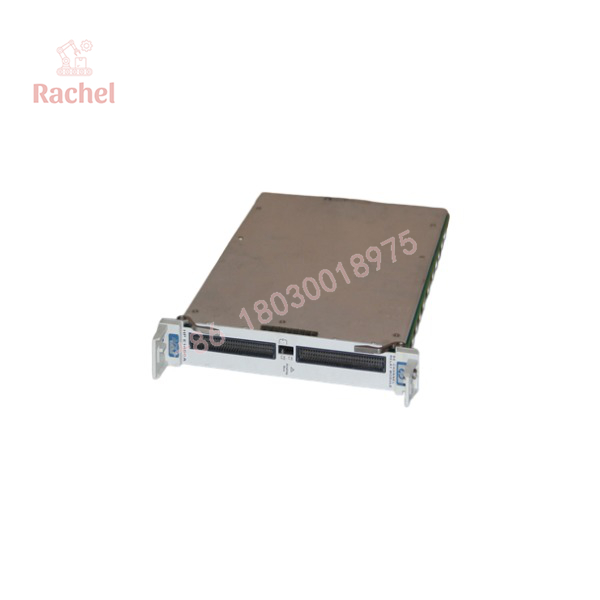
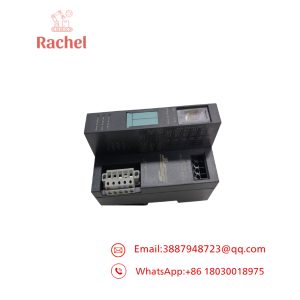
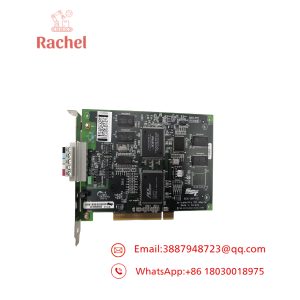
E1460A
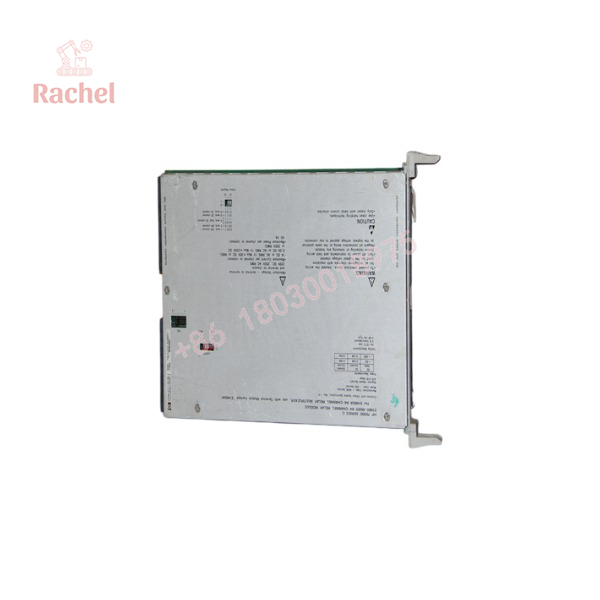
E1460A
The Veteran’s Tech Trap Guide (Crucial Value-Add)
- ⚠️ Voltage Limit Overruns: Do not exceed 42V peak across these relays! This is a signal-level matrix board, not a power switching module. Attempting to switch 120V/230V mains through an E1460A will arc the relay contacts and instantly weld the crosspoint leaves together.
- ❗ Cold-Switching vs. Hot-Switching: Always open or close relays with the signal source powered down or disabled (“cold switching”). Hot-switching under full load causes contact pitting, shortening the lifespan of the armature relays from 1,000,000 cycles down to a few thousand.
- ⚠️ Terminal Block Wiring Strain: When wiring up the high-density terminal blocks, use proper wire tie-downs and strain reliefs. Heavy wire bundles pulling on the connector face will strain the PCB surface-mount pads, leading to intermittent open circuits on outer matrix columns.
- ❗ Relay Cycle Counting: If your test code cycles the same crosspoint thousands of times a day, build software logs to track switch cycles. Swap under-utilized rows or columns into high-duty test paths during scheduled preventive maintenance to avoid unexpected mid-run failures.
Frequently Asked Questions (FAQ for Conversion)
Q: Can I reconfigure the E1460A into multiple smaller matrix groups?
A: Yes. Internal jumpers or terminal block wiring allow you to split the card into dual 4×32 matrices or customize common row busing depending on your system topology.
Q: Is the E1460A register-based or message-based?
A: It is a register-based module. It executes commands with ultra-fast hardware response times and relies on the Slot 0 Command Module (like an E1406A) to translate high-level SCPI commands into direct register writes.
Q: Can I hot-swap the E1460A out of the VXI chassis while powered?
A: Absolutely not. Removing or inserting any VXI module while the mainframe backplane is energized will cause electrical arcing, potentially corrupting backplane address logic or destroying the module’s bus interface ICs.
Q: How do I know if a specific relay crosspoint is failing?
A: A failing relay will show elevated or fluctuating contact resistance (>1-2 Ω) when closed, or high-impedance opens. Our QA process tests and logs contact resistance on all 256 crosspoints prior to dispatch.
Q: Why choose surplus/refurbished over buying new from Keysight?
A: Keysight has long discontinued the E1460A and the surrounding VXI architecture. Sourcing fully tested surplus inventory is the only cost-effective way to support legacy ATE systems without investing millions in a complete software and rack overhaul.

 Start Chat


